Showing posts with label salmon. Show all posts

Wednesday, September 3, 2014

RAINY DAY AT FORT WORDEN.

DSC09084 (Copy)
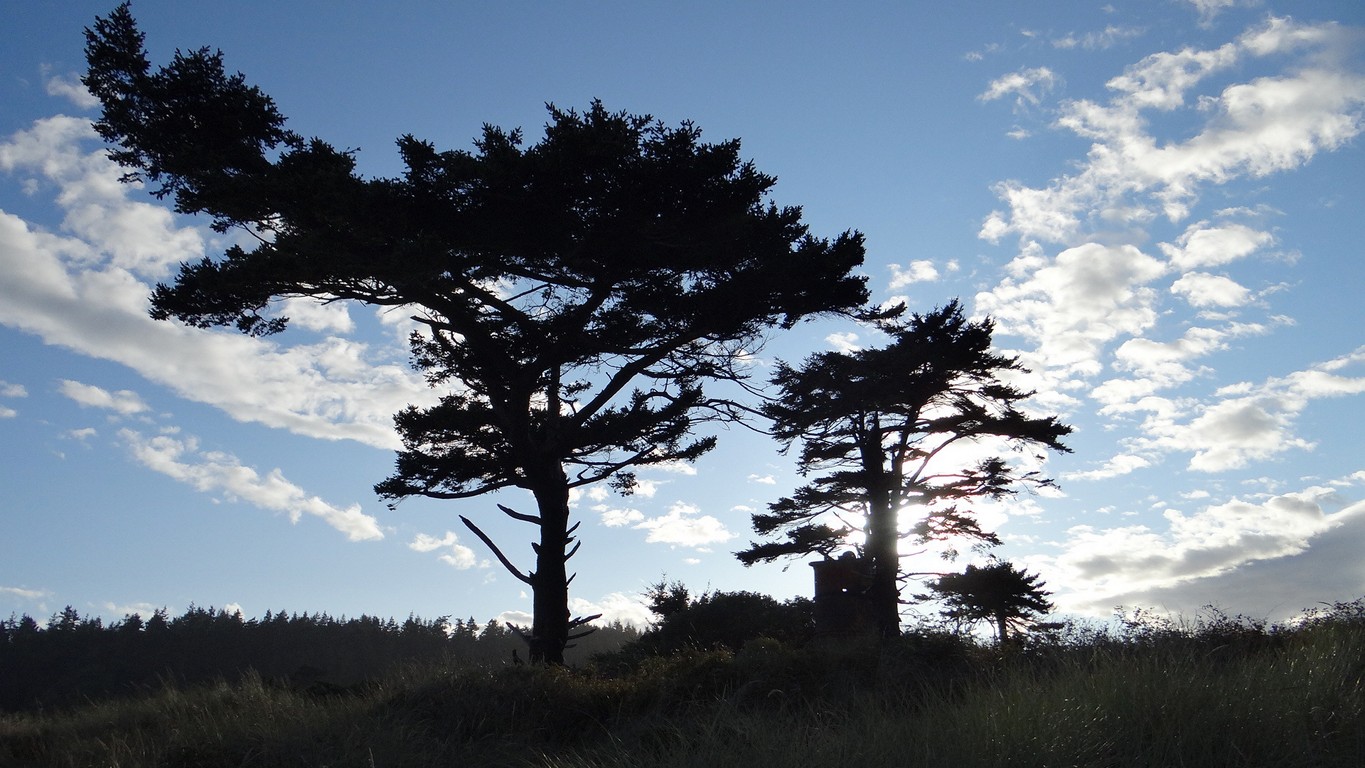
Fort Worden has two campgrounds and we chose the beach area. These trees were silhouetted against a cloudy sky.DSC09085 (Copy)
It is easy to see which way the wind blows. Rain was in the forecast. We set up camp and decided to walk to the two science museums on the grounds.
DSC09086 (Copy)
On the way, we stopped at this little free library.  We just turned in bags of books at our last campground, so I had none to trade. We continued to the science museums and both were closed. They begin their winter hours after Labor Day. We got caught in the rain and had to run for the motorhome. Our wet clothes were set to dry while we had dinner.
DSC09090 (Copy)
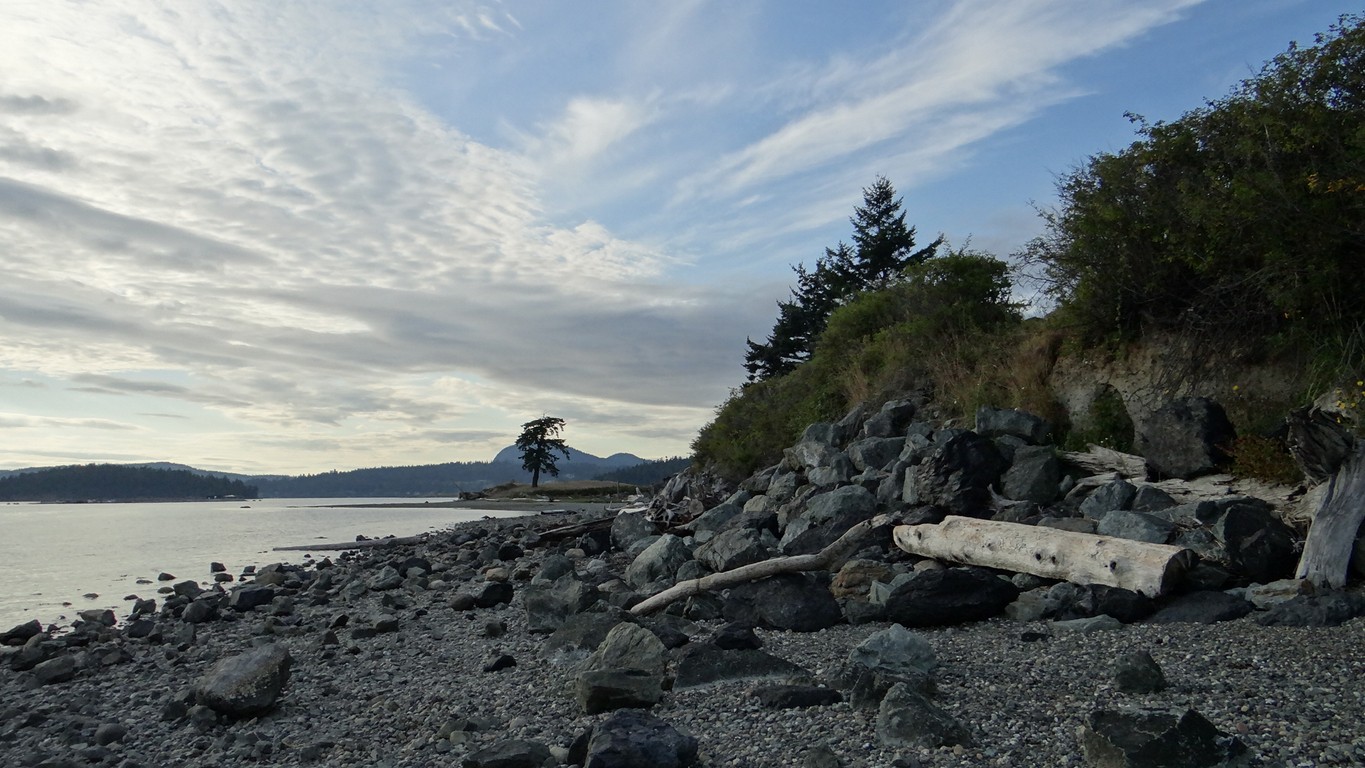
The storm lasted about an hour and we took the opportunity to walk the beach. A distant light house beckoned. In places we had to climb over rocks to escape the incoming tide.
DSC09092 (Copy)
We talked to two women from Pullman,WA who were gathering beach shells and glass in the surf. We peeked into their buckets and admired their pretties.  They wore simple sweatshirts during weather I found brutally cold with wind enough to knock you over.  I met a fellow from my part of Michigan who wore a simple long-sleeved shirt and remarked at how nice the weather is here. I told him I'd never leave California for Michigan despite my roots.
DSC09096 (Copy)
After we'd passed them, one woman came back and offered to share some of her beach glass with me. Wasn't that sweet? I declined since we have jars of beach stones and glass from other beaches we've visited, particularly the Glass Beach in California that was once a dump.
DSC09097 (Copy)
Besides, the beach was strewn with rocks and and shells at the tide line.
DSC09106 (Copy)
Close to the lighthouse, someone spent time balancing rocks called cairns. Most make it five stones high. Some go six and seven.
DSC09110 (Copy)
I put together a seven, then the rock toppled and I couldn't retrieve it, so I settled for a six.
DSC09112 (Copy)
The lighthouse was built in 1913, one hundred one years old. So important in their time. No visitors.
DSC09115 (Copy)
Past the lighthouse, we got up on the breakwater and walked.
DSC09118 (Copy)
Driftwood, sometimes whole trees, enough to build a house
DSC09130 (Copy)
It ages so beautifully.
DSC09121 (Copy)
We watched six fishermen with fly rods where the breakwater began to peter out.
DSC09125 (Copy)
We met an honest fisherman. He said he is going for fish and chips at a local restaurant.
DSC09124 (Copy)
Wives waiting on the beach with their blue-eyed Australian Shepherd. They said the salmon season is just starting and only a certain kind of salmon can be taken. They were unsure, but think that if it is a king salmon, they have to throw it back. They can take silvers.
DSC09133 (Copy)
We returned to the motor home just before the second storm hit. It rocked the motorhome, threatened to tear off the vents and our closed awning, and blew and rattled everything that moved along with heavy rains. I stowed our ground rug under the motorhome because the wind was folding it and moving it from its appointed spot. We have yet to check and see if we still have a rug.

Saturday, August 16, 2014

IF I WAS A KID...

DSC08074 (Copy)
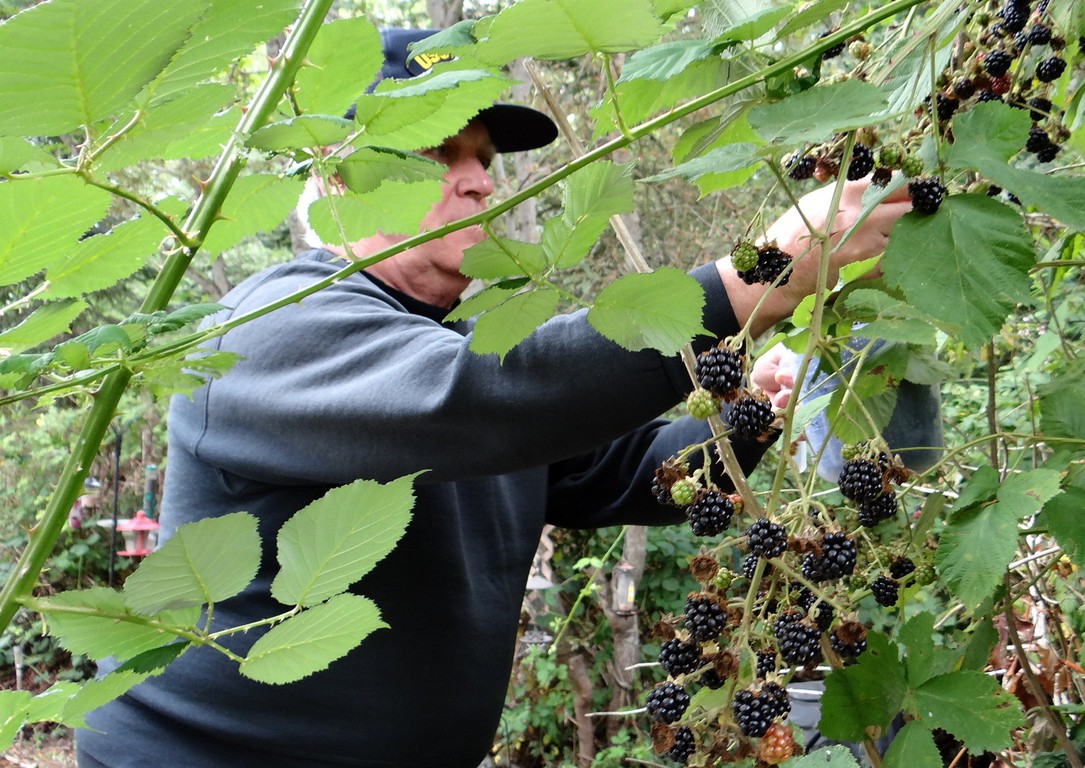
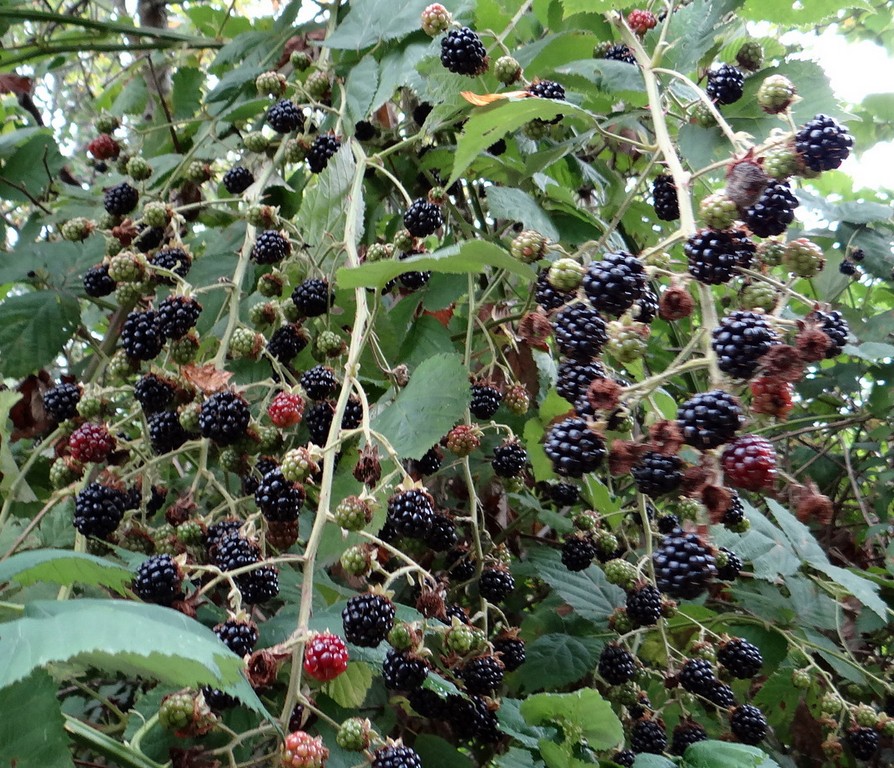
We stayed in camp yesterday, doing house chores and decided to pick more blackberries.
DSC08075 (Copy)
The berries are humongous. We try to pick only the ones that fall into your hand, no tugging. We took home enough to put some in our tiny freezer.
DSC08079 (Copy)
We took a walk around camp after dinner and the kids were loading into the hay wagon. If I was a kid, that is exactly what I'd be doing.
DSC08081 (Copy)
What I wouldn't be doing is playing with an electronic device on a hay ride. Actually, the hayride had plenty of adults on board. They took four trips to fit everyone in. The ride around the park takes about 30 minutes.
DSC08090 (Copy)
The tide was out and we could walk over to the island and sit under this stand alone tree on the point. On our visit in 2009, we got a picture of an eagle in this tree.
DSC08083 (Copy)
If I was a kid, I'd be doing just what these girls are doing. Walking the driftwood balance bar. After all that talk yesterday about age, it kind of makes you yearn for childhood days. Momentarily, anyway. I wouldn't want to relive it or go back.
DSC08092 (Copy)
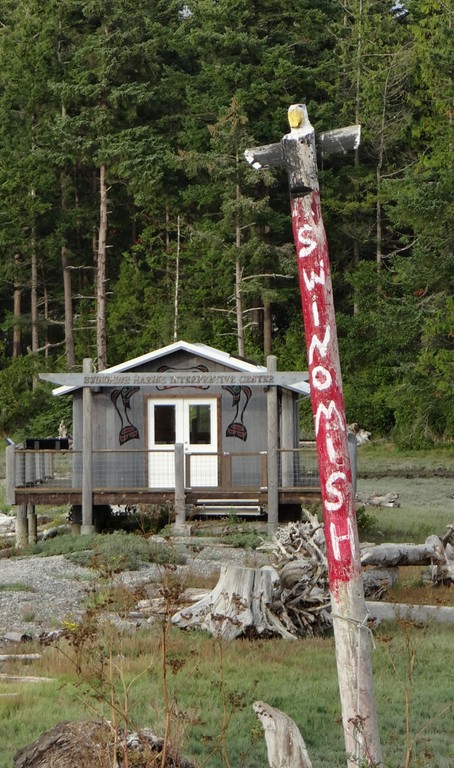
On the point, the Swinomish have a co-operative where they take a salmon catch out of the bay and then they have a big feast, part religious ceremony and a division of food. Everyone gets a share. We were here and saw the salmon catch in 2009. Really interesting.
DSC08097 (Copy)
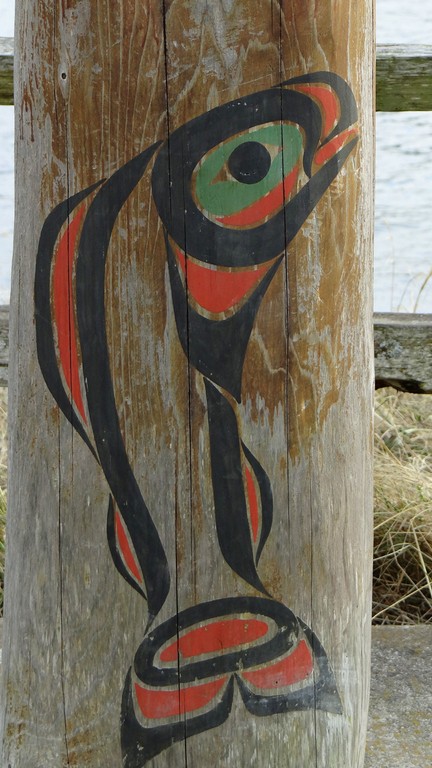
Thousand Trails leases this park from the Swinomish. And each park marker has a Swinomish painting. They are treated with great deference and respect.
DSC08103 (Copy)
At low tide, we walked to the opposite end of the park, to the adult lodge and then home. A beautiful evening after all that rain. This photo deserves a click to enlarge it. La Conner is a lovely park, quiet and woodsy.

Monday, June 17, 2013

GIRLS DAY OUT.

DSC07259 (Copy)
Sunday, the party is over, we decide to have a girls day out. before the hard work of moving begins. Virginia will leave Monday morning and we don't often find time for just we girls to have fun time together. We headed for the nail spa. Laurie, Kris and I chose to have a pedicure.
DSC07267 (Copy)
Virginia opted for a manicure.
DSC07261 (Copy)
Kris was in the habit of treating me to a pedicure when I visited her in Southern California, many years ago. I remember them as sitting on a fairly normal chair, soaking my feet in a pan of water and having my feet on the technicians knees as she sat at my feet with a towel over her clothes. This was an entirely different experience. The plush chairs, give you a massage while your feet are  softened.
DSC07269 (Copy)
The technician sands the rough skin off the bottom of Kris's feet.
DSC07274 (Copy)
After the scrubbing and softening, we each got a defoliating toes to knee massage. What a great feeling.
DSC07266 (Copy)
The nails and cuticles are given special attention. The techs laugh and talk while they work.
DSC07271 (Copy)
Kris had them really laughing as she counted from one to ten in Vietnamese. They corrected her pronunciation a couple of times.
DSC07279 (Copy)
Then the color and hardner are added.
DSC07280 (Copy)
A relaxing and fun hour later, we showed off our feet and hands, and headed out for Sushi.
DSC07281 (Copy)
There are several really good sushi restaurants in the area, but not many of them are open on Sunday. This one is Midori, on N. Green Valley Parkway, in nearby Henderson.
DSC07283 (Copy)
We had appetizers of salmon and tuna, fried tofu, and seaweed salad. All delicious. I forgot to take pictures of everything but the first plate.
DSC07282 (Copy)
We were having too much fun for me to remember the exotic names of these dishes. Just that they were all delicious as we tasted back and forth. Virginia's order with rice above.
DSC07285 (Copy)
My entre had three different types of tuna plus octopus, shrimp, caviar,  and salmon.  Extremely fresh and tasty, served on a combined bed of fine rice noodles and  sticky rice.
DSC07286 (Copy)
Kris and Laurie both tried a conventional sushi dish. All were good.
We headed for Laurie's and Virginia made the perfect statement. "We need to do this more often." I'll go for that!

Saturday, October 1, 2011

DEMOLISHING DAMS.

Earlier this year we visited a museum showing pictures of Native Americans fishing for salmon on the Columbia River. Their whole life style revolved around the salmon including  religious rituals. It fed them and the bears, the eagles, otter and numerous other species plus provided fertile ground around the river bank from the millions of dead salmon after the spawn.  Then settlers moved into the west and greed and competition took hold. They put fish wheels on the rivers.  By some historic reports, they caught so many fish, so easily,  half of each catch was wasted. They couldn’t give it away because everybody wanted to be in the fish business. 
Not until canneries opened did it become super profitable and then fishing with wheels practically decimated salmon populations by 1906. On the Columbia River, one single fish wheel near The Dalles pulled 418,000 pounds of salmon out of the river in 1906 alone, and it was just one of more than 75 fish wheels working the river that year.
Conventional wisdom  blames over fishing  for salmon decline, and when it became obvious something had to be done, no one wanted to be blamed.  The gillnet  fishing boat operators of the lower Columbia and the fish-wheel operators farther upstream, each blamed the other for its dwindling salmon catch. In the 1908 Oregon election, the two sides sponsored competing ballot measures, one banning fish wheels and the other making gillnetting illegal.  Both bills passed, but were thrown out by courts.  Isn’t that wonderful?  The courts sometimes have as much sense as our current court which insists a corporation has the same rights as an individual which allows  the huge amounts of money we now have in our election process.

It took until 1935 for fish wheels to be banned completely on the Columbia, but by this time the Grand Coulee Dam had been built without fish ladders, cutting off access to slews of spawning grounds. Salmon  never rebounded to anywhere near  historic levels.
I read this piece in the Washington Post about two weeks ago with a feeling of satisfaction and relief: 
The largest dam demolition in the nation’s history will begin Saturday when an excavator claws away at the concrete supports for Washington’s 108-foot Elwha River Dam, a ceremonial act of destruction that will signal not only the structure’s demise but the latest step in a broad shift in the way Americans are managing rivers. Faced with aging infrastructure and declining fish stocks, communities are tearing down dams across the country in key waterways that can generate more economic benefits when they are removed than when the rivers are controlled.
“What once seemed radical is now mainstream,” said  American Rivers President Bob Irvin, whose group has advocated dam removal for environmental reasons. “All of these are experiments in how nature can restore itself, and the Elwha is the biggest example of that.” The pace of removal has quickened, with 241 dams demolished between 2006 and 2010, more than a 40 percent increase over the previous five years. Many of them are in the East and Midwest, having powered everything, including textile mills and paper operations at the turn of the 20th century. A drumbeat of litigation by tribes and environmental groups has pushed federal officials to dismantle some dams that otherwise would have remained in place. Although this has led to political fights in regions where dams matter the most, such as the Pacific Northwest, it has also forged historic compromises.“The Elwha River restoration marks a new era of river restoration in which broad community support provides the bedrock for work to sustain our rivers and the communities that rely on them,” Interior Secretary Ken Salazar said in a statement. Although estimates vary on the economic value of restoring a river’s natural flow, it creates construction jobs in the short term and eventually restores depleted commercial fisheries. It also draws tourists — anglers, rafters and kayakers. Federal officials estimate that restoring the Elwha river  will generate at least 760 jobs during  the clean up which will take over two years, and 446 annual jobs in recreation and tourism once it’s finished.Demolishing dams is not popular with some State and Federal policy makers. But, considering that Dams once played an outsize role in the nation’s energy supply, providing 40 percent of U.S. electricity in 1940. Now they account for 7 to 10 percent, with only 3 percent of the nation’s dams with adequate generating capacity. And, many policy makers do not consider the cost of the electricity when the dam upkeep is taken into the equation. We recently visited the Bonneville dam, two dams, actually because they are spread from a man made river Island to both banks of the Columbia. The dam impedes boat and barge transportation. In fact, the locks, are no longer used because there isn’t enough boat transportation to keep them running. Glen Canyon Dam, was built in 1966. It supplies recreation on Lake Powell, but the dam destroyed some of the most beautiful scenery on the Colorado River. Senator Goldwater pushed for the project and later stated if he had seen the scenery before he voted he wouldn’t have voted for it. It doesn’t supply significant electricity, but it does provide recreation. The problem is it keeps natural silt from the river and the native plants and fish are suffering.  It is costing millions  to counteract the affects of the dam on the Grand Canyon.
Even though laws mandate mitigation for lost habitat, we still have overgrazed, over fished, flood prone, destroyed wetlands, because of dams. Unfortunately, not much is being done. Costs to maintain the dams are often not considered in the proposals to build dams because riparian rights are not recognized by our political system.
My rant for the week.

Wednesday, May 25, 2011

TIME IN VANCOUVER


Yesterday, I spent most of the day with Damiann Kegney, a friend of my son’s. Damiann showed me  condos for sale, since she is also a real estate agent for Century 21. I like Washington and Oregon, Portland in particular. Vancouver is close to Portland’s good restaurants and theatre, art, etc.  Our  travel adventure, but also a bit of business thrown in.  Wouldn’t it be nice to spend summers in the Northwest where its cool and Winter in Murphys?  We had a great lunch and lots of laughter, in any case.
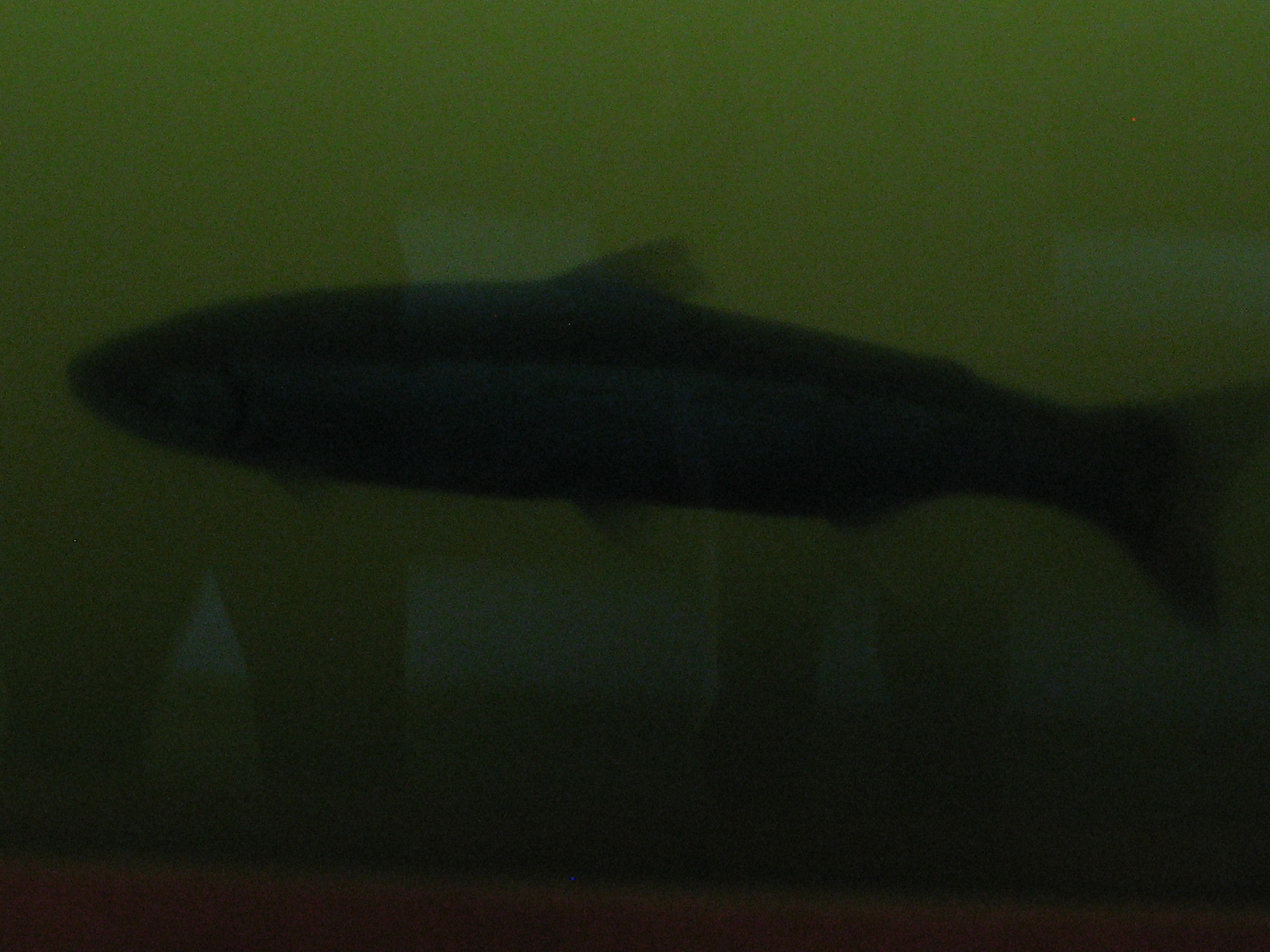
Dipping back once again, on our way to Vancouver, we stopped at the Washington side of the Bonneville dam and watched their fish  count through  murkey windows

Interesting statistics in their educational program about salmon make me appreciate every bite of salmon I eat. Salmon decline was first noticed officially in 1983.  Fish and Game conservatively estimate 12 million salmon spawned up this River system 200 years ago. The three rivers that flow to sea in this area are  dammed in 15 places. Current salmon spawn is less than one million. It wasn’t only the dams. Cattle trample eggs, fish habitat is altered, sewage, chemical fertilizers, mechanical fishing equipment, stream side habitat erosion causes silt.  All contribute to fish decline. It costs millions to try to save the salmon.
On a cheerier note, not at all related to salmon, is the chess collection I saw at Maryhill. I have a link to 30 pictures if you’d like to look at them.  https://picasaweb.google.com/106530979158681190260/MHCHESS#

Wednesday, October 6, 2010

ITS A CHEMICAL WORLD

Oh, what a tangled web we weave. The Environmental Protection Agency people,  who attempt to sort out all the nasty chemicals and approve or disapprove of them, weigh stuff like:
Should household cleaning products that we use on our clothing, counter tops, cars, driveways, have to reveal what chemicals are in the products we use?  No.
However, New York is the first state to require manufacturers to reveal them. Go New York!  It would be nice to have a clean and healthy home without risk from known problems for some people  like asthma and reproductive defects.

Or how about this one, should EPA allow researchers to dose people with poisonous pesticides and study the effects?  Can they pay people to drink, eat and enter vaporous chambers and see what happens? Apparently, yes. Yes? They even tested on pregnant women and children. Well, they've been sued and have to stop that awful practice.

California's San Joaquin Valley is the most polluted air basin in the United States. My son lives there. After multiple suits against the EPA, they've been forced to enforce the Clean Air Act requirements just this past June. 1,000 people each year die from air-pollution maladies. 

Well, the EPA did ban the pesticide chlorpyrifos from being used in homes and gardens. It's a World War II era chemical for warfare. It causes blurred vision, headaches, chest tightness, coughing, wheezing, nausea, vomiting, low birth weights. Studies have not been exhaustive.  But, 8 to 10 million pounds of the nerve gas pesticide is still used each year by farms across the country, infiltrating food and water supplies, endangering salmon along with diazinon,and malathion. I guess it depends on who we think should be endangered, home owners no, but farm workers yes. And, just those who inadvertently ingest the stuff in their food not knowing what they are eating. Salmon is supposed to be a healthy food choice.  I would like wild salmon to rebound in our rivers.

And the EPA is thinking about banning a highly toxic chemical used on pear orchards, potato, tomato and lettuce fields called Endosulfan because the stuff travels long distances, like the Arctic, Sierra Nevada lakes, Mount Everest. They find it in the air around schools and they know it causes reproductive deformities and it increases autism in exposed fetuses. That is, now that they are being sued they are thinking about banning it.

Truth be told, there are hundreds of thousands of chemicals awash on our food and products that have never been tested. Its even worse in other countries. The non profit organization, Earthjustice, is attempting to hold the  EPA to its standards of protection. Chemical deduction is kind of like reading a horror story. When I'm on the road, I don't worry about these things as much. But, they don't go away. A new nasty chemical pops up out of some manufacturing lab every year. Maybe every week.  And people wonder why breast cancer, birth defects, asthma and autism are on the rise.

I may be old fashioned but I think I should be able to breathe air not fouled by someone's chemicals. Isn't there an industrial code that says Do No Harm?  Apparently not. And isn't the EPA supposed to protect us, the consumers? Apparently not.

It may benefit you to know that Earthjustice, the non-profit group, is located at 426 Seventeenth St., Sixth Floor, Oakland, CA. 94612.

Saturday, August 15, 2009

WATERMELON SNOW

Our rainy day drive to the North Cascades National Park brought us to the visitors center at Newhalem.
Repeating myself, I'm in awe of the wonderful parks in the State of Washington, probably because I'm from California where our underfunded STATE parks are beginning to look bruised and abused with volunteer docents and no money for materials. Of course, this is a National Park and the interpretive displays are stellar. We decided not to take the river loop hike given the unpredictable weather and no rain gear. I cheated and took pictures of some of the displays instead. I'd heard of pink snow while visiting Alaska, but never watermelon snow. It is a phenomena of snow algae that attracts a worm. The above photo shows a bird feeding on the worms. Some worms and bugs are blown up hill out of their own element and supply food for birds. Isn't science wonderful?
This is a copy of a photo of a deer drinking in the river. I wish I could credit the original photographer, but, in any case, it comes from the displays.
This is a mock up of perpendicular glaciers on the steeps of the Cascades showing the hoof prints of a mountain goat.
Closeup of a gnarled tree, stunted by the wind and thin soil of high elevations. The photo exhibits were wonderful, but the highlight of the center was a 25 minute film about the Cascades and its inhabitants. It emphasized the closeness of the native peoples to the land; their life in harmony with nature; the beauty and grandeur of the mountains and the animals, birds and plants that call it home.
The Cascades are so steep and remote it is one place with less footprint by modern man than others. In fact, the grizzly and wolves are being re-introduced to the Cascades with some notable success. Salmon were naturally blocked on the upper Skagit and the dams here did not affect them as much as in other rivers.
During Chief Seattle's time, life revolved around the Eagle, Grizzly, Wolves, Owls and Salmon. The native people respected their animals, the storms, the seasons, the plants, in such a way they are indelibly stamped with the spirt of them for all time.

Wednesday, July 1, 2009

SEA-TAC AIRPORT, A RIVER RUNS THROUGH IT


Wenatchee, Queets, Ilwaco,Hoquiam, Willapa, Kanogan, Omak, Quinault, Kitsap,Skamania, Skagit, Wahkiakum,Wicomico, Chico
Tulalip, Quinault, Snohomish, Nisqually, Clatsop, Chinook, Puyallup, Clallam, Kitsap, Klickitat, Okanogan, Skagit, Skamaimia, Spokane, Yakima, Walla Walla, Wahkiakum, Atanum, Algona.

Like poetry, the Indian names and places and history enrich Washington State. The state is also known for its rivers, the thick evergreens, ferns, wild rhodedendrons, fox glove, moss, cool summers and its beauty. Lewis and Clark estimated the Indian's living on the Columbia River had 10,000 pounds of dried salmon in their stocks. In places the salmon were running the river so thickly it appeared you could walk across the river on their backs.
The SEA-TAC Airport has a river in tile running through it, brimming with bronze fishes. One even carries his airport bag.