Showing posts with label travels. Show all posts

Monday, September 12, 2011

CHINA BUIILDERS


While blogging my China trip, not only did I relive the trip and revisit old memories, I heard from several people about fascinating places in China. Xandre Verkes blog answers the question I had about how can  a path be built on a mountain, seemingly without any super structure?  The path we took to Tiger Leaping Gorge was dynamited out of solid rock and spanned  “empty” space in two spots.  Xandre sent me a  message and I looked up his blog.  Click this link to stunning  photos of the daring Chinese workers who build flat up against a 90 degree mountain.  I hope you enjoy it as much as I did:

http://xandreverkes.wordpress.com/2011/08/24/builders-in-the-sky/

Tuesday, September 6, 2011

VISIT TO A CHINESE CEMETERY

We leave Kunming on the bus headed for Guilin. On the way we stop at a poor Suni Yi village that  still functions much like it has for hundreds of years. It has been insulated from tourists until recently when the village and its cemetery were designated a UNESCO site.
Most of the houses are ramshackle. Some have tin roofs, some have straw. Some keep pigs next to their houses.

Raw sewage runs into a ditch down the street; garbage is strewn on the ground everywhere.  You understand very quickly what life was like, and still is,  for some ethnic minorities in China.

The Suni Yi believe spider webs are good luck and they don’t remove them from doorways, alleys or houses.

The women work together to remove corn from the cobs. The crop is shared among the families. It appears to be the major crop in this area. Front right is the village adobe mixer.

They have many uses for the fibrous husks and don’t throw them out.

Clearly visible on this building, the many layers of time. On the right, is a slap dash repair. The center is from an earlier time. Above and on the left are different materials.

Here, too, you can see the different style of adobe bricks and stucco that went into repairs over the years.

Like all Chinese, they adore their children. During the enforced one child per family policy ethnic minority people are allowed two children per family. The Chinese government enforces this with ostracism. An unregistered child is shunned by neighbors; he cannot get work as an adult, no one is allowed to hire him.  His parents also suffer; they lose jobs and get punished in many, small ways. Farm people didn’t exactly have “jobs” like city people before collective farming. And now, collective farming  has been discontinued.   At one time they gave out free condoms and demonstrated them by showing how to use them by slipping  them on their fingers. So the farmers put the condoms on fence posts, tree branches and anything but their privates thinking they would work.

The people here are not used to big noses parading through their village and they are a bit shy. Vicki asked us not to give them money and turn them into beggars. But, you can see the dollar bill in this little boys hand. One of our group “forgot”.  It won’t be long before tourism will negatively and positively affect their  lives.

We barely give the above ground  cemetery a passing glance. It is unkempt and overgrown with weeds.

From past experience,  UNESCO sites usually have some great beauty, but this site was chosen for its historical significance and rarity. Above ground cemeteries have not been allowed in China for several centuries. By law,  bodies must be cremated.

As we leave the village, this woman is headed for the fields with her child on her back. You can tell the dog has had recent puppies and we wonder…

Happy children play on the street. They don’t know they are poor when they get enough to eat, have loving parents, and adequate shelter.

Thursday, August 18, 2011

THE HUTONGS


During the cultural revolution, the city was cleared of many of its old quarters and high rises were built as the “standard” housing. Some old families were allowed to remain in the center of Beijing called the Hutongs. Old, dilapidated one-family residences have been preserved. They are part of the narrow warrens, the crooked uneven, unplanned streets where at one time shacks were built on top of shacks and people rarely wandered more than a few blocks from their home. All business was conducted on the streets where neighbors traded goods with neighbors.  Some streets have been widened enough for a small car. At one time only bicycles and rickshaws plied the rough streets of the  Hutongs.

We disembark from our rickshaw and push our way through the throngs to a family home where our guide has arranged a home visit.
Just about every family has a  bike, still the main mode of transportation.

The area is dark and moving from one place to the other is from memory. No numbers or addresses are seen on these buildings.

We reach our destination and we crowd into two different houses.  They are very basic dwellings with a small shared courtyard to grow and gather herbs and some vegetables or flowers in pots. This is middle-class housing, usually one room. A few families have more spacious places with three rooms.  They are occupied by working middle class people, not at all what Chinese think of as poor, but to us they seem poor.

These neighborhoods are friendly, and safe. They are a very desired commodity, individual family housing, rare in modern China.  The  Hutong  families have modern amenities like a TV, a refrigerator and a place to cook on a coal or wood stove that is also used for heat. No indoor toilets.  The tour company pays them to open their homes to tours. Our hostess’s furniture was matched.  Our host family was very proud of their special home.

This is one of the bigger houses with three rooms.  Pictures  of family members share space with “decorator” pictures as well, showing their affluence.  The floor  at one time was well trodden dirt with bamboo mats.  The floor is now cement tiles.


The third room, a small bedroom with a fancy spread.

Here is a place where buildings have been removed to allow cars to enter.

Our rickshaw driver is “Joe.”  He knew some English and told us he has two kids. He was very chatty. He lives in the country and spends only one month per year with his family. Country people are allowed two children per couple. Joe works in the city and bunks in with other drivers and sends a required amount of his earnings home. He scowled and didn’t like his $1 tip. (Our guide warned us not to pay more.)

Friday, August 12, 2011

THE TEMPLE OF HEAVEN


These first two days in Mt.Vernon, I’ve swam, walked the grounds, rested and re-oriented myself to life in a motor home. Today, we will Ferry to Orcas Island and explore. In the meantime, I’m enjoying my pictures from China that I rescued from my old Mac.

As we approach the Temple of Heaven, we see street scenes like this, mobs of bicycles. From our bus we notice tired commuters trying to catch up on their sleep. The Chinese people work very hard under difficult conditions.

Entrance to the grounds is through several gates; an openness the Chinese people  treasure after the ring of three  feudal system walls, the Mongolians erected, were torn down by Chairman Mau. He replaced them by three ring roads, in all the cities that had the walls.

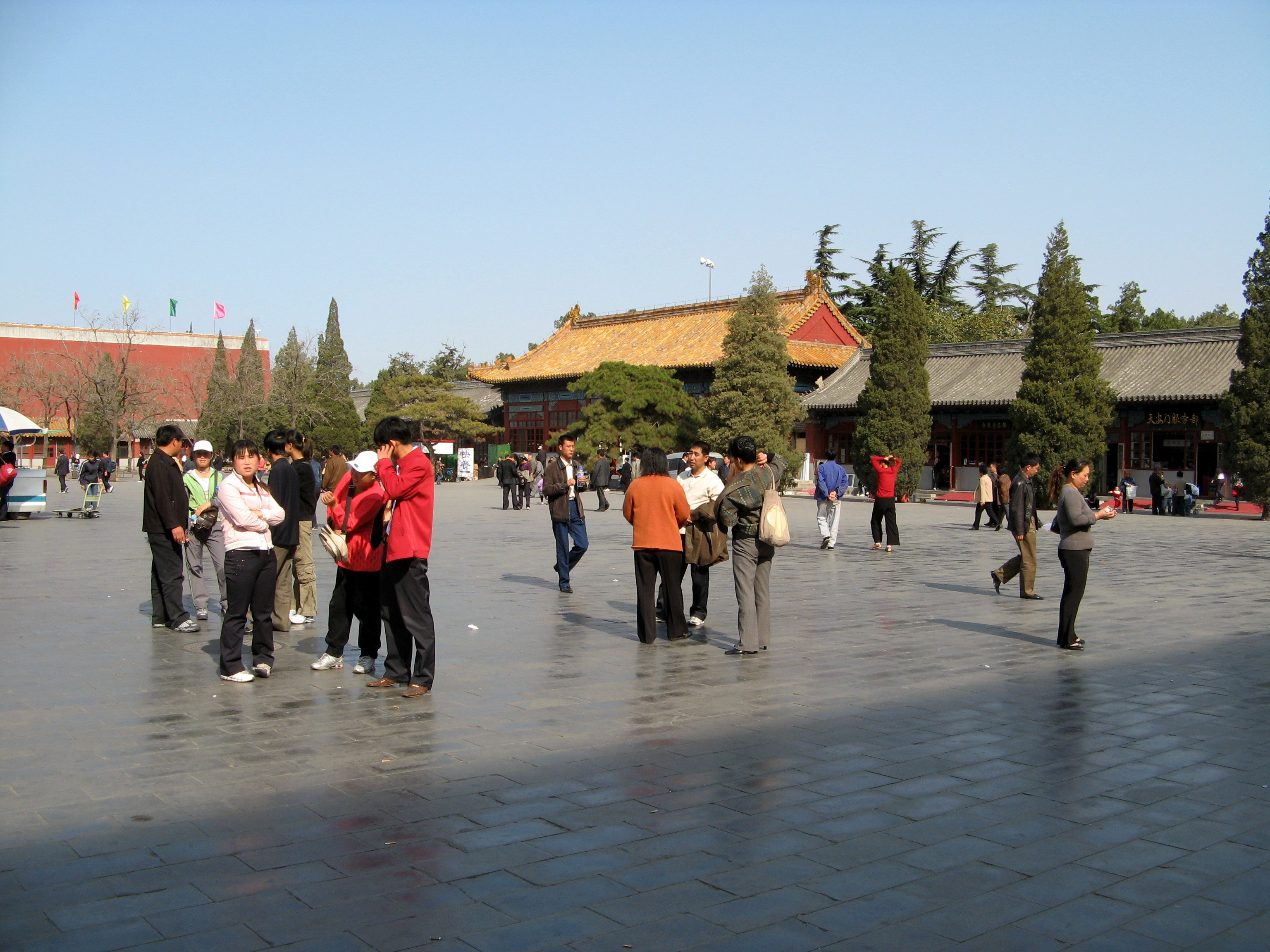
The grounds surrounding the temple is a huge complex with squares, grassy park areas and woods. The first square we come to is filled with ballroom dancers. This is early morning, and nearly all Chinese exercise in the morning, together, in public areas like this. Our guide invites us to join the dancers if we like. One man asked me to dance and I did. Like us, a senior with gray hair, but  strong and muscular. You rarely see a fat person in China.

Michal joined the single dancers on the next square over.

Part of the joy of visiting the Temple Of Heaven was strolling the beautiful grounds and watching the people. Here exercisers perform a  swirling banner dance with graceful ballet like movements.

At this square the people were clapping their hands and changing positions in a very rhythmic  fast-paced way. We enjoyed several groups of  typical tai chai movements.  One group did tai chai while holding balls and paddles. Amazing. Here houses are small so big body movements are only possible  in the parks. They don’t appear to have gyms as we know them.

And, finally, the temple itself. Everything here is so huge, it is difficult to get a picture up close, at least with my camera. This temple is a UNESCO (World Heritage) site. At one time, animal sacrifices were done here and the meat cooked and eaten in the “great” kitchen. The temple is the tallest round building in the world.

Carved column and rail as on the temple stairs.

In the vast interior of the temple, your flash is almost useless. Instead, we were astounded at the beauty of the building; the priceless labors from ancient times that went into building and designing it.  Some things are enjoyable but do not translate to a camera such as mine.
The outer facade of the temple. Not difficult to understand why it is a world-class heritage site. The Temple of Heaven was the province of the Emperor, his family, consorts and servants. The public did not worship here.

And the long hall is really, really long.

A roof corner decoration detail.

We repaired to a Chinese restaurant for lunch.

No matter where you are, the appeal of little children is the same.

But only in China will you find a roof  like this.

Thursday, August 11, 2011

GOING BACK TO CHINA.


My tendency has been to forge through life, swiftly, do everything, don’t allow a stone unturned.  Say yes!  Let’s go, let’s do it.  Influenced by my partner, Jim, my new philosophy is stop and smell the flowers.  While home in Murphys these past weeks, an unfinished travel journal of my trip to China in 2006, nudged me. Jim says this summer promises to be slower paced,so I think I’ll go back to China.

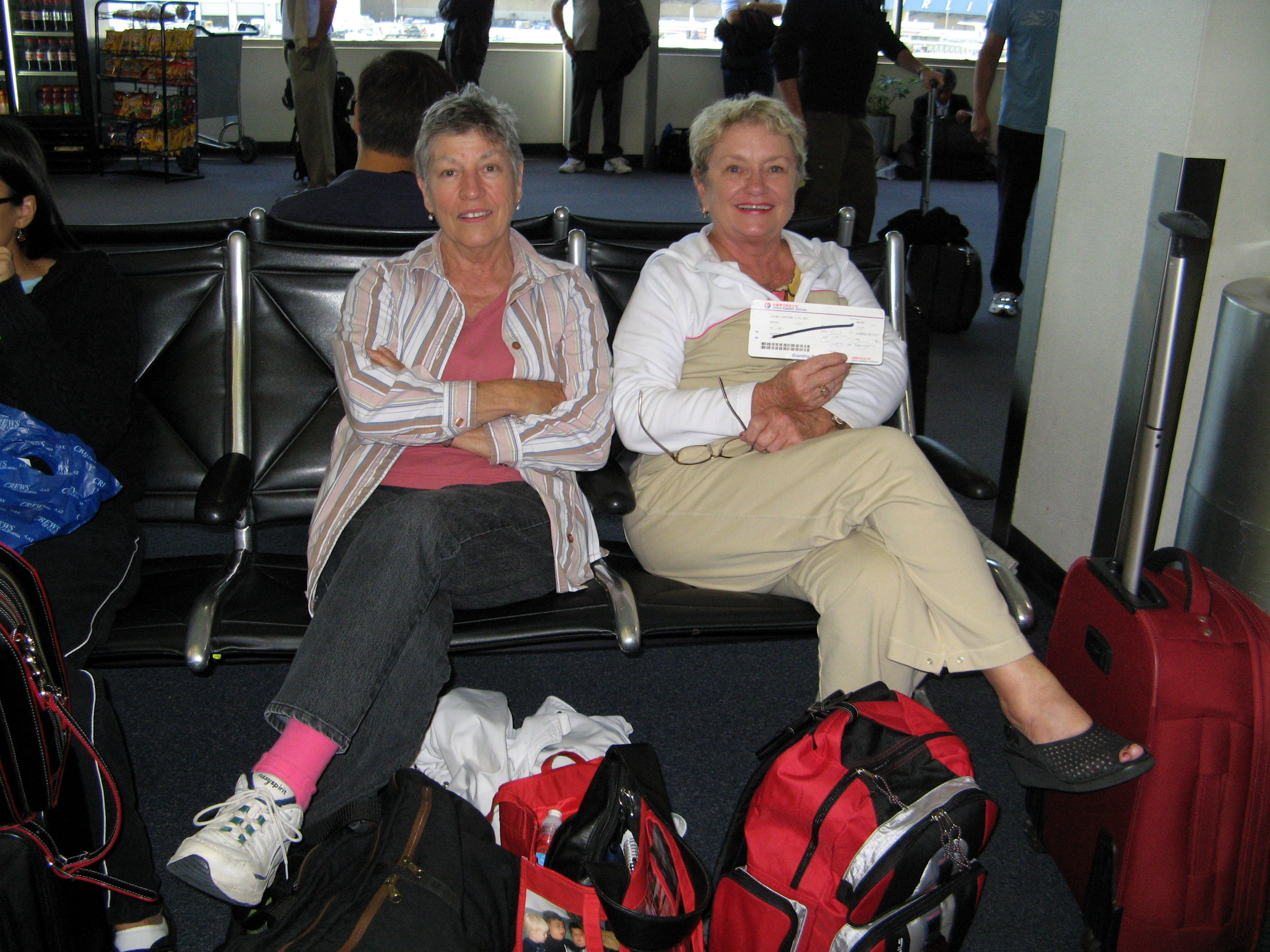
I traveled with my friend, Michal Houston. After a long flight, we landed in Shanghai tired and weary only to be  shuffled to another plane that took us to Beijing. Our assigned room had one bed instead of two as requested. Her name spelling, Michal translated as Michael. Exhausted, we tumbled into bed and straightened it out the next day.

Beijing was in the middle of changing from a Socialist/Market Economy to a Capitalist Economy back in 2006. Beijing is a modern city of  only thirteen million people. I say only seriously because Chinese Cities can be,  and are, much larger than this home to International Government, political,  and financial centers of China. You find modern condos and 200-year-old homes side by side. Sixty per cent of the people in Beijing work for the government, kind of like Washington D.C.

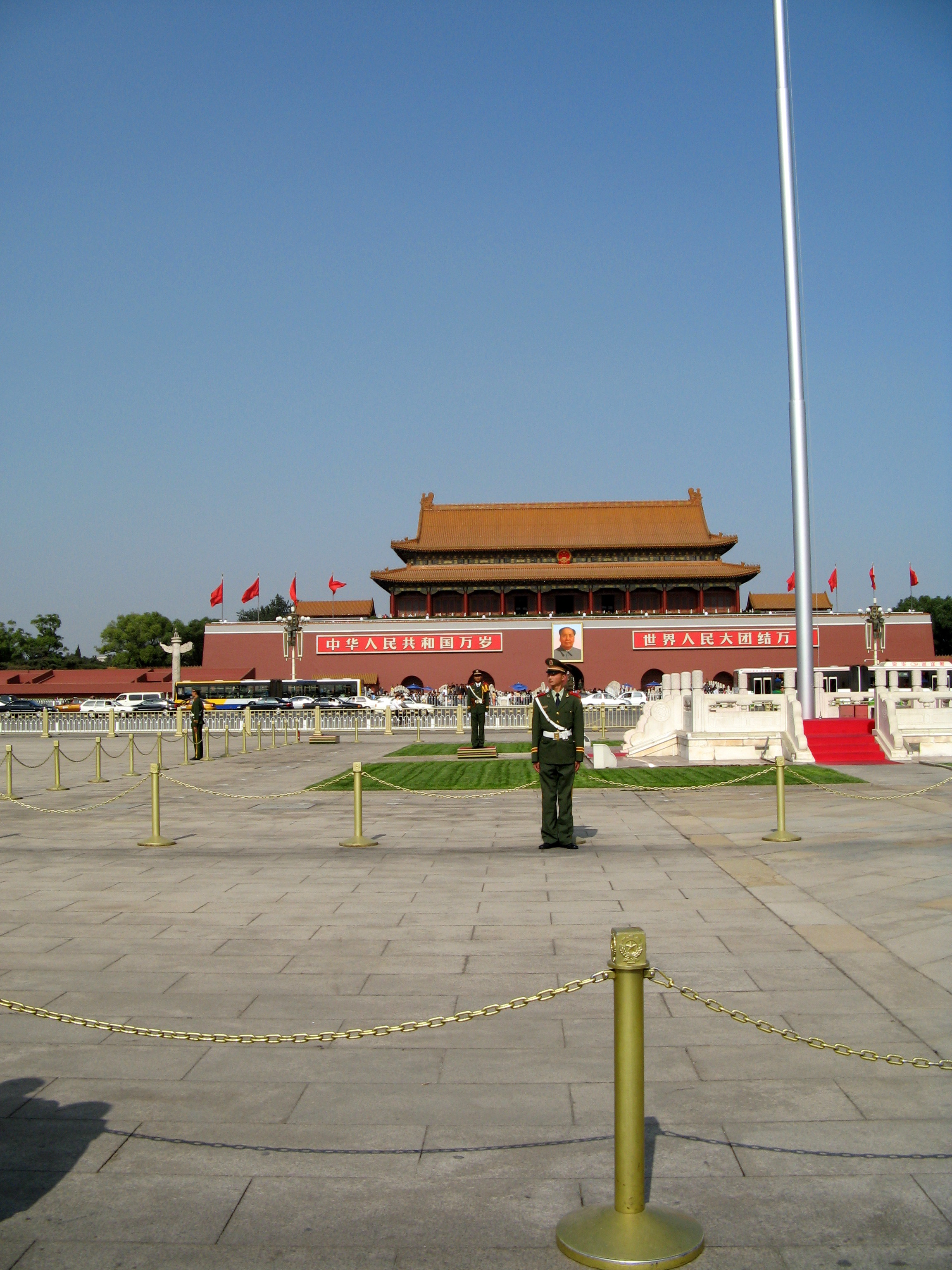
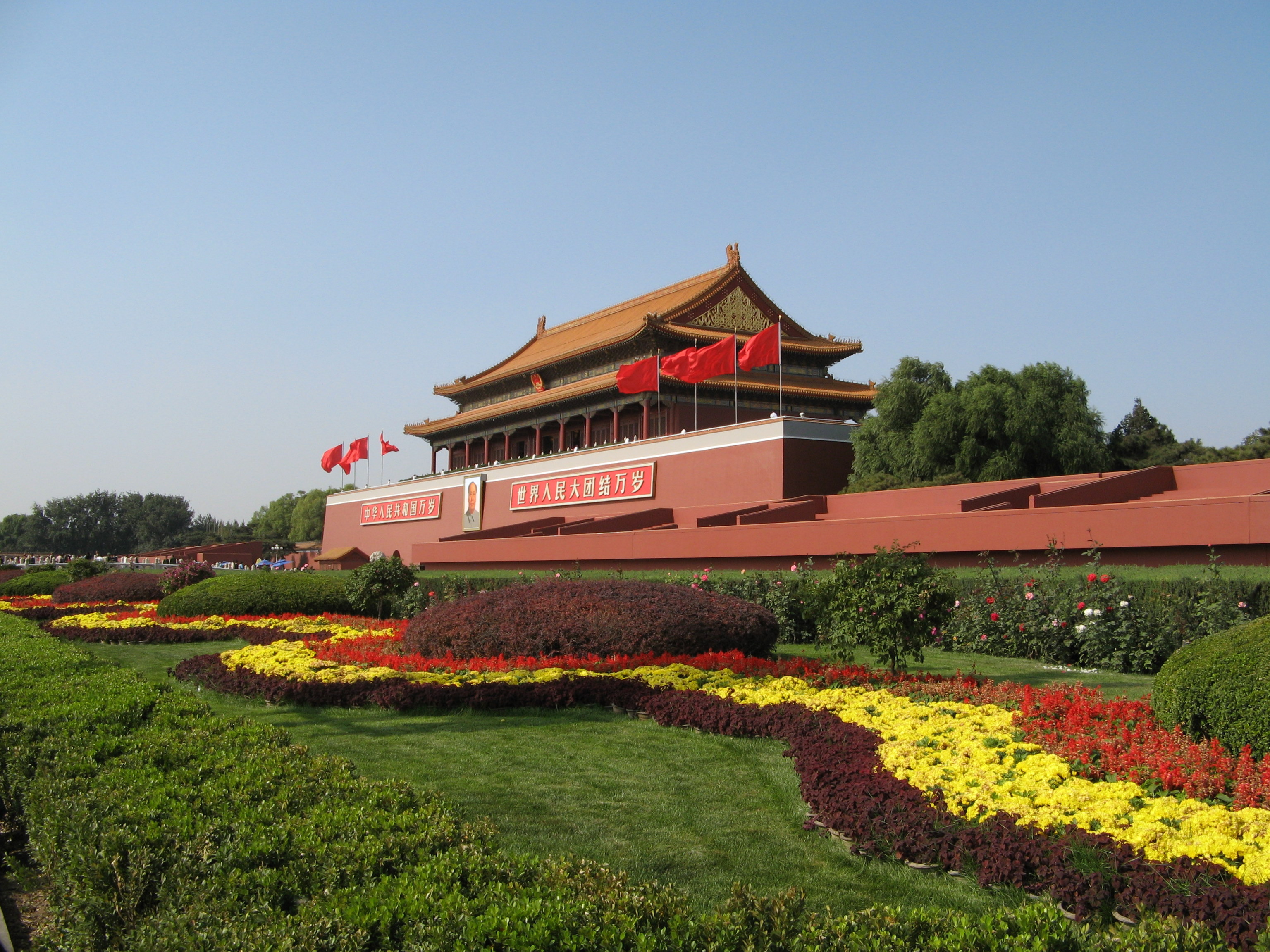
Tiananmen Square is so huge it dwarfs any mall we have in the U.S. Soldiers on guard are always visible. And, surprising to us, we saw “modern” Chinese tourists; older people visiting their own iconic places and young people with cell phones in their ears.  This is the infamous spot where protests during National day 1989 led to the deaths of students and gave China a black eye over their aggressive policies. The poster of  Chairman Mau in the background looks small. In reality it stands  about twenty-five feet high. We have a group photo taken here and get our first taste of the new capitalism with vendors selling post cards and junky trinkets. Some of them starve on the new system and intrude, shove things under your nose, begging you to buy their trinkets and post cards.


One side of the square is this lovely government building and gardens, always statues and memorials from every preceding dynasty that governed China except maybe the Mongolians. Chairman Mau tore down the old city walls and opened things up with a ring road inhabited more and more by modern cars but  still madly outnumbered by eight million bicycles on the roads, the most common form of transportation in Beijing.

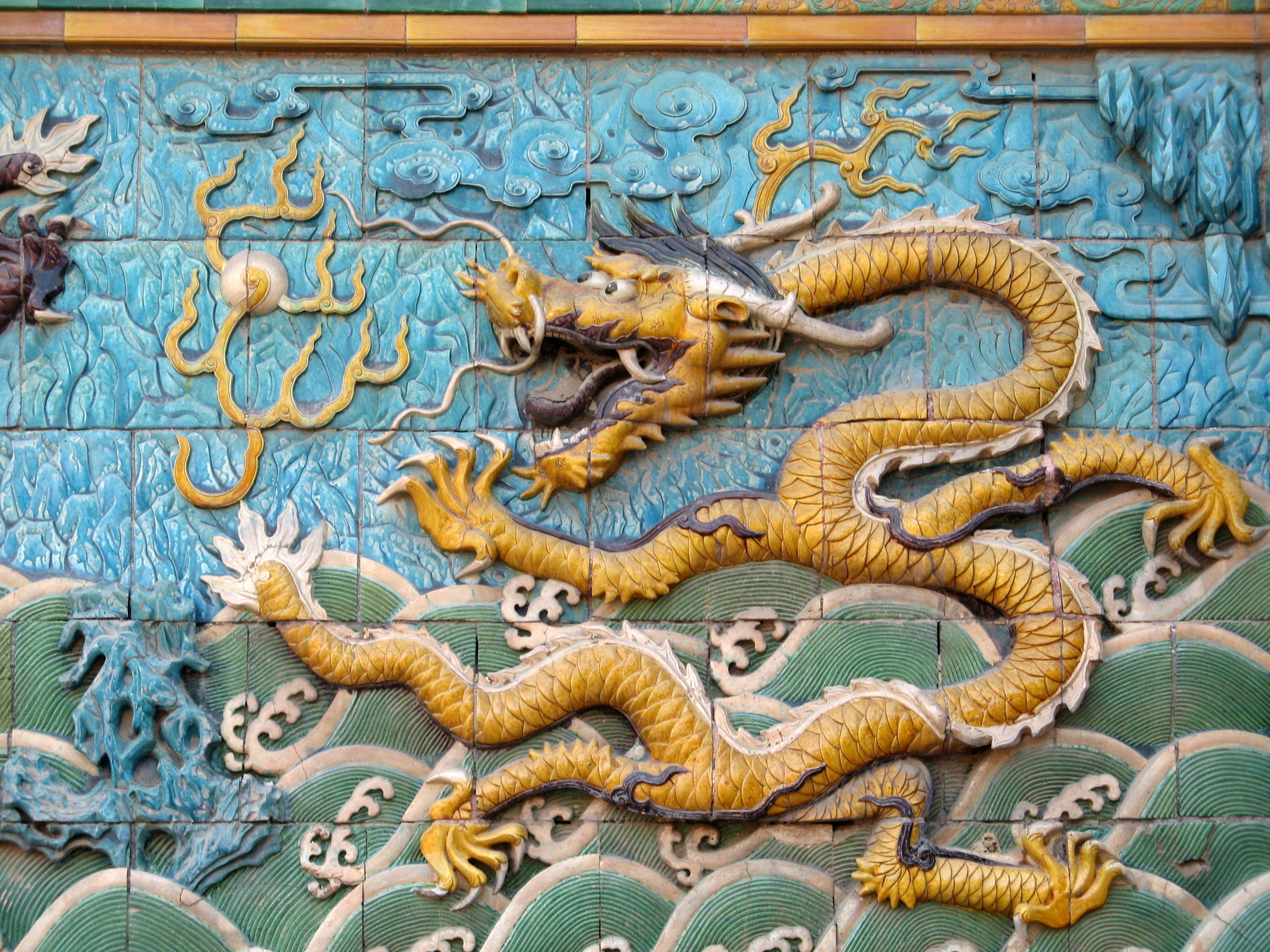
China has a love affair with dragons.  Their most favored and positive sign is everywhere in China.  As it turned out, I was born the year of the dragon.

We move on the Forbidden City where we see soldiers congregated in the square and their boots lined up outside of their barracks which were built in 1406 and finished in 1420. The Palace has 9,999 1/2 rooms. Nine is the supreme number. So, there are nine gates, each gate is nine by nine and has nine knobs. You can extrapolate that process through out the Imperial Grounds and Palace. It has served Eleven Emperors.

The “building” is actually one of the nine gates we pass through to reach the palace. The emperor has a resting place inside the gate where he emerged to address his people. He stood on a stair high above them.  This complex is a series of high gates, (stairs up stairs down)  and open space between them.

The walls here are made from 15 thicknesses of bricks to avoid tunneling into the Imperial Grounds.  There are 18 water pots around the grounds one for each of the 18 provinces. (Notice the multiple of nine.)

One side of the palace wall is made up of four panels of huge tiled dragons, approximately twenty feet tall.  Among the palace antiquities, marvelous gold, huge jade carvings, a gold Buddha, marvelous crystal, precious jewelry and marvelous treasures. I’m unsure why no pictures inside the palace. We may not have been allowed flash photography inside.  At one place we passed the shrine (inside) devoted to one of the Emperor’s favorite concubine. She was forced to jump into a well by the eunuchs of the jealous empress. Inside the court-yard we had a Starbucks coffee and cookies. The Starbucks was protested by Chinese activists and removed after our visit.

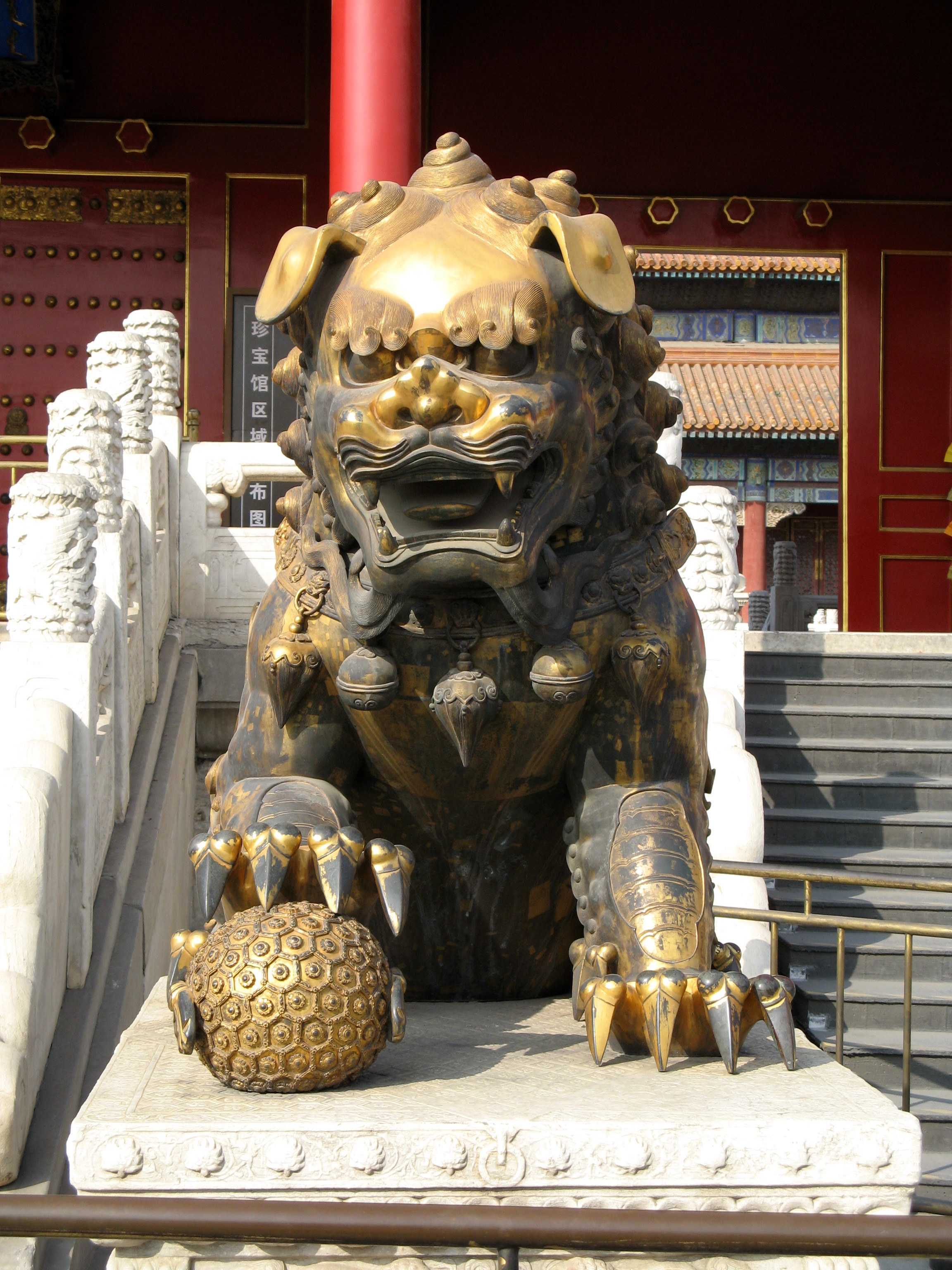
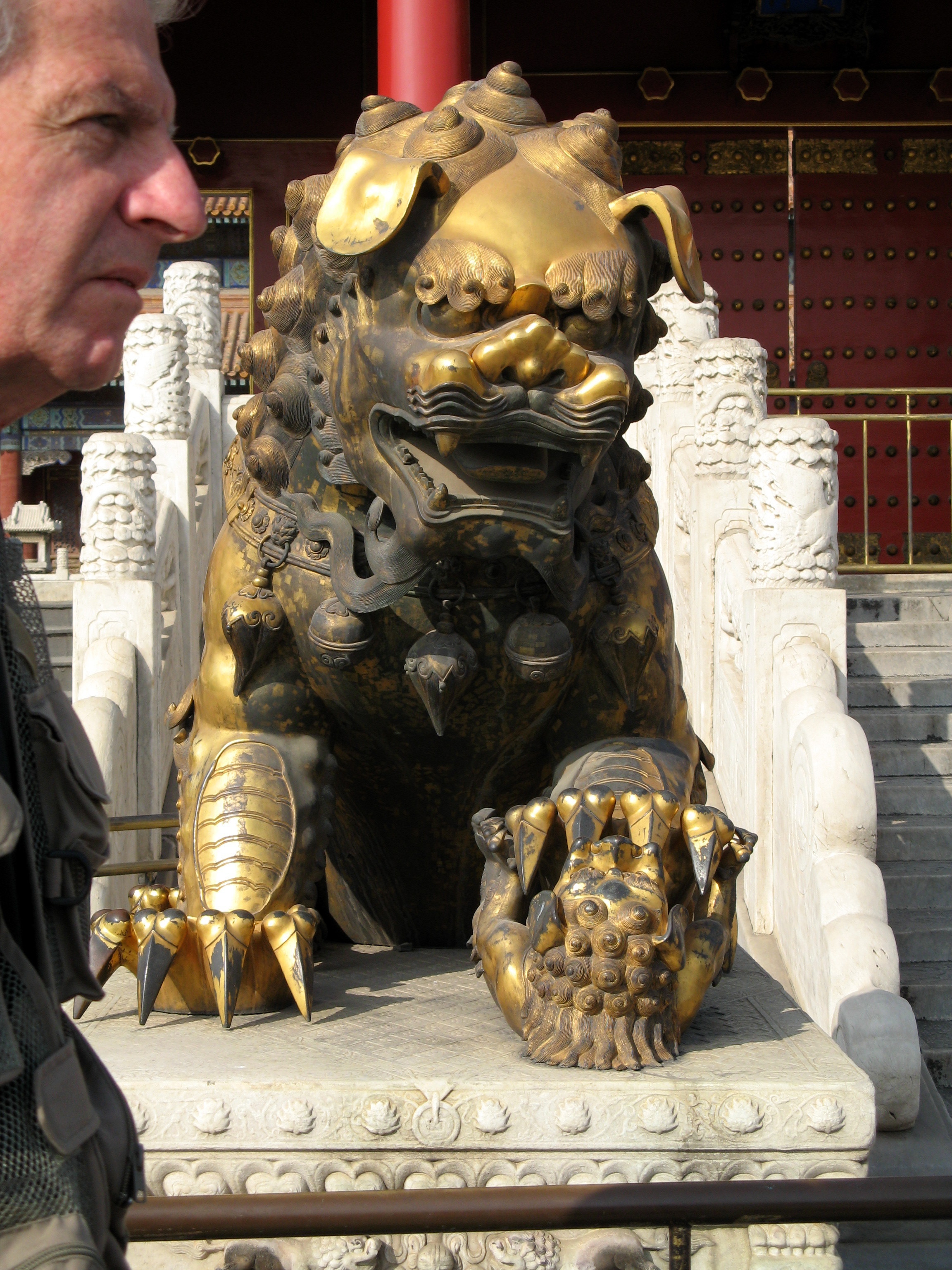
These Chinese lions, one with his left foot on the ball, the other with his right foot on the ball have some significance in their stance which I’ve since forgotten. What I do remember is there are no lions native to China.  Chinese illustrators drew what a lion looked like from verbal descriptions of those brave explorers from “olden” times. Thus lions have fierceness, clawed feet, a mane and a ferocious face that much resembles a dog.

We went on to visit a couple of grouchy, lethargic Panda bears at a very seedy looking facility. We do not wonder why there are only 1,000 of them left in captivity and the wild. The Chinese were not very conscious of environmental concerns in 2006.  We  finished our day with a famous Peking duck dinner. (More tomorrow.)

Friday, August 5, 2011

FALLEN ROBOT


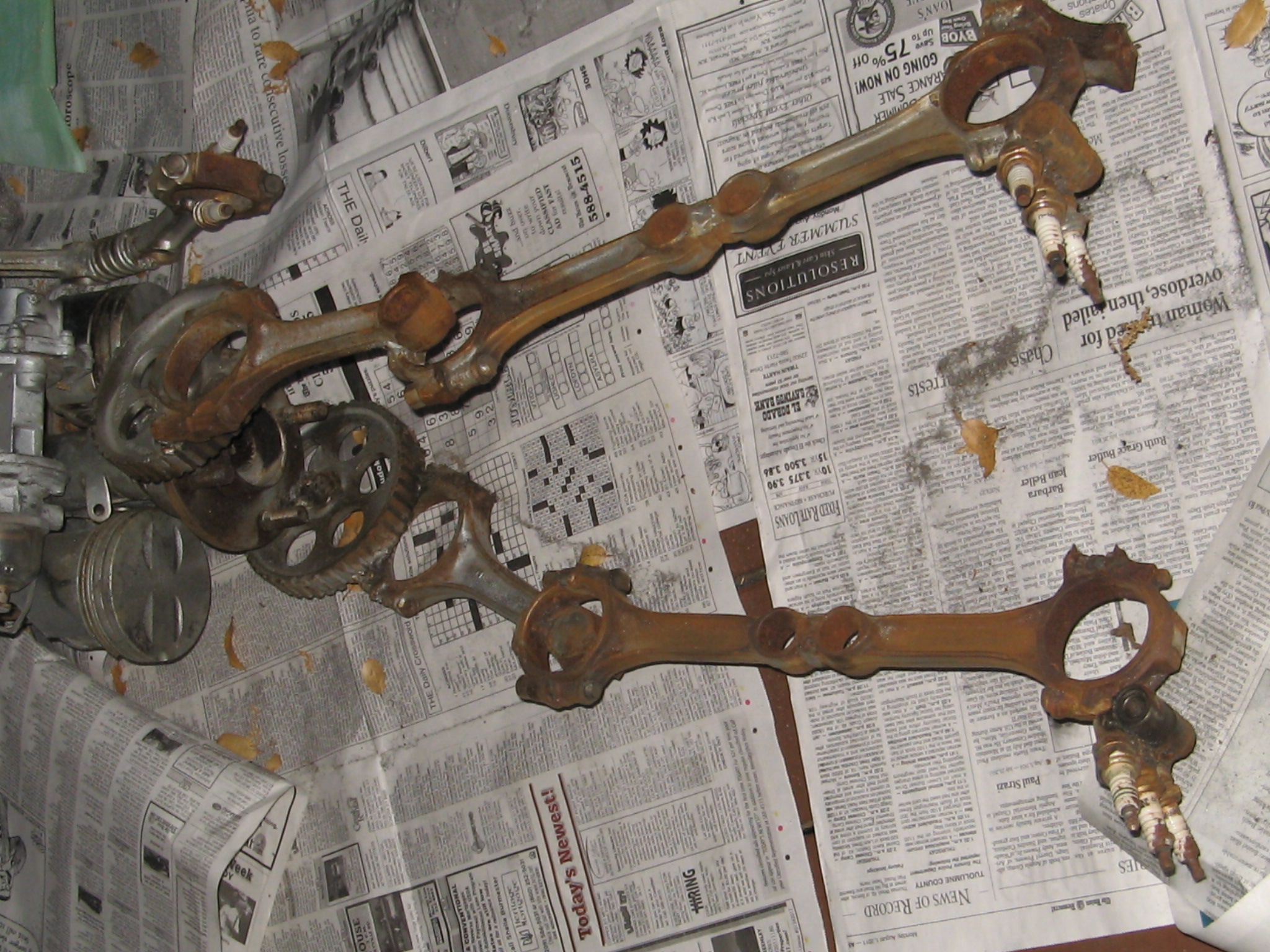
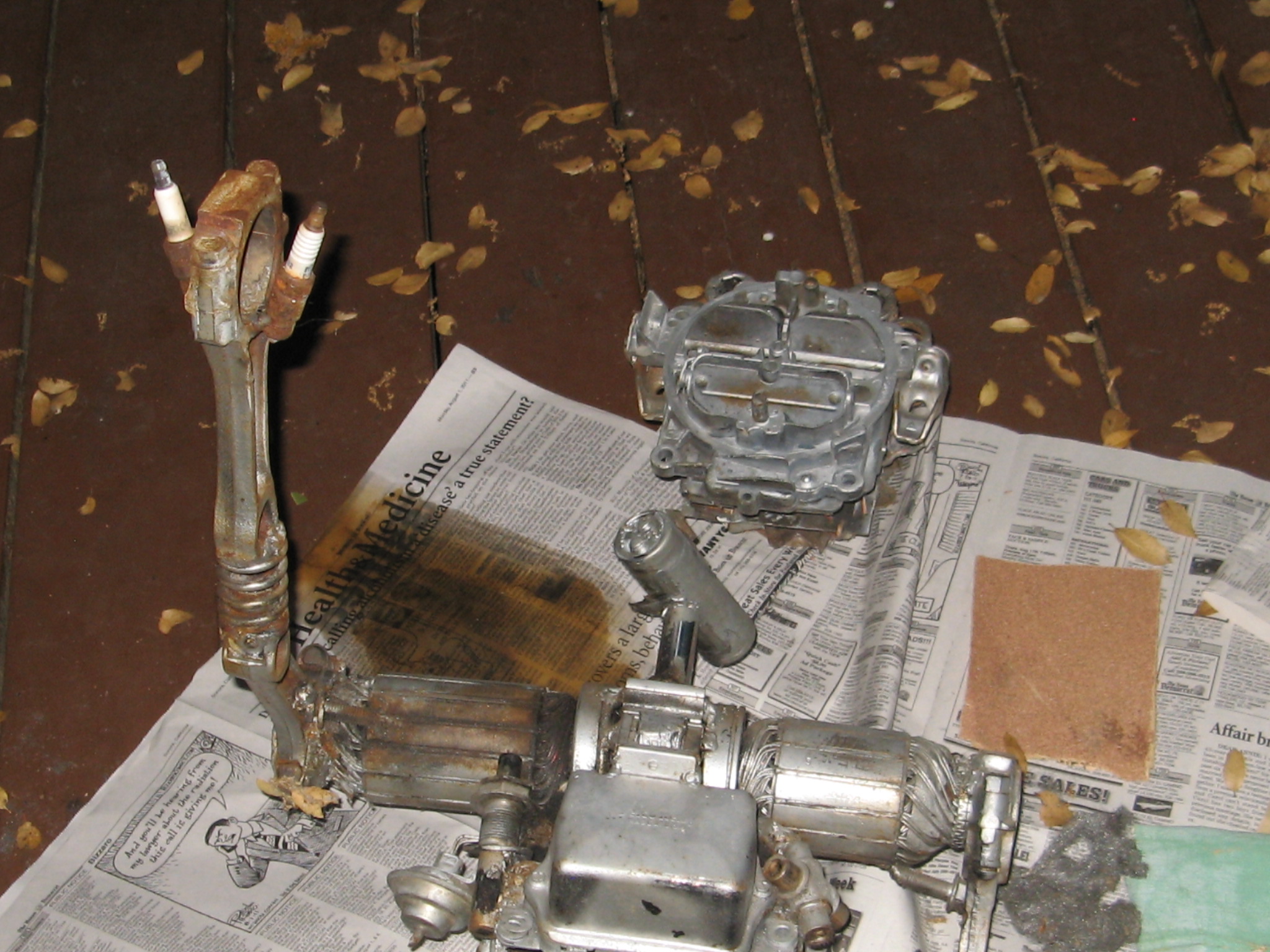
Guys like my robot. Their mechanical curiosity immediately pops up at first site of it, and they check out his movable arms and legs, and head; his spark plug toes; radio tube eyes. They act like teenagers looking under the hood of their first car. (It helps to know he is made of car parts.)  One piece comes from a 1947 Plymouth, the artist told me.

Rust has caught up with my robot and I tried to move him inside, out of the weather until I could attend to the problem. Unfortunately, the weld on his foot gave way and down he came, his head came undone and rolled to the side. Oh, no!  Some rusty looking oil spilled out of his “crank case” and there he lay. Now, where is one of those handy car guys when you need him?  No putting off the job. I got out the steel wool and sandpaper, bought some aluminum paint and went to work. Not a job I wanted to do just now, but the robot needs this  fix.

Several hours yesterday morning, I managed to get two legs finished on one side only. Hmm! This is going to be a long process I can see. I’m enthused. He looks much better. Now, to find a handy welder kind of guy to put him back together before I leave.
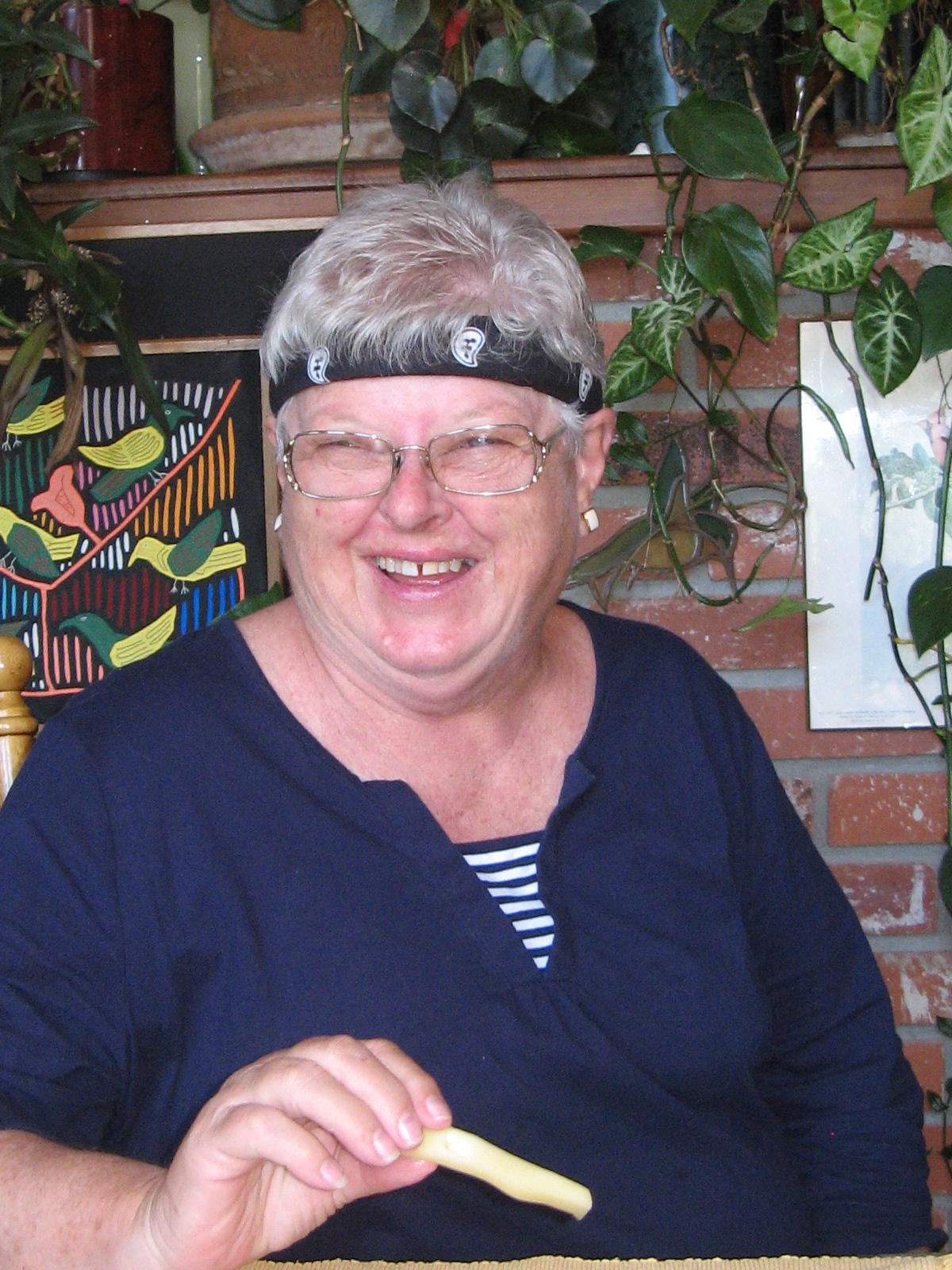
I spent the afternoon with an old quilting buddy, Kendra North.  We didn’t quilt, we talked about the quilts we haven’t finished yet, our high school reunion experiences and had lunch instead. I am so fortunate to have so many talented friends.  Kendra, a cancer survivor,  can saddle a horse, shoe a donkey, weed eat her acreage, stave off the coyotes with her rifle, tutor her grandchildren, build a chicken coop, make gorgeous quilts, and keep her ancient Volkswagen running.  She doesn’t weld.