It is unusual to find someone who has a link to Monte Wolfe, the legendary mountain man who disappeared over sixty years ago. Mark Bonar, who moved here in the 1950′s is that man.
In college, he met his wife, Barbara La Teer, who was a native of West Point, Calaveras County. They had three children, Mark Richard, Lynne Alison and Lauren Ann. Mark became close to his Father-in-law and through him, the larger than life character of Monte Wolfe with whom Paul La Teer had crossed paths.

“I hadn’t fished since I was a kid in Idaho,” said Mark. “Paul invited me fishing. I went out and bought a primitive fishing pole and reel, and as we began hiking, I heard the first of many stories of Monte Wolfe. Our fishing expeditions became regular, enjoyable occasions. Paul hiked all over the rough and wild back country and was in terrific shape. And, that is how he encountered Monte’s one room, “first” cabin, which became known as the Upper Cabin, in the mid 1930′s. It was situated in plain sight along the Mokelumne River and right along Paul’s fishing site. Monte had left a foot- high stack of canning jars piled next to the cabin.

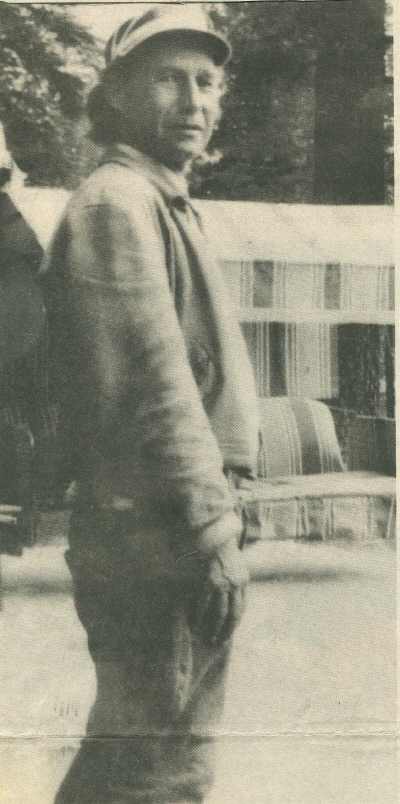
(These two reproduced pictures of Monte and the first cabin were copied from my newspaper article on Monte in the 1980′s and were taken by Harry Schimke.)
"Paul had heard rumors of a newer cabin and as he prowled the high country, he spent the late 1930′s trying to find it. When he did find it, he was met with a 30-30 deer rifle by an unfriendly Monte Wolfe. During that encounter, Monte had visitors, presumably the Linfords, who had befriended Monte and who claimed to be guarding his privacy. Monte was a social person but could be unpredictable and not someone to mess with, so Paul never became a friend of his.”
Veda Linford wrote a book about Monte and once cared for him when he broke his leg. The Linford’s probably knew him best. Monte divulged little about himself and seemed to like being a bit mysterious, for good reason. He was arrested and tried for stealing in Tuolumne County as Ed Mc Grath, not something the locals were likely to forget.
He lived totally off the land on fish, deer, and whatever game he could trap for food and pelts. Some of it was legal and some of it was not. He had many a run-in with the Calaveras County game warden and the law.
“He would routinely break into local cabins and take food, mostly canned food which was standard fare at the time. He’d usually leave something to replace it, or leave a note of thanks signed Monte The Wolf.” He would attempt give something in payment at a later date, perhaps a mess of fresh trout.
Paul recollected a story of one of Monte’s encounters with a game warden who walked up to Monte’s camp to find a lot of grouse feathers around it. The warden questioned him. Monte steadfastly claimed that he had seen no grouse and that the feathers must have blown in. Another time, a rifle that went missing from Sonora, out of someone’s car, was spotted hidden in a hollow sugar pine near his camp.
There were many incidents of things gone missing that irked people and the authorities. He was so adept in the woods and a dead shot with a rifle, people were not inclined to challenge him in his own territory, which encompassed three counties, Calaveras, Tuolumne and Amador.
(To be continued tomorrow.)
In college, he met his wife, Barbara La Teer, who was a native of West Point, Calaveras County. They had three children, Mark Richard, Lynne Alison and Lauren Ann. Mark became close to his Father-in-law and through him, the larger than life character of Monte Wolfe with whom Paul La Teer had crossed paths.
“I hadn’t fished since I was a kid in Idaho,” said Mark. “Paul invited me fishing. I went out and bought a primitive fishing pole and reel, and as we began hiking, I heard the first of many stories of Monte Wolfe. Our fishing expeditions became regular, enjoyable occasions. Paul hiked all over the rough and wild back country and was in terrific shape. And, that is how he encountered Monte’s one room, “first” cabin, which became known as the Upper Cabin, in the mid 1930′s. It was situated in plain sight along the Mokelumne River and right along Paul’s fishing site. Monte had left a foot- high stack of canning jars piled next to the cabin.
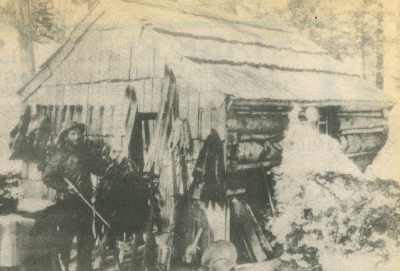
(These two reproduced pictures of Monte and the first cabin were copied from my newspaper article on Monte in the 1980′s and were taken by Harry Schimke.)
"Paul had heard rumors of a newer cabin and as he prowled the high country, he spent the late 1930′s trying to find it. When he did find it, he was met with a 30-30 deer rifle by an unfriendly Monte Wolfe. During that encounter, Monte had visitors, presumably the Linfords, who had befriended Monte and who claimed to be guarding his privacy. Monte was a social person but could be unpredictable and not someone to mess with, so Paul never became a friend of his.”
Veda Linford wrote a book about Monte and once cared for him when he broke his leg. The Linford’s probably knew him best. Monte divulged little about himself and seemed to like being a bit mysterious, for good reason. He was arrested and tried for stealing in Tuolumne County as Ed Mc Grath, not something the locals were likely to forget.
He lived totally off the land on fish, deer, and whatever game he could trap for food and pelts. Some of it was legal and some of it was not. He had many a run-in with the Calaveras County game warden and the law.
“He would routinely break into local cabins and take food, mostly canned food which was standard fare at the time. He’d usually leave something to replace it, or leave a note of thanks signed Monte The Wolf.” He would attempt give something in payment at a later date, perhaps a mess of fresh trout.
Paul recollected a story of one of Monte’s encounters with a game warden who walked up to Monte’s camp to find a lot of grouse feathers around it. The warden questioned him. Monte steadfastly claimed that he had seen no grouse and that the feathers must have blown in. Another time, a rifle that went missing from Sonora, out of someone’s car, was spotted hidden in a hollow sugar pine near his camp.
There were many incidents of things gone missing that irked people and the authorities. He was so adept in the woods and a dead shot with a rifle, people were not inclined to challenge him in his own territory, which encompassed three counties, Calaveras, Tuolumne and Amador.
(To be continued tomorrow.)


