Jim says I try to stuff 600 years of history into 800 words. I
suppose he is right. I’m always awed by history in out-of-the-way places
I’ve never heard of such as the Acomo Pueblo near Casa Blanca, New
Mexico.

This mesa was once home to 3,000 Acoma. Their homes were built during
the late 15th and early 16th centuries. But evidence of the mesa’s
occupation are as old as the 11th century, making it the longest
continually occupied place in the United States.

Many homes line the sand streets though only about thirty families live full-time on the Mesa.

The adobe houses reveal layers of history. The bottom part of this
building has smaller stones of odd and uneven sizes. At one time the
Pueblo could only be reached by climbing a stone stairway hacked into
the side of the mountain. Every log, every stone had to be hand carried
to the site. The top was restored after a drivable road, and a pick-up
truck could carry loads of perfectly formed adobe bricks.

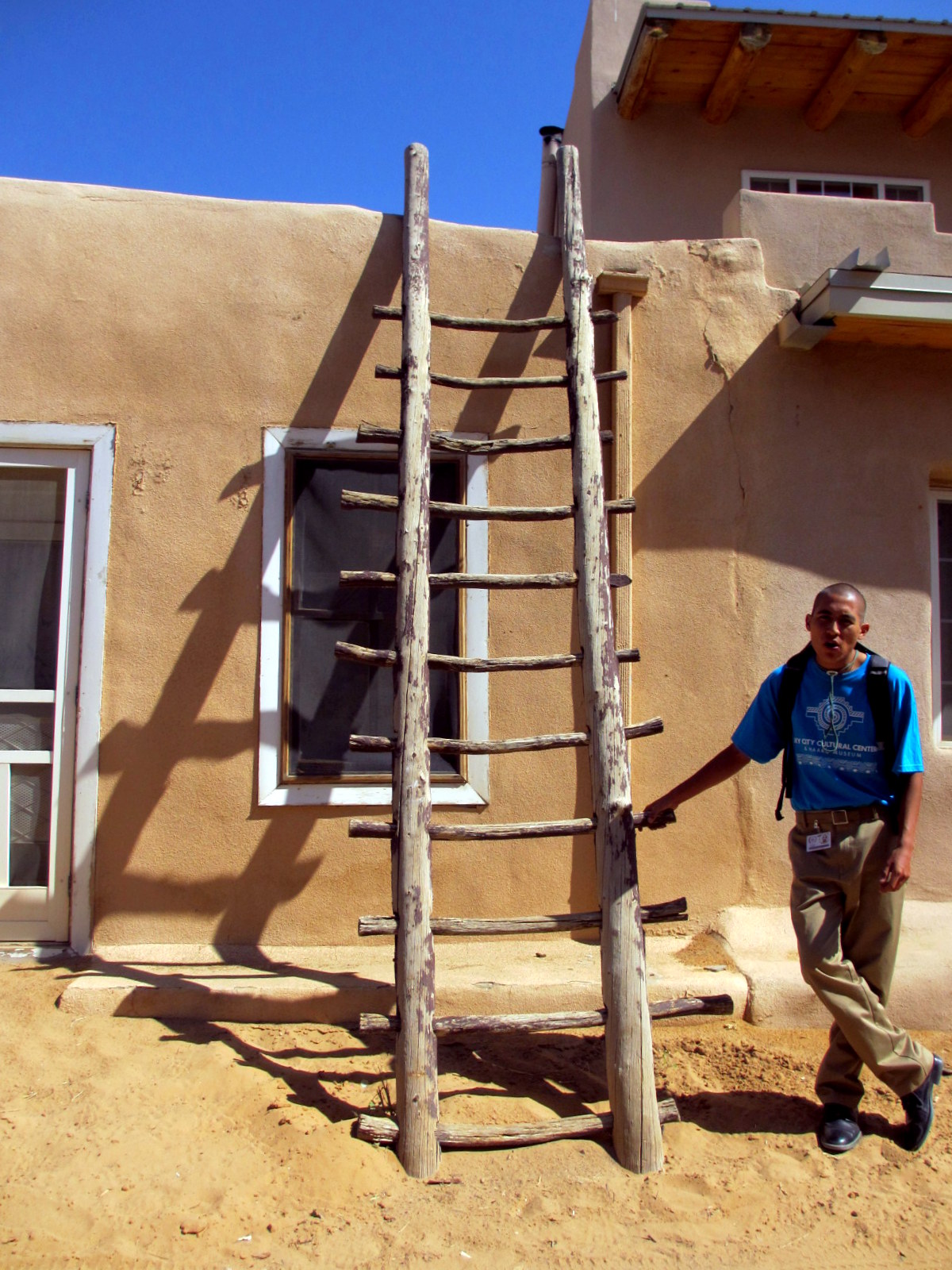
At one time, all houses were assessable by ladders. For safety,
people entered from the upper story, no doors were built into the lower
levels. People lived communally and could travel the length of the
street inside of the houses from one end to the other. The young men
would pull up the ladders every night and set them down in the morning.

For light, a glassy type of stone, that had to cure for about a
year, was used to bring a dim light inside. This pane is the only
remaining pane of that type on the mesa. When the Spanish brought
paned glass, the Acomo quickly converted to larger, better windows.

In this unique and fascinating place, the families worked together on
the roof. They dried the corn, and ground it and took shelter inside
from the heat. The children and dogs played there. They dry farmed and
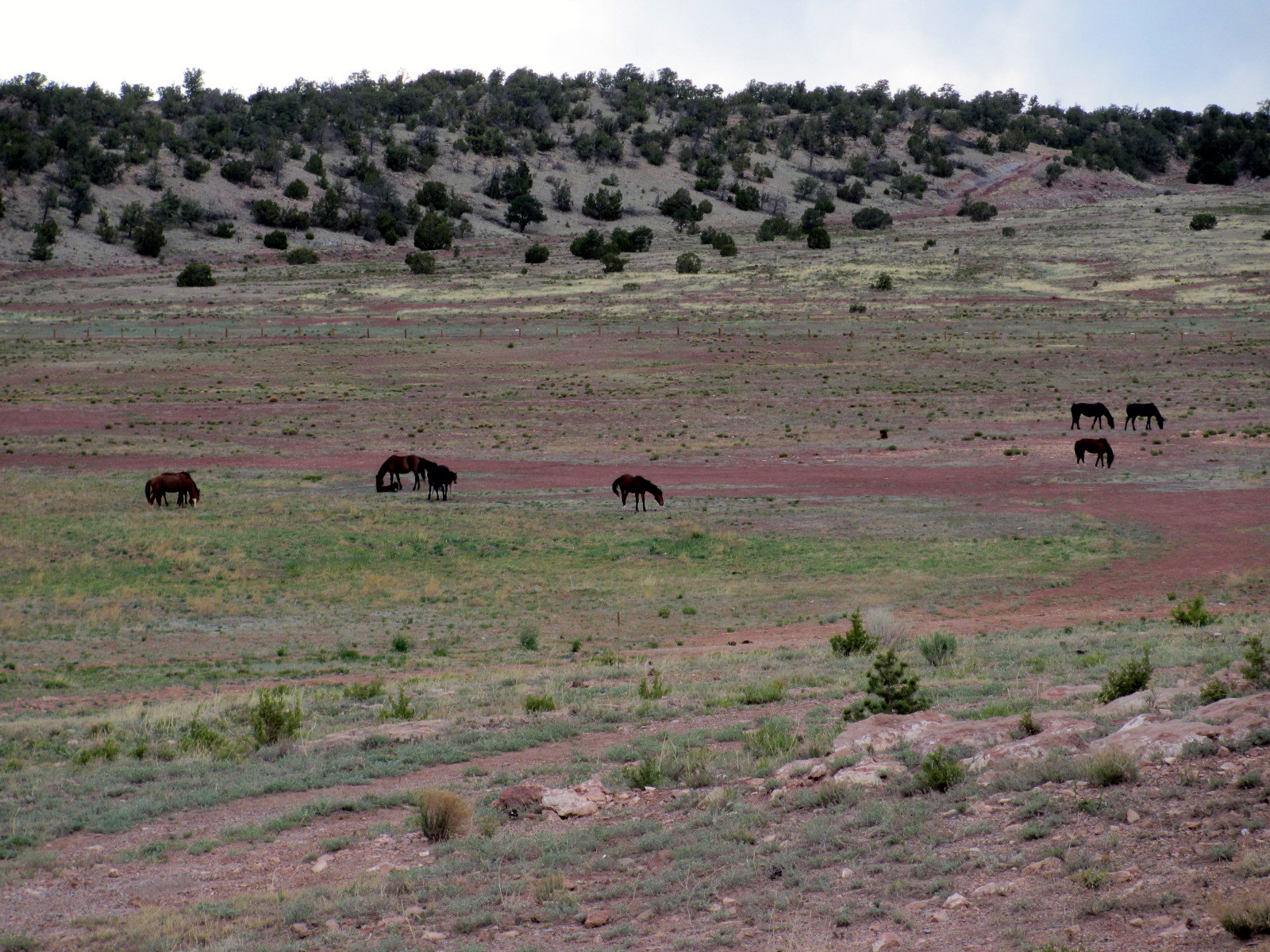
collected rainwater in several large cisterns. Once the Spanish arrived
and the horses drank from the open cisterns, algae contaminated the
pools and are no longer used today. New closed cisterns provide drinking
and cooking water. Residents have no electricity, nor running water.
They now use Portable toilets.

This building is a Kiva with a special ladder. The top represents a
cloud. The posts must be brought up the Mesa without touching the
ground. Men only are allowed in the building, though the Acoma are a
matriarchal society. A small hole in the thick wall, just under the
fourth rung from the bottom, on the right, could be used by the women to
shout in to the men if needed. The population swells on the weekends
when friends and relatives visit or ceremonies are held.

When the Spaniards arrived, they brought many good things to the
Pueblo. They learned to steam corn and cook meats in these adobe ovens.
Two of them remain on the Mesa. They brought peaches, peppers and grains
to the area. But they also treated the native populations with
disrespect. Ordered them to cease their religious practices and convert
to Christianity.

They built an enormous church, with Acomo labor, over one of their
Kivas. The Acomo are the only people to successfully rid themselves of
a foreign power on their land. They kept the Spanish out for 100 years.
The church, built in the 1600′s stayed unused for that 100 years. But,
the Spanish returned. The Acomo had ambushed the Spaniards by leading
them into the zigzag maze of their Pueblo, separated them and killed
them.

The Spaniards brought back a cannon and destroyed buildings, set fire
to the Pueblo, and killed 500 Acomo and threw their bodies over the
edge to the ground below. They amputated one foot of every man aged 25
and over (except the very old) and sentenced them to 25 years of
enslaved hard labor. The women were sentenced to hard labor. The old
women and children were abandoned on the Mesa.

The Spaniards took 1500 people off the Mesa, but one thousand of them
had hidden in neighboring villages below and returned to the Pueblo to
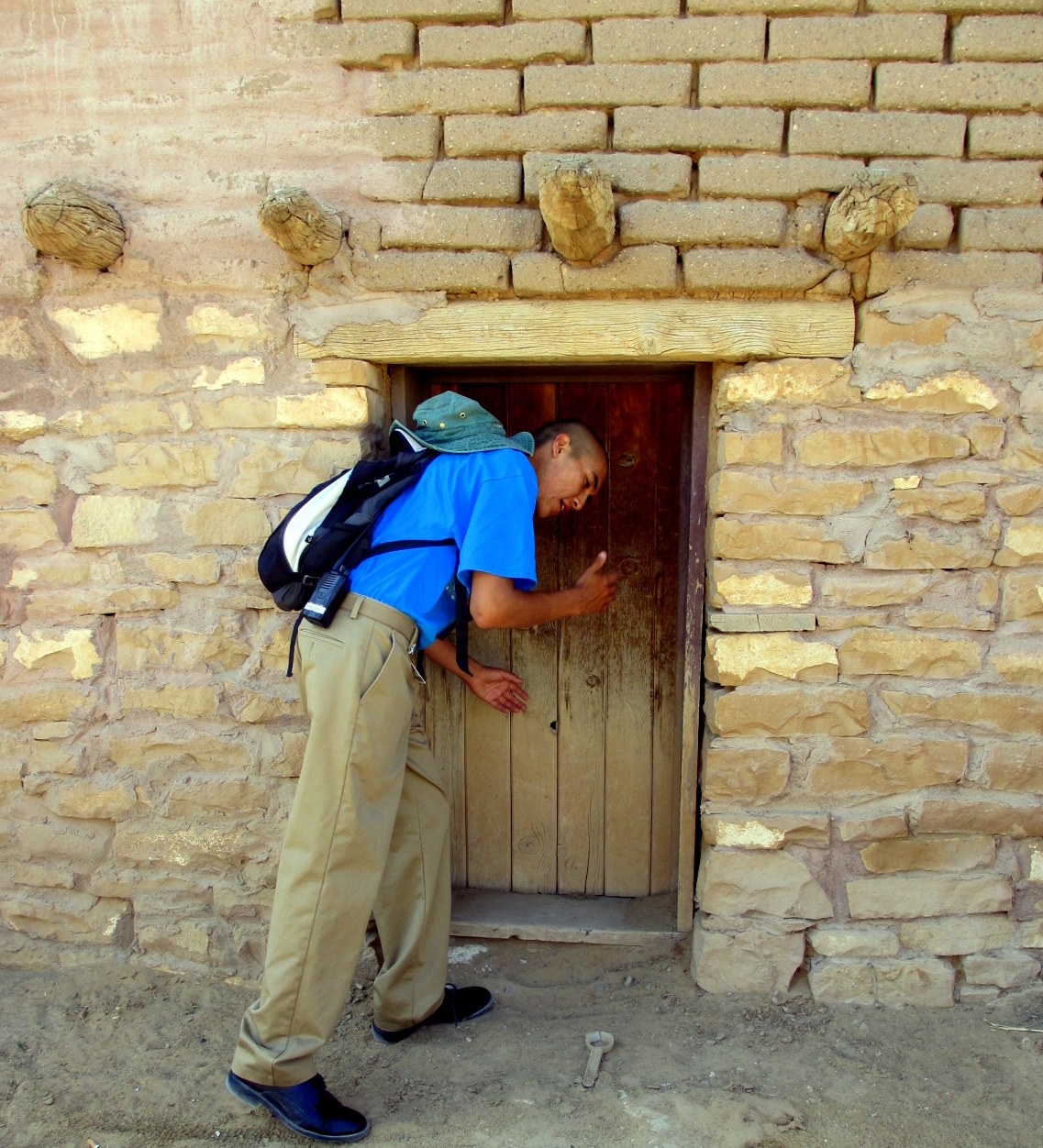
continue life as they had known it. They built their doors small, so
that anyone trying to enter, like a Spaniard with a tall helmet and a
weapon, would have to stoop to enter and be vulnerable to attack from
the inside the thick walls.

They surrounded their cemetery with an adobe wall with head shapes.
They would dress these knobs up to look like people guarding the mesa.

The old church was the most fascinating building,ten feet thick at
the base and four feet thick at the top. No pictures were allowed
inside. When it was built the Spaniards claimed it wasn’t complete
without a bell. The Acomo asked for a bell. The Spaniards said they
could bring a bell in exchange for four children, two boys and two
girls. The trade was made and the children were sent to be priests and
nuns.

This historical treasure was a fascinating place to visit, just 60
miles West of Albuquerque. It is under continual restoration. They have a
visitors center, a film,cafe, gift shop and museum. The Acomo are
renowned for their special pottery.
The nearby Casino provides a nice respite and a parking place for
RVers like us. After our visit we had a Mothers Day lunch to strolling
musicians in the Casino.

If you’d like to see the rest of my photos, click on the link below:
https://picasaweb.google.com/106530979158681190260/2012513MothersDayAcomaPueblo?authkey=Gv1sRgCJzo7-mUlYTUeg