Showing posts with label meat. Show all posts

Sunday, August 4, 2013

NEW BEDFORD PORTUGUESE FESTA

DSC07868 (Copy)
Donna, Bob, Jim and I arrived at  New Bedford’s 99th annual Feast Of The Blessed Sacrament, more commonly called by many, the Portuguese Festa. We arrived early, bought our drink tickets without having to wait in line and then headed directly to the charcoal pits to have a look.  The draw for me is cooking our skewer of carne espeto, pronounced cog-na-schpitz, and the fado. The meat in front appeared to have powdered sugar on it which we learned later was rock salt.DSC07870 (Copy)
We rented our seven to seven and a half-foot skewers for $10. They give you your money back when you return them.
DSC07871 (Copy)
We loaded our skewers with a pound of beef that you can buy at the festa,  and the veggies, zucchini, peppers, onion, that Donna and I bought and cut to size on Friday. Rock salt is available on the counter and this year, Donna thought we should try it. Reputed to keep the juices in and the outside crisp, we used a minimal amount of the salt.
DSC07877 (Copy)
While my skewer was cooking, I took a minute to watch the unloading process. The metal scraper holds the skewer and you pull the hot meat off the rod into a dish or onto a paper plate.DSC07879 (Copy)
Next to me was a guy carefully basting his meat with beer without spilling a drop.
DSC07880 (Copy)
Another guy was squirting his meat with wine. Hey, good idea, methinks.
DSC07882 (Copy)
Moving through a crowd of people with a heavy, seven-foot skewer is an exercise in balance and Bob helped me remove our dinner, filling the two paper containers in two strokes. DSC07887 (Copy)
Jim kept our place under this beautiful grape covered picnic grounds and watched our purses, then went for beer when we got back with the food.
DSC07890 (Copy)
We discovered that the meat and veggies were overcooked. The salt kind of obscured the process and we couldn’t detect when the meat was done, but it was still tasty stuff.  Later, we watched people cook sword fish, shrimp, sausages, potatoes and all kinds of delectables and realized we were not required to buy the beef at the festa. Donna said, I learn something new every year. And, I drank a regular beer and it actually tasted good with the food. I discovered later they had imported beers with micros among I could have had.
DSC07885 (Copy)
We spotted a lot of people wearing these traditional Portuguese hats. DSC07893 (Copy)
They differ a good bit and supposedly denote the area of Portugal from which you or your family members come from. Donna didn’t mention where her family originated and her parents didn’t teach she and her sister Portuguese.
DSC07900 (Copy)
As the day got later, the crowds thickened. Donna would run into friends she knew. We headed for the kiosk selling malasadas, a hot, Portuguese doughnut the size of a dinner plated (without the hole) and dipped in powdered sugar. Everyone calls them mollies. The line was sooooo long, we gave up. The news says they sell 2000 of them a day during the four day event.
DSC07896 (Copy)
The stand was near one of the bands, but it was a rock band, not our type of music. The headliner band was Everclear from Portland, but they were on another stage. The festa must cover about five acres with a carnival grounds with a ferris wheel, tilt-a-whirl and the usual line-up of thrills and arcade of games. Donna won a 7 inch stuffed fish at one of the games. (We only played one.)
DSC07902 (Copy)
Instead of playing games we headed early for the fado tent and got front row seats and enjoyed a glass of wine and delicious pastries while waiting for the band and singers. They sell special coffees and deserts.
DSC07904 (Copy)
The fado is sung with a three-piece band, the mandolin, guitar and bass fiddle.
DSC07906 (Copy)
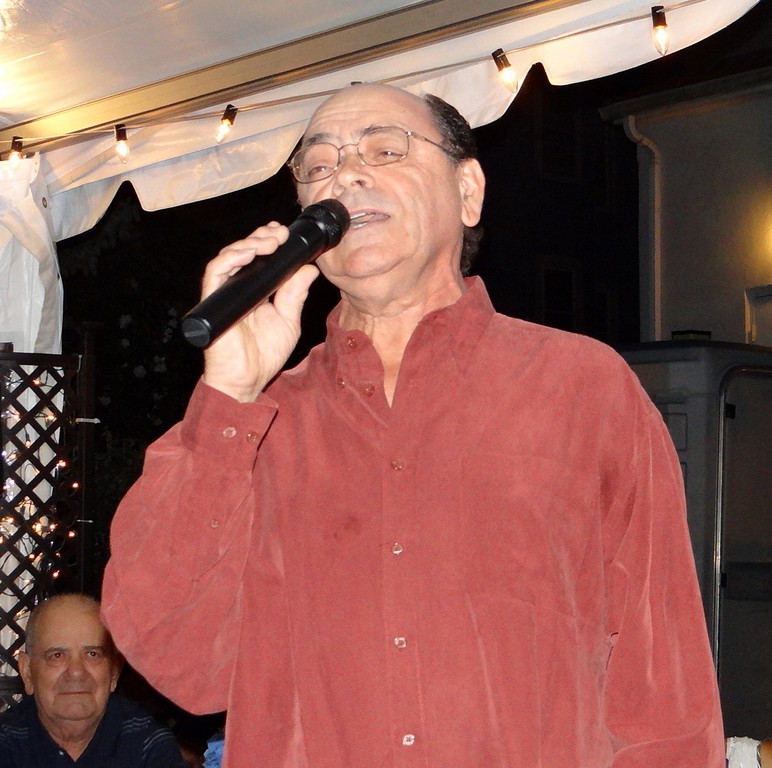
The first fado singer was male. He sang and spoke only Portuguese so it was difficult to get the gist of the song. He had a great voice and alluded to singing with his favorite singer/partner of 41 years. We think they are married.
DSC07914 (Copy)
They did a couple of duets before he turned the stage over to her. His name is Jordan Paiva. She is Ana Vinagre, the singer we like best.
DSC07922 (Copy)
The face of fado is expressed by Ana.
DSC07923 (Copy)
The fado originated as a sad and emotional lament, an ancient tradition in Portugal where the women sang out their anguish as their husbands, fathers, sons and brothers went to sea in their whaling boats.  No one knew when they would return or if they would return. Some voyages lasted two years and the boats usually returned with someone missing. It was their livelihood, accepted, but with heart-rending consequences for some,  and thus the fado was born.
DSC07926 (Copy)
.
DSC07927 (Copy)
.
DSC07918 (Copy)
.
DSC07919 (Copy)
Her voice will always stay with me. The fado is every night from 8:30 to 11:30 during the festa.
During a break, the folorico band, the local Grupo Troup played; the dancers came from Sacramento, California.DSC07930 (Copy)
The Grupo Troup from the youngest…DSC07940 (Copy)
…to the oldest. The woman on the left, we heard from chatter in the audience, is said to be over 100 years old. She sits to play her little noisemaker instrument.
DSC07939 (Copy)
An accordion is a major instrument in the Grupo Troup.
DSC07935 (Copy)
They played and sang several numbers before the dancers took to the floor.
DSC07942 (Copy)
An unusual instrument native to Portugal is the stick with figures that the player moves up and down to sound the castanets. He also uses the gourd hanging at his side. (Click to enlarge the photo.)
DSC07941 (Copy)
The little boy plays a miniature instrument of the same kind.DSC07938 (Copy)
The folklorico dancers performed in the center of the tent and were warmly applauded and appreciated. I have to say, I love the Festa and would attend every year if I could.

Wednesday, February 27, 2013

VILLE PLATTE AND JACK MILLER'S

DSC03419 (Copy)
After the horrific storm from the previous day, we woke up to a few puddles. The whole river of water covering the ground just disappeared. DSC03420 (Copy)
We drove about 7 miles to Ville Platte, a town of  8,000 population. The Chamber of Commerce suggested we visit this beautiful old restored bank building, Jack Miller’s  Sauce and Seasonings Company, and  Slap Ya Mama Cajun Seasonings Co.
DSC03426 (Copy)
The restored bank building has been turned into an upscale restaurant called The Cocks Tail.
DSC03438 (Copy)
It is as beautiful on the inside as the outside.
DSC03428 (Copy)
The gorgeous old gas lamps have been wired for electricity.
DSC03430 (Copy)
The old broken tiles replaced with new stuff; period border tile sets off the brick and flat tile.
DSC03431 (Copy)
Ditto the metal ceiling tiles and corner decorations. Replaced with a replica of what was there.
DSC03435 (Copy)
What a delightful place. A great menu as in shrimp etouffee stuffed baked potato, portobello soup, all the usual southern fried dishes and a huge variety of tempting sandwiches, flatbreads and wraps. Yum.
DSC03455 (Copy)
We headed out to Jack Miller’s place promising to go back for lunch. We were intrigued by the fact Jack Miller’s carries a line of salt free seasonings. This is a picture of a picture of Jack Miller, the founder of the company, now deceased.
DSC03439 (Copy)
His son Kermit Miller runs the company with his wife, two sons and one employee. The no salt seasoning is an interesting story. His parents owned a restaurant where Jack was always fooling with sauces and seasonings for his dishes. He had a friend whose daughter was born without the ability to tolerate salt, none at all. Jack fooled around with spices and flavors and made seasoning for the daughter without salt until she finally grew out of the condition. During that time, he perfected a tasty concoction that suited other people’s needs who prefer not to use so much salt.
DSC03443 (Copy)
Jack Miller’s Bar-B-Que sauce though, is their top seller. It was developed out of need. Jack  Miller’s American Inn Restaurant couldn’t get enough ground meat, beef, during the war years. In 1941  all these service men were in town and they were hungry. He realized the farmers in the area had some pork and lots of chickens.  So, he fooled with sauces to make it tasty and it was. Over the years, people would come to the restaurant with their own jars and ask Jack to sell them a little of that sauce. (The sauce pictured above as raw ingredients, ready to cook.) Jack  turned one part of the restaurant into a sauce “factory”.
DSC03441 (Copy)
Kermit’s son, Christian, loads one of three steam tubs where the sauce is cooked.
DSC03444 (Copy)
It flows by pipe into the next room where it is bottled.
DSC03446 (Copy)
We happened in at the end of a run. Kermit hit the handle of the auto filler to make it squirt out the last bit of sauce. (Partially filled jars.)
DSC03447 (Copy)
His employee hand fills the jars and sends it back through the bottle labeler and capper.
DSC03450 (Copy)
The finished product that is made daily, 500 to 700 gallons a day. Come May when the weather warms, it flies out of the warehouse. Kermit talks fondly of his father’s ways. He did everything by hand. On a restaurant stove, stirring and stirring the product so it wouldn’t burn. He would deliver to a Mom And Pop grocery and sell the a case of sauce and explain, I’ll come back and if it doesn’t sell, I’ll take it back and give you your money back. “You can’t do business like that anymore,” says Kermit.
DSC03451 (Copy)
Walmart approached him about selling in their stores. He has several products other than the original sauce. It is carried in all Louisiana Walmarts. He ships to a winery in California, to Chef Prudhomme, to Japan…literally all over the world from on-line.  Tabasco asked him to design a sauce that added tabasco, and they sell it under Tabasco’s name and worldwide reach. Prodhomme sells his own seasonings but keeps Jack Miller’s name on what they buy from him.
DSC03452 (Copy)
Kermit is a true Cajun, laid back, friendly and humorous. He calls this his secret Cajun Engineering. A huge sewn together plastic bag, fitted with a wood stove damper, from which he dispenses cellulose packing “peanuts” or nuggets for shipping his product. He reuses boxes and prefers to use the biodegradable cellulose instead of styrofoam. What a neat guy and an interesting success story. He sent us home with a gift pack of his product. And, recipes. I’ll get some of them on the blog sometime soon.

Tuesday, January 17, 2012

HELPED BY HOG POOP.

Being a committed greenie, I rarely eat pork. Not because I don’t like it, but because of the disgusting way it is raised on huge  hog farms. Shoot,  cities build sewage  treatment plants for human waste, but the hog farmer’s animal wastes pollute rivers and  spoil (collectively) thousands of acres of  land. Disastrous messes are cleaned up by you and me, babe, our taxes. How fair is that? Without a strong pork lobby, and our weak willed congress, government could and should  require they build treatment plants.
Tatah!! The answer is at hand and it is  wonderful.
Thankfully, farmer Loyd Bryant, fromYadkinville, North Carolina has come up with a solution. Mr. Bryant used to be the guy who pumped the poop, now Mr. Bryant is the guy who runs a power plant.
Mr. Bryant built a power plant with off the shelf parts on a 154 acre farm. The power plant, that is actually more like a waste processing plant, uses bacteria to digest the poop and then the plant burns the methane to make electricity. Additionally, Mr. Bryant’s plant converts the ammonia into forms of nitrogen that can be used as a fertilizer.
The project cost $1.2 million to build with financing secured from both Google and Duke University. Duke University claims that Mr. Bryant’s system is one of the cleanest in existence, and it solves all of the environmental problems associated with animal waste (namely, methane, ammonia, and disposal of said waste.)
In the three way partnership everyone wins. Mr. Bryant saves money on electricity and gets a cleaner farming environment. The 65-kilowatt turbine generates enough electricity to power the plant system and five of Bryant’s nine hog barns. Meanwhile, Google and Duke earn carbon offset credits.
According to the Environmental Protection Agency (EPA), the number of waste to energy systems in the U.S. grows every year – last year 162 systems on U.S. farms were in action using poop as a renewable source of energy. Such systems are also being touted as a way to dispose of human sewage in developing areas like Africa, providing power for an ever-growing population that lacks proper infrastructure.
The EPA estimates that if 8,200 eligible dairy and hog farms nationwide used systems like Mr. Bryant’s these farms could generate enough electricity to power 980,000 homes for one year. The EPA predicts that this would create the equivalent of removing 6.7 million cars from America’s roads by reducing methane emissions and avoiding power plant carbon dioxide emissions.
(Source: sfgate.com)

The picture accompanying the article  shows this darling free ranging mother and baby. But, I still won’t be eating pork regularly, even though the news is good. Those hog farms do not have free range hogs. They are tightly cooped, grown and slaughtered in an ugly, despicable way. Raising meat in general is a  reprehensible if efficient practice. I’m still struggling with the ethics of eating meat at all and I attempt to eat less and less of it,  including avoiding beef. In a world of burgeoning population and a country of poor land use practices, someday, we will be forced to change.  But, those times when I do cave in and eat pork, I can feel a smidge less guilty.