Showing posts with label hike. Show all posts

Tuesday, March 14, 2017

RANTHAMBORE NATIONAL PARK.


We arrived at our destination, Ranthambore National Park near the town of Sawai Madhopur. The park has over a hundred square miles of forests and several large lakes and was at one time a hunting preserve of the maharajas. I bought Theo a tie, but later he bought himself a handsome red scarf and he is never without it.

After our long ride and lunch, we take a canter to the fort and spent the afternoon hiking to various historical sites. In a later blog, we will visit the beautiful Dargah Ganesh Temple inside the fort.

The Park is a UNESCO site and one of 11 tiger preserves in India. India tigers are unique in that they are the biggest cats; they are not speedy. They don't chase distances for their quarry. They will jump from a tree or rock or attack near a watering hole.

We enter by this huge gate.  Mostly uphill from here.

I'm fascinated by this woman's clothing and her ability to carry belongings on her head.

The fort was built in the fifth century A.D. Astounding that it still survives especially when you see the current scaffolding still used in India today.

We see this all over India, even on modern high rise buildings.

The men tie the bamboo poles with simple hemp ropes, then wet the ropes and tighten them.  The structure is very solid.

One of  many temples on the grounds. This one a later vintage.

This spot was over run with monkeys, fighting for territory or females. Not sure which.

They would race about and attack each other. You could feel a breeze as they hurtled by we human invaders.

Some of the attacking monkeys like this one, bared his teeth and growled.
None of my other grandsons I've taken on their special trip took pictures, but Theo took many.

Onward and up. Another temple is just ahead.

Another set of stairs was daunting, and none of us chose to go inside.

Sandy, is photo averse. She is beautiful, friendly and a joy to be around.

The steps are steep. And after awhile we get our "temple legs." This step has a stone once used in another building.

Arches are more vulnerable, but these still stand.

At the top, everyone gets to look over the lakes and valley below.

This man takes tickets for the temple located at the far reaches of the hike.  You can buy food, water, souvenirs and flowers here.
People buy flowers as part of their ritual. I picked up a strand to smell and Ranvir, said, "you touched it. Now it can't be used.  Nothing goes to waste. The monkeys will eat the flowers." He paid for my mistake.

At the temple, you may not speak.

I came out  anointed.

Where there's  food, there's  rats.

The monkey enjoyed his treat.
On the way back, the monkeys get well fed. Everyone gives their flowers.

These little birds seem to find food where there is nothing but rock.

This is a squirrel. At home we'd call it a chipmunk or chicaree. They too, seem to find food where none exists.

Tuesday, January 3, 2017

NEW YEAR'S DAY HIKE.

img_0450-copy
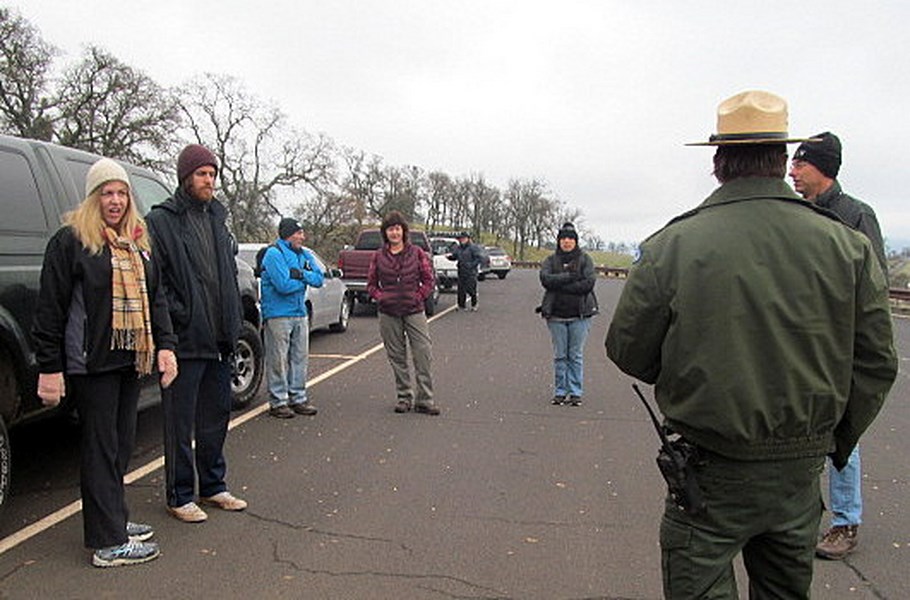
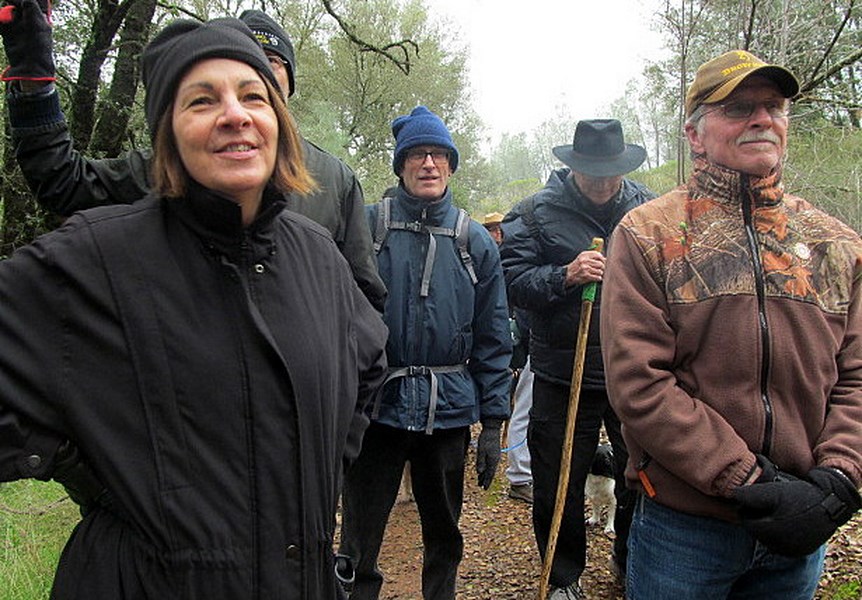
From Highway 49, Glory Hole Recreation District at New Mellones, a free hike was advertised for New Years Day, rain or shine. You can see people warmly dressed as we strangers met at the entrance station and introduced ourselves.
img_0451-copy
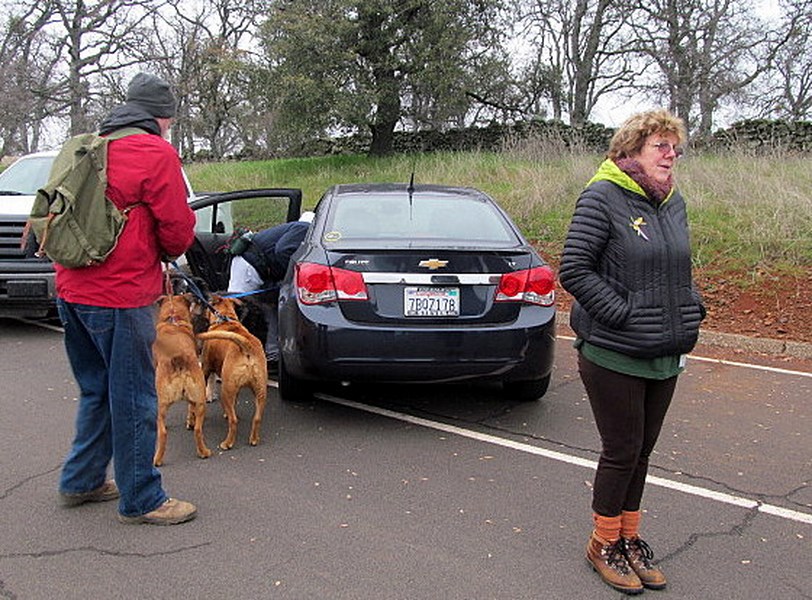
Dogs are allowed on the trails. We met two bikers and we saw evidence of horses using the trails. Walkers are asked to give way to horses, but we didn't meet any.
img_0452-copy
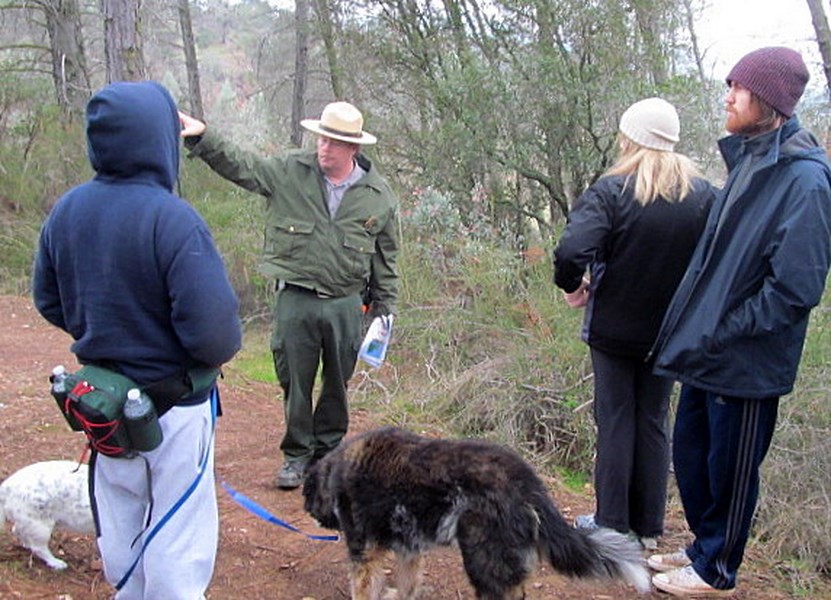
Ranger Josh, guided the group and pointed out the growth patterns of this type of forest and explained in some detail the various flora and fauna.img_0455-copy
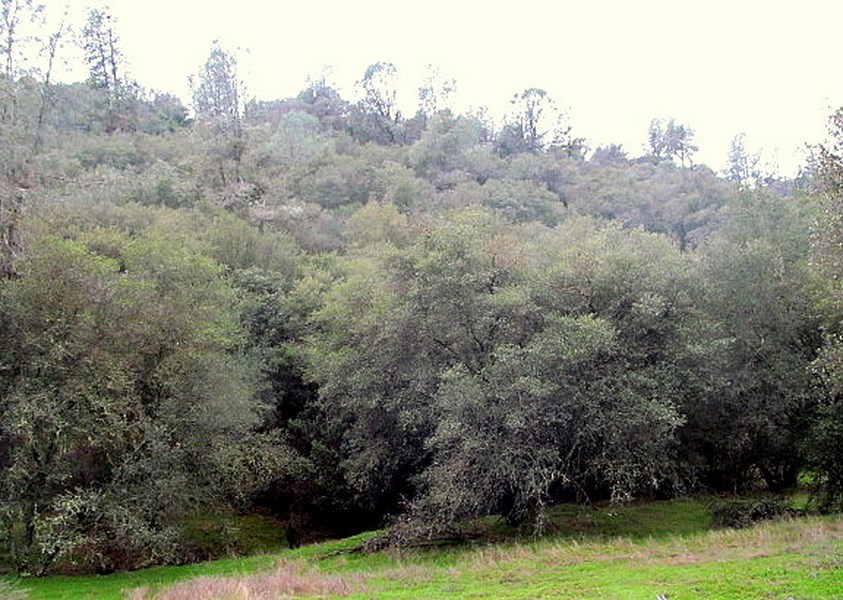
At the beginning of the Angels Creek Trail, the forest has a mixture of digger pines, black oak, live oak and thick underbrush.  Ranger Josh admitted the underbrush is a fire hazard with chemise and buck brush.
img_0457-copy
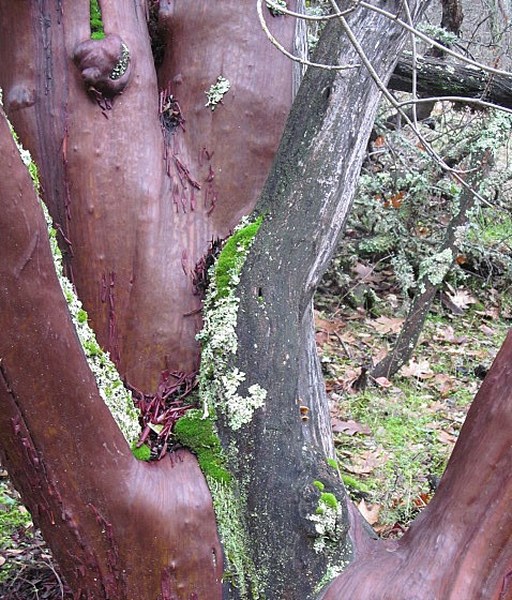
I was impressed by the girth of this giant manzanita specimen and the lichens and bright, green moss growing on it. Ranger Josh noted that the east side of the hills get most of the water. He told us that manzanita burns very hot and can burn up your stove, actually melt it if you use enough of it.
img_0463-copy
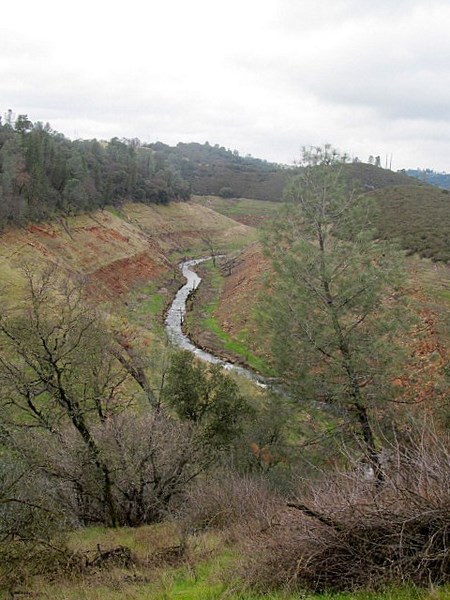
Angels Creek is low, in tune with the current drought situation. The trail is a 2.5 mile hike.
img_0472-copy
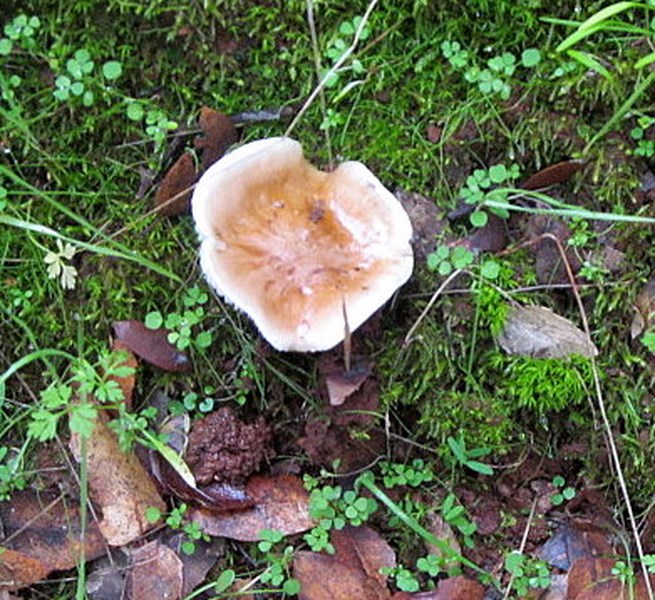
I looked at just about every mushroom, hoping to find a "buckskin". (Not it's scientific name.) The old Italians knew their mushrooms and would pick up large delicious mushrooms under manzanita habitat. I didn't find a one. Deer feed on these, as do various insects.
img_0453-copy
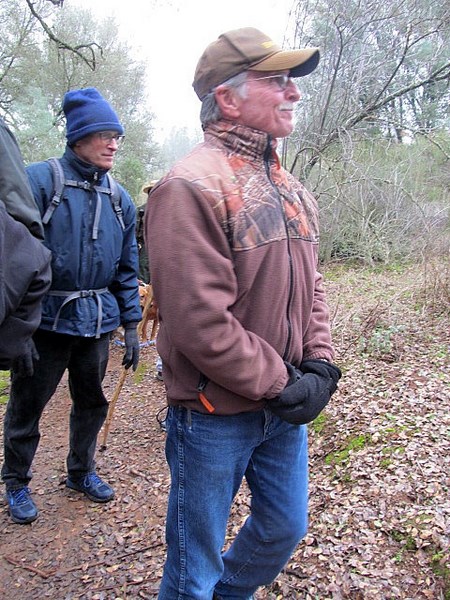
I didn't get many pictures of the hikers. Strung out in a line, it is hard to capture everyone. The trail is narrow in most places. Looking back and forth I believe we had about 30 people on the hike. The Calaveras side of the Recreation Area has seven trails of different lengths and are rated easy, moderate, challenging and so on. This trail is moderate.
img_0454-copy
When guided, Ranger Josh makes many stops and he even played a couple games with us. He formed us into a walking caterpillar, eyes closed, to just walk and tune your ears, nose and senses to the trail. If you are a lone hiker, you get the sense of quiet that being in a natural forest gives you.
img_0466-copy
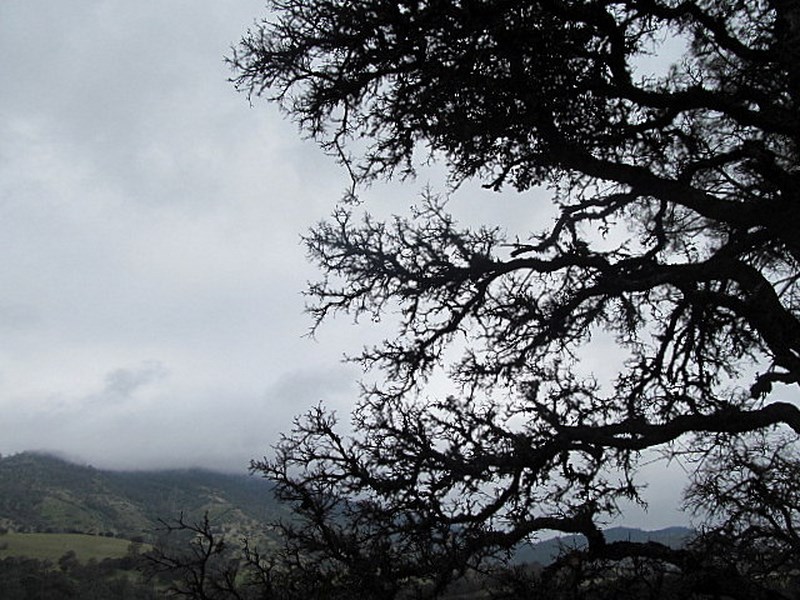
The sun didn't come out during our 3 hour hike. This tree, etched against the overcast made a nice contrast, with the west side of the hill in the distance showing meadows; more barren than the brushy east hillside.
img_0471-copy
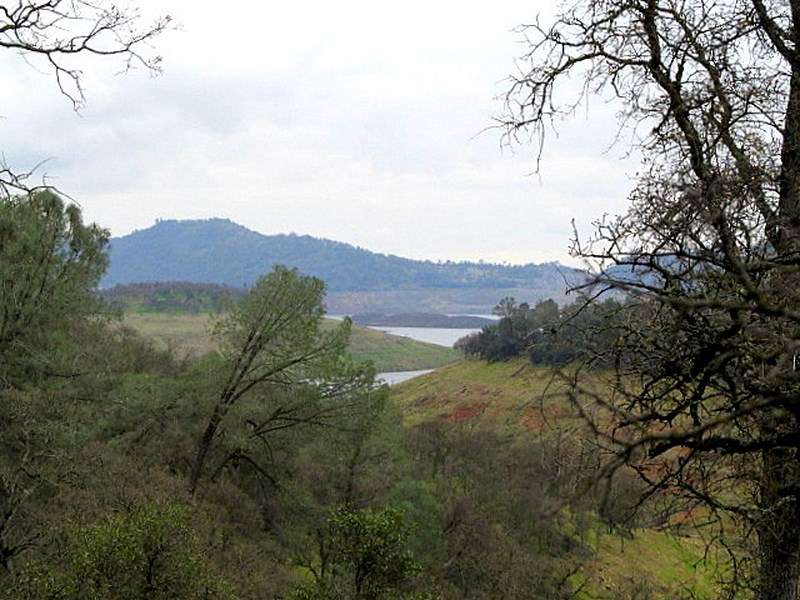
At the end of the trail was a pretty view of the lake with an island showing that isn't visible when the water level is normal. Drought conditions persist here in California though the recent rains are encouraging. The Calaveras side has seven trails and the  Tuolumne County, Tuttletown Recreation area also has seven trails.  Senior Citizens, with their pass can enter the hiking trails free at anytime of year. For most, there is a day use charge.

This was my first excursion with a new social singles group  and I got to meet the seven people at the end of the hike. Cindy is the key organizer and can be reached at this phone number if you are interested in joining. I didn't ask permission to print her phone number, (no addresses are given), but her number was published in the newspaper ad for this hike, so here goes. 209-559-8517. The only qualification, you must be 50 or older. We picked up two new members at this event.

Sunday, June 10, 2012

THE LONG HOUSE AT MESA VERDE

Mesa Verde means green table. And, for desert, this high mountain place is green.  The drive  Mesa Verde National Park at  7,500 feet was a challenging pull. The drive to the various ancient dwellings on a twisty hilly road provides you beautiful views of the valley below.
It takes 45 minutes to drive the 25 miles to the Long House. We stood in line to get tickets for our guided tour.  The tickets are only $3, affordable and young children can climb the ladders. No water or food in the canyon. When  you go, read all the rules before you start.

A panoramic view of this ancient  cluster of dwellings, set into a stone mountain suggests to me why it is called the Long House since it sits in a long crevice in the stone. ( Click on pictures to make them larger.)

The tour starts here, with these two ladders. They are easy to climb. The guide allows 90 minutes for the tour from start to finish. Plenty of time to look around and rest if you need to.

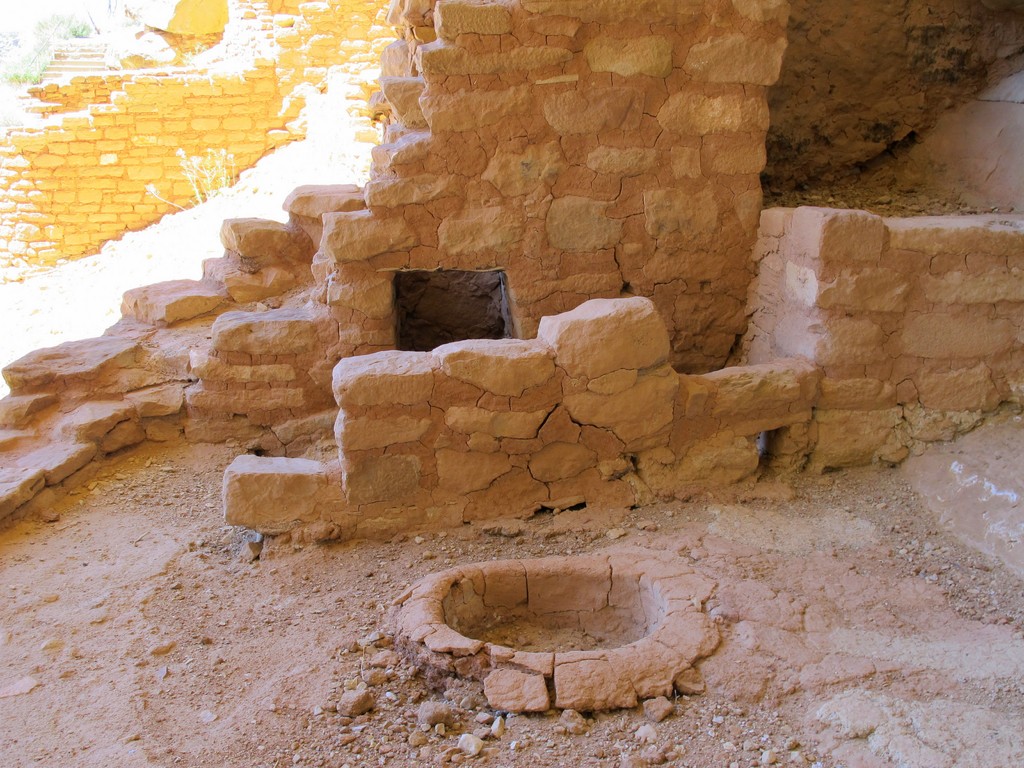
The first building we looked into was quite intact.  The Puebloan People crawled into their dwellings through a small door. Windows were often smaller than this one, and gave very little light.

This is what it looks like inside. Jim teased a little girl on the tram ride back and asked her if she would like to live here if they would install a television set.  Of course,  she said no. The climate gets very cold and very hot here.  Archeologists believe the ancient ones  spent as little time inside as possible. Mostly to store goods, sleep and cook in winter months. 
Looking down into one of the dwellings shows a fire pit with a deflector in front of it.  The chimney that brought in fresh air is behind the deflector, so not to blow embers or smoke around. Smoke went up through a hole in the roof.  It is amazing to think these people lived her around 568 BC.  Archeologists  know the dwellings were continually occupied for 200 years. Then abandoned and then lived in a second time.

No one knows how many people lived in this cluster of dwellings, but their middens show they hunted elk and the bones in the midden got smaller and smaller as the years passed, suggesting they had over hunted and game became scarce.  Knowledge had to be passed down to younger generations, and the average lifespan was 32 years for men and 36 for women. They were good architects; survivors; capable of eking out a living in a sparse environment.

Building here was no easy task, picking the stones, carrying them in, making the mud. This rock shelf had a small spring at the back wall that now grows moss and mosquitoes. Life giving to the Puebloans.

In the floor were grinding holes next to the water visible as a thin layer on the right.

And on the  floor, a moccasin footprint .

.

It is easy to romanticize and imagine the congenial families, children cavorting, enjoying story telling around a fire at night, women weaving, looking out over the beautiful canyon. But, the lifespan, the sparse living, suggest more work than play.

We hiked back up to our tram and got off at the Pit Houses. These ancient dwellings are covered for protection and precede the cliff dwellings.

This community of ancient peoples dug homes into the ground. We visited four covered sites  within easy walking distance of each other.

A large Kiva, where ceremonies and religious rituals  were held suggest a large community.  A drawing of what these dwellings looked like with a roof over is at one of the sites.

Why did they dig homes to live underground?  Why did they cease their formerly nomadic life style to live in “permanent” dwellings? One pit house had evidence of a fenced enclosure around it. Was it for protection?  To hold livestock, like turkeys?  No one knows. Archeologists suggest the planting of corn, changed their lives from nomads to farmers. They used practically every plant in the canyon for food and medicine.
I thoroughly enjoyed seeing how they lived and imagining being set down in this hostile climate and  being able to survive. For us, not possible.