Showing posts with label boats. Show all posts

Saturday, September 20, 2014

WESTPORT HARBOR, PART ONE.

DSC05197 (Copy)

Westport Harbor has a marine Museum located in the former Coast Guard Station, an appropriate transition.
DSC05200 (Copy)

It is on a board, how can you get a notion of the size of a 126.5 lb salmon. Having just carved up a 5.25 lb salmon that has thus far provided Jim and I with three meals and three left to go in the freezer, I had to think seriously about this big fellow. It was 53 inches long and had a waist line of 42 inches. Now that puts it as tall as a 10 year old boy with the stomach of a pregnant woman. Yup! On a board. There is pictures of other giants on the wall at 57 pounds and down. I now look at them as food. No wonder the Indians of the Northwest were so healthy and prolific.
DSC05201 (Copy)

I try to find something that I've never seen before in a museum. Certainly the salmon qualifies and so does this dairy. Instead of a milk delivery from door to door, the milk was delivered to a tree. Now that is novel.
Destruction Island Lens

One building on the Coast Guard complex was devoted to the fresnel lens from Destruction Island Light House. Ive seen many lenses but never so beautifully displayed. The docent imparted a bit of trivia, telling me that the state with the most lighthouses is Michigan. Since I lived there for 13 years, why did I not know this?
DSC05303 (Copy)

This building held skeletons of whales, the Minke, and other whales are endangered because Japanese hunters refuse to obey the hunting ban.  The length of the building, the long part of the L shape, is 100 feet. A blue whale, the largest living mammal on earth,  would take up the entire building. What interested me about this exhibit is signs on the building, Clam Chowder, $5 a bowl. A hotdog and a soda, $4. It went on to compare fish foods to junk foods and gave me another perspective on the relatively cheap food we have in America, healthy as opposed to unhealthy.
DSC05210 (Copy)

It was about lunch time and we zapped over to Bennett's Fish Shack, which came highly recommended and we weren't disappointed.
DSC05211 (Copy)

Clam chowder and crab cakes. The docent at the museum told us Dungeness crab tastes better than king crab. I have to agree.
DSC05209 (Copy)

On the street we met little dog, Mikey. Who could resist a pose like that. I know he was just begging me to take him home. If I ever get another dog, I'll chose a little one.
DSC05216 (Copy)

After lunch, we walked in one of Washington State's "heavy mists" along the harbor. It turns out that Westport is the most western point in the U.S. mainland coast. It also has the highest lighthouse on the West Coast, now open to tourists. We didn't get there. But we had a great time photographing the largest Marina on the outer coast of the Pacific Northwest.  I stopped and gabbed with this fisherman and a couple of others. No luck. They all complained they'd seen few salmon in the water but this guy said, in a couple of weeks, there will be thousands of them in the harbor. People here love to fish.
DSC05217 (Copy)

Suddenly, on float #8 (I think it was 8) we saw some excited activity, a plastic bag full of red meat salmon on the float. (Click to enlarge this photo, then back arrow to the blog.)
DSC05218 (Copy)

A fishing boat had come in and this dude on the right was filleting them for the guys to take home.
DSC05225 (Copy)

I asked him how many fish he's cleaned and whether the people on the boat had any fun, like a little wine, some music, maybe a dance or...? He looked at me and said, ..."fishing is fun, that's what we do." He said he'd probably cleaned a million fish.
both silvers, despite diff in color

These two silvers were on the boat walk and the fisherman was waiting in line to have them fileted.
I caught the big one for the day on his hat 14 pound silvers

He was only too glad to hoist them up for us to take a picture. He got the pin for the  day's catch, "I caught the big 'un on the Tequila. " He hadn't had them weighed yet. All hands estimated the big one to be 14 pounds. The captains know where the fish are and everyone got their limit which is two salmon, plus whatever else they are allowed.
DSC05221 (Copy)

This guy was tagging heads. He knows how many boats go out each day. They are all licensed. They told him they had to throw back a silver which he records on his chart. He tells what boat these fish came from, the total catch, and a number of other statistics. He knows where they were raised, from what hatchery and the statistics give him an idea how many are still out there and when to close the season to allow for spawning. Fishing is tightly controlled to make sure enough survive and keep the fish numbers sustainable.
DSC05229 (Copy)

We walked the floats and took pictures around the harbor. This is Jim's favorite nickname for me.
DSC05234 (Copy)

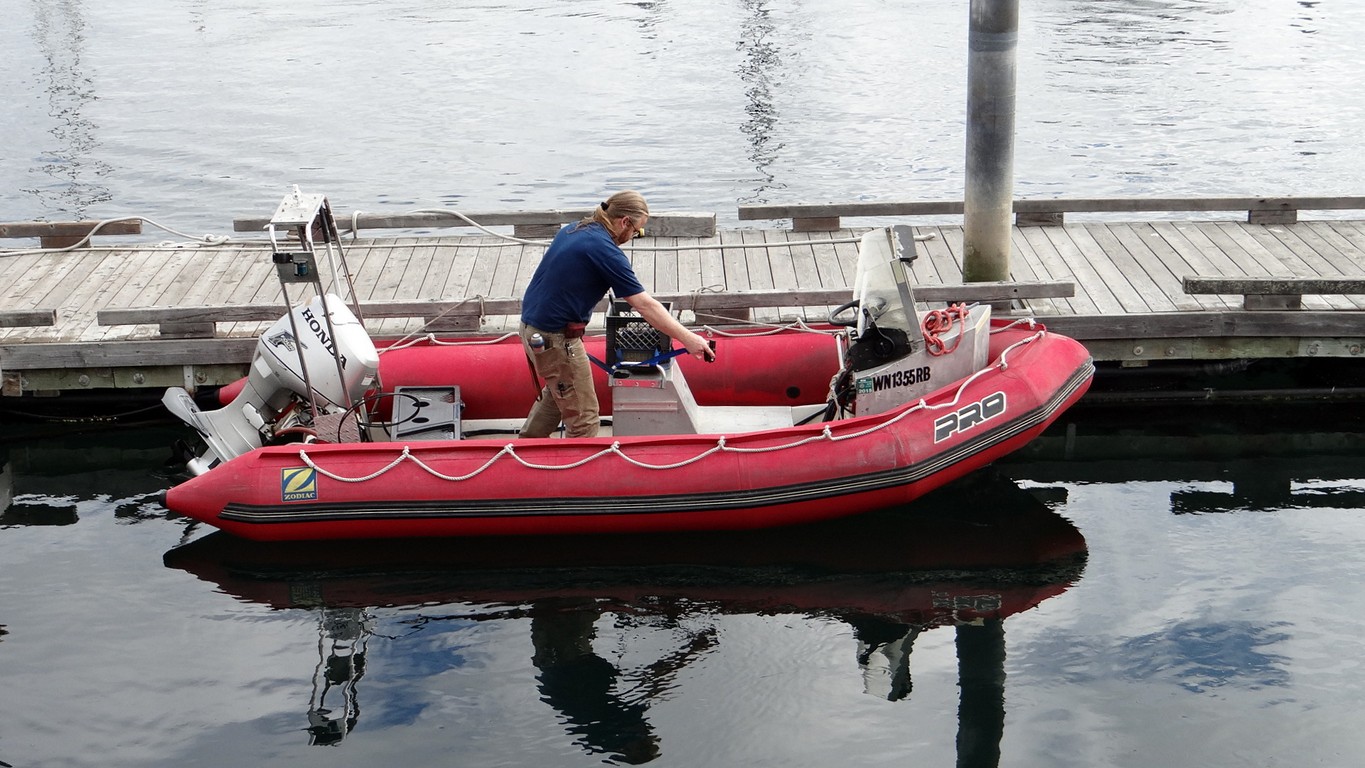
The marina is a fascinating place with small, individual boats like this one.
DSC05235 (Copy)

To huge net trawlers like this one.
DSC05240 (Copy)

We see very little color in this gray atmosphere.
DSC05250 (Copy)

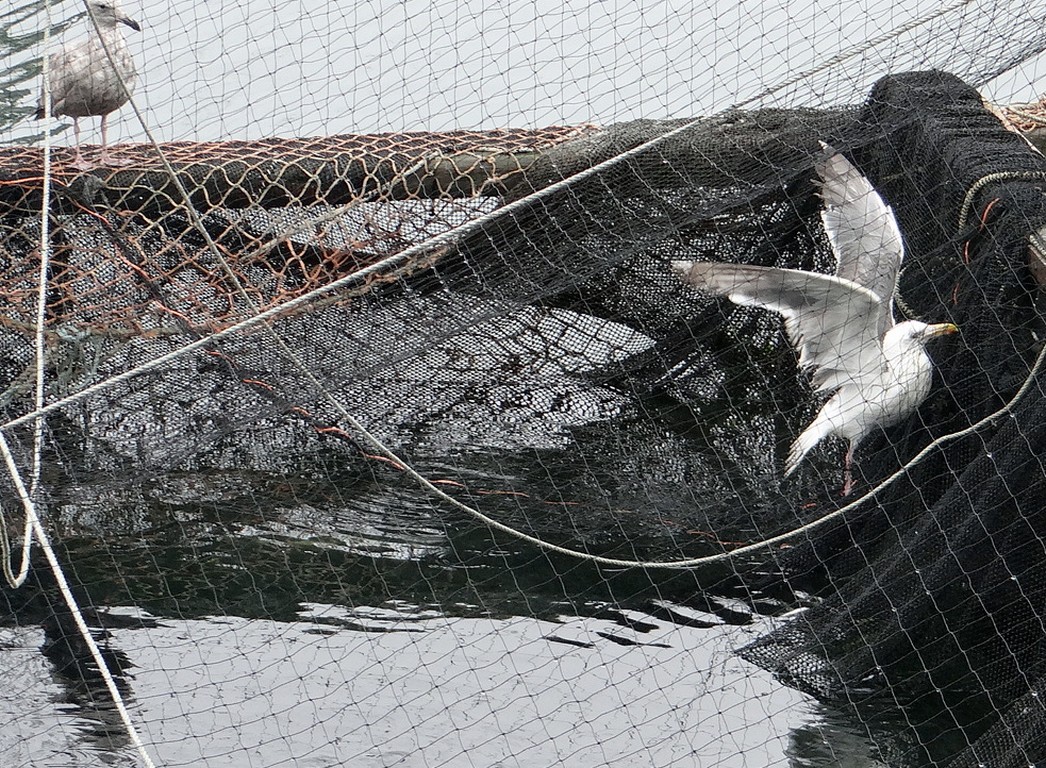
As we drew nearer the commercial floats, pens of fingerlings have been planted here. This gull somehow got under the net and then could not get out. We watched her try and try to get out. I know some birds mate for life, maybe gulls do to because the brownish gull kept returning to her and watching helplessly by while she struggled. It was sad to watch.
DSC05253 (Copy)

A heron stayed hopefully by the fingerling beds for a long time.
DSC05262 (Copy)

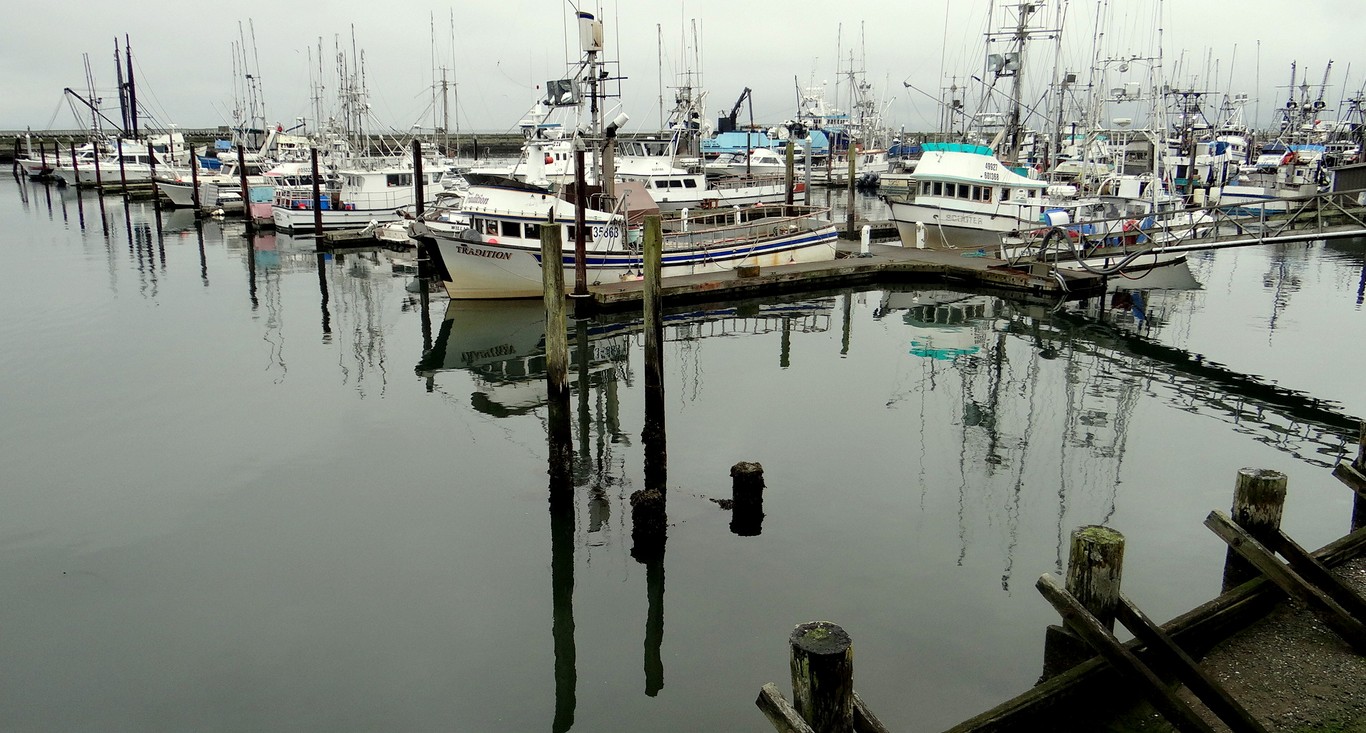
In two weeks, maybe the whole fishing fleet will be after the salmon. A poor fish doesn't have a chance. I think there were 15 floats with boats tied to each side.
DSC05269 (Copy)

We found fresh air, wonderful people, fish and beauty. But, I'm not finished. More tomorrow. We move 100 miles south today to Seaside.

Thursday, September 4, 2014

AN ENTERTAINING DAY AT PORT TOWNSEND.

DSC09143 (Copy)
My cousin, Bob Moore lives in Port Townsend and he wanted us to meet him at the town fountain, and then have lunch. We knew that PT has a walking or driving map of the hillside homes, old victorians from the 1800's, above the port, but the real action is "down town". Nice old Victorians have been preserved on Water Street as well.
DSC09141 (Copy)
They reflect the former grandeur and economic importance of Port Townsend.
DSC09169 (Copy)
My favorite was this old brick clam cannery, 1885. I briefly met the owner, but his place wasn't quite open yet.
DSC09161 (Copy)
But to really get a feel for the city, its friendliness, its artistic bent, its present character is to notice things like this little park made from junk.
DSC09159 (Copy)
Anything that floats in is welcome here. The bike "antenna" has Christmas lights on it. Jim spotted an old bread delivery truck turned into a residence right at the pier's edge of the park, with a manikin head on top of it. He turned one just like it into a camper in his younger days. After we met Bob,he told us that some folks in town want to clean it up and get rid of it. But, people like the funky place. We ran into Bob before our appointed time for lunch.

DSC09174 (Copy)
When you live near water, there is much ado about boats and water sports and water traffic. Jim liked the new pier and took a lot of boat pictures. DSC09170 (Copy)
And I liked the old pier and took a lot of boat pictures. DSC09140 (Copy)
The ferry chugs regularly between PT across Puget Sound, part of the Straits of Juan De Fuca to several different islands in this island mottled area. You really need a map to appreciate the jagged coast line of hundreds of islands both big and small.
DSC09145 (Copy)
.
DSC09182 (Copy)
I stepped into this small boat builders place.
DSC09210 (Copy)
I passed by a bed and breakfast where this woman entertains passers-by every day in good weather. I also saw a thin woman in her 90's in levi shorts, exercising her dog. She didn't want her picture taken. Realize that I'm dressed in four layers and it is about 10:00 a.m. and she is in shorts.
DSC09184 (Copy)
I made it to the marina on the Point Hudson end of town. PT's other marina is on the opposite end of town.
DSC09194 (Copy)
This one is the prettiest.
DSC09195 (Copy)
No craft too small.
DSC09241 (Copy)
Before we met Bob at the Fountain, we saw him on the street after getting his hair cut. He said, I made a trip to our book store, you must read this book and he handed me a copy of "Boys In The Boat" by Daniel James Brown. We didn't know that this weekend, after we leave, Port Townsend is hosting  a big boat festival with tall ships, wooden boats and the author of the book will be in town to sign autographs. Bob was talking excitedly, in glowing terms, about this book when he came to visit us at Dave's and Melissa's camp. Then he led us into a thrift shop that had a poster of the town fountain and asked me to take a picture that imitated the poster. Here it is.

DSC09245 (Copy)
I was more interested in this tiny little electric car parked in front of the restaurant.
DSC09246 (Copy)
What a great little town car. Its a Gem, see the plug? We couldn't decide if the projector is a camera or a hood ornament?
DSC09226 (Copy)
Bob is a tourist in his own town because he's just moved here and is spending his first summer in PT while his significant other lives in their house in Nevada City, CA. with two years to go before she retires. We just happened to run into Mari, a 70 year old woman who unlocked this warehouse of long boats. We got a great education about them. A famous boatmaker, named Pocock built rowing shells of red cedar, one of which won the 1936 Olympics with a team from local communities like Sequim. A replica of that boat is in this warehouse, and, the "Boys In The Boat" is the story of one member of that Olympic Team. I can't wait to read it just from the cover introduction. The replica is the same boat, just three years younger.
DSC09225 (Copy)
Some of these racing shells are 60-65 feet long. Others measure anywhere from single seat rowers to nine seat shells, eight rowers and the coxswain. She told us that in competitions you can't fly a boat to the East Coast, so they have a boat permanently there. She rows with the women's team, "Tough As Nails."  She invited Bob to learn to row with the men's team. Mari has been rowing for ten years and had never done it before.
DSC09233 (Copy)
She said they don't race the heavier wooden boats anymore, but they are so comfortable and stable, these boats go out every day. She practices every morning at, depending on sunrise, 6:00 or 6:30. They go at it most of the winter. When they are shut out by bad weather, they have practice rowing machines. Pretty amazing. Talk about dedication. The new fiber glass boats are faster and long boats are required to break into three pieces so they can be trucked around to various places for competition. For competition they all must weigh the same. Like horseracing, the "girls in the boat" who weigh less have an advantage. There are over 30 boats in this warehouse.
DSC09221 (Copy)
Chugach baidarkas are also built here. This one is 17 feet long and sells for $1800. They are made with a solid frame and varnished fabric. Light weight skimming with one to three people is their advantage. This whole pier area was fascinating and I'll have to finish tomorrow.

Sunday, February 24, 2013

TRAPPING AND EATING CRAWFISH.

DSC03259 (Copy)

On what was supposed to be our last day at the American Legion, I mentioned that I wanted to buy some crawfish to take with me before we left crawfish territory. Mark and Marlene told us, no, you don’t want to do that, it’ll stink up your camper. You go see Cody and Leslie Newman. She called them on the phone and we went and ate crawfish and got a tour of his business and learned how it is done. Then, we got a date for the following morning to ride his boat and see how crawfish are trapped and harvested. I’m blogging the process in reverse.
DSC03302 (Copy)

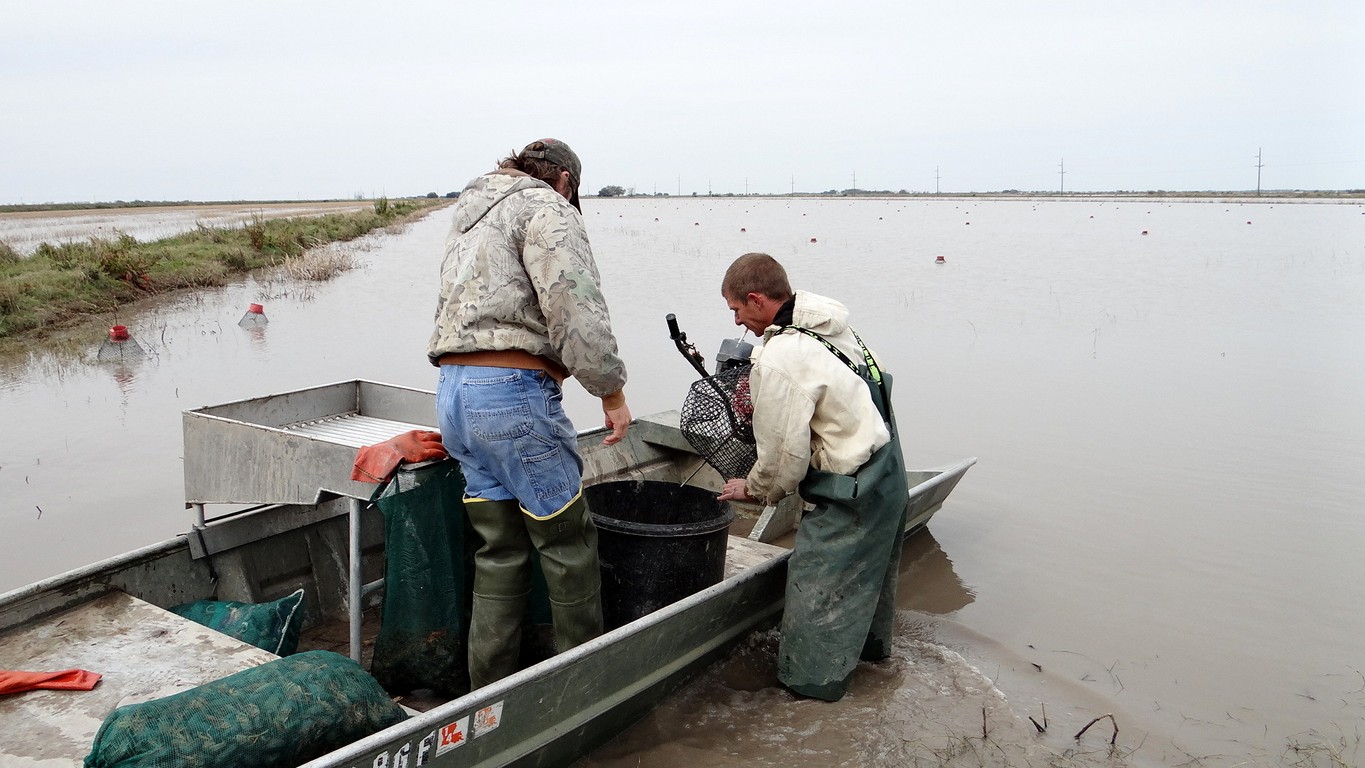
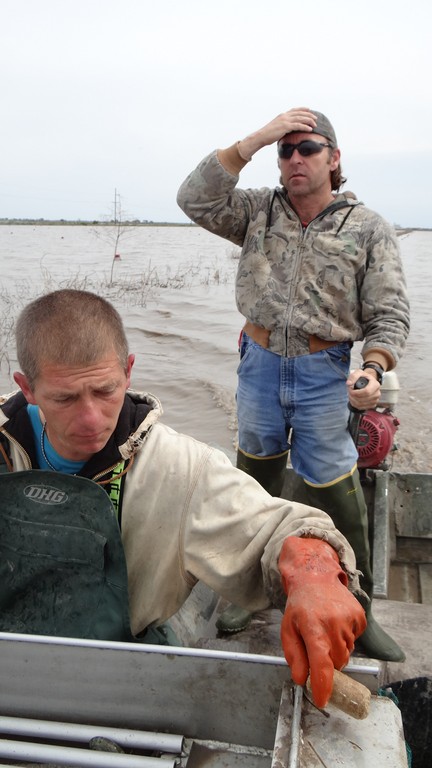
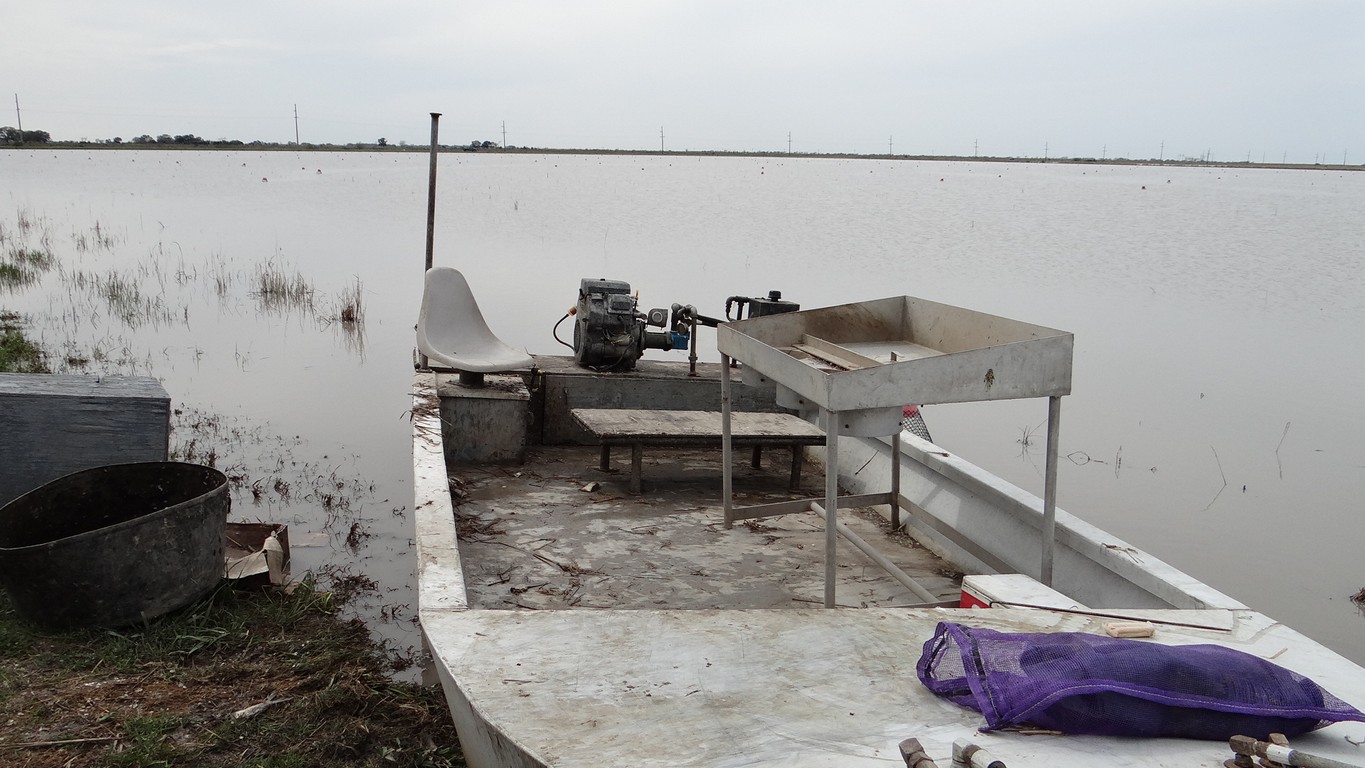
We followed Cody to his ponds. His boat is a two-man operation. Cody checks the bait tub to make sure there is plenty for your jaunt.
DSC03304 (Copy)

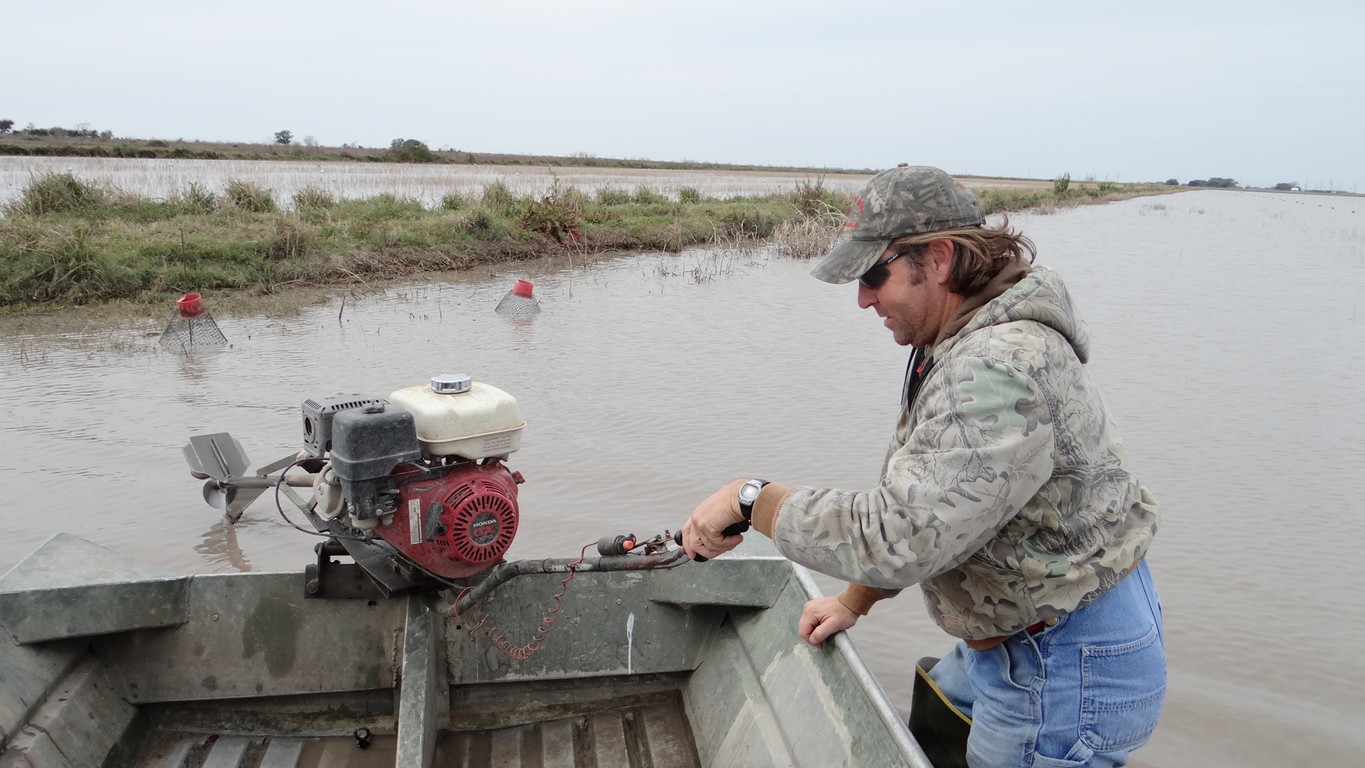
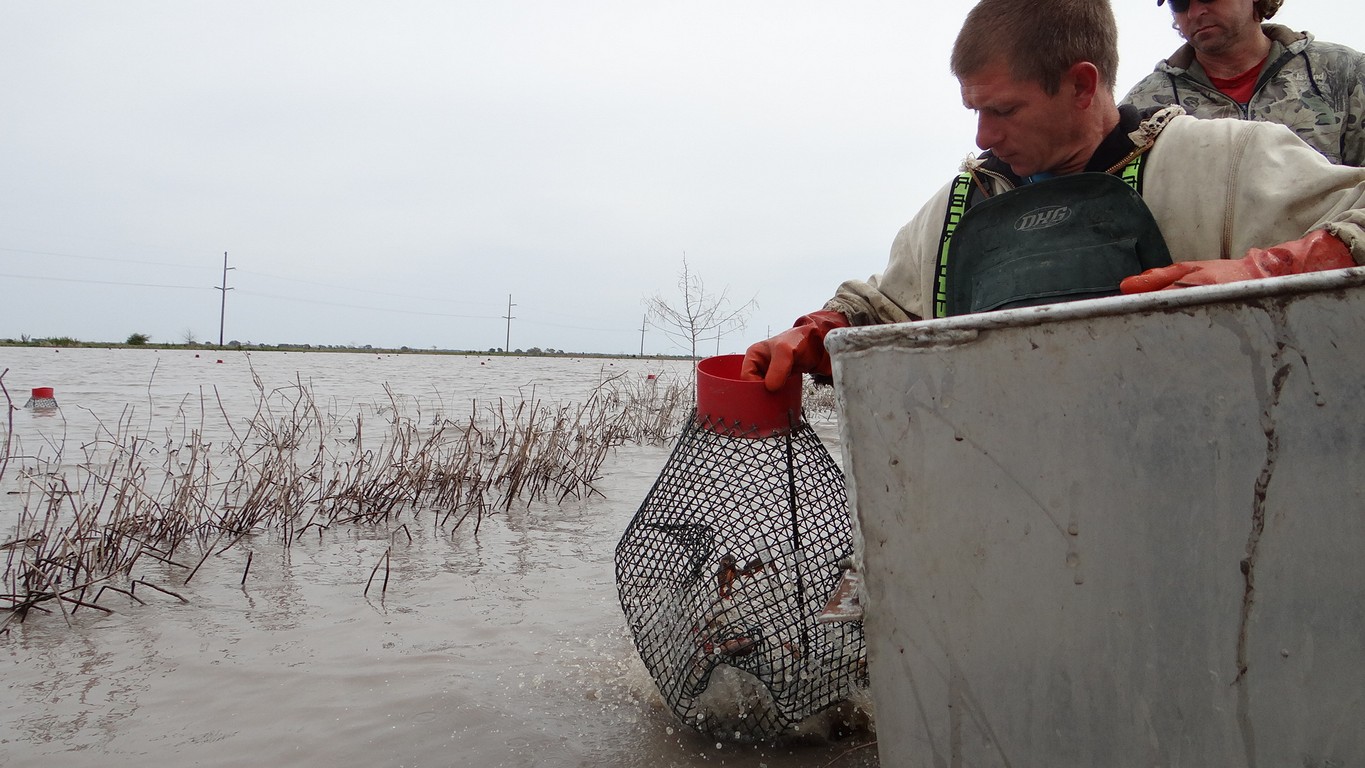
This Honda motor is air-cooled, quiet and propels the lightweight boat through the shallow water without harming anything. Once the process starts, the boat doesn’t stop.
DSC03329 (Copy)

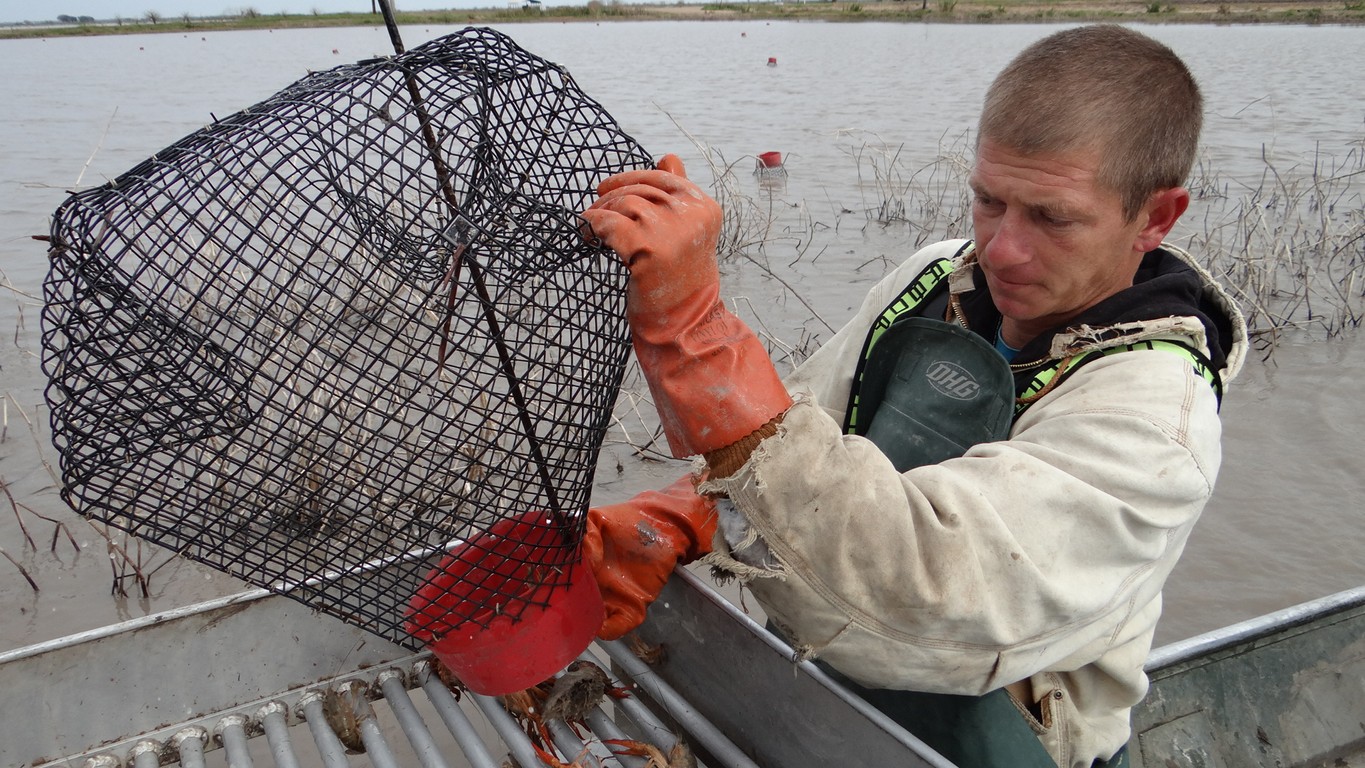
His worker picks up the trap on the move.
DSC03311 (Copy)

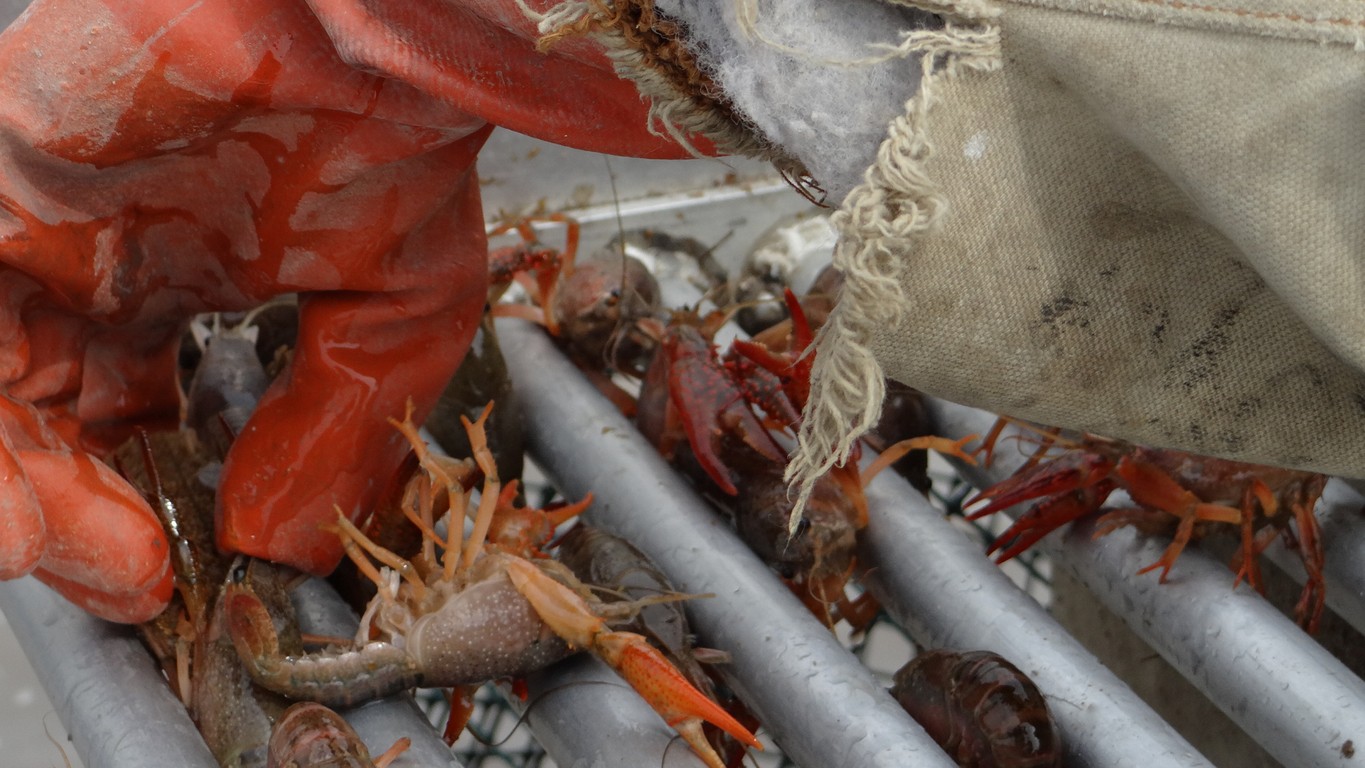
He dumps the crawfish onto the grader…
DSC03309 (Copy)

…pushes them into the bags that hang at the end of the table, which allows the small-sized fish to fall through the bars and slide back into the pond.
DSC03330 (Copy)

Then he re-baits the trap, and stabs it back into the pond behind the next trap he picks up. It is continuous. Dump the trap, throw out any old chewed up dead fish bait and put in new bait. Right now, Cody is using a poagie bait, a cooked product that has an attractant.  Fish are better but it takes three times the weight for the worker to bait the trap. Weight is an issue when you may have to lift three thousand pounds of fish in a days work with one arm.
DSC03336 (Copy)

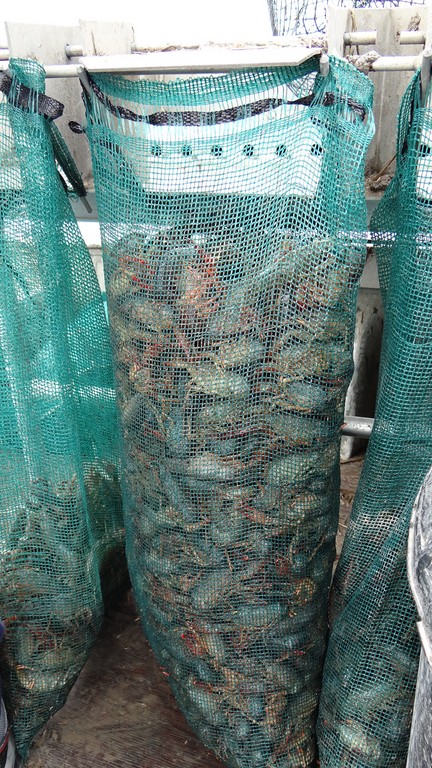
The bags hold from 30 to 35 pounds of crawfish. On a good day, he might harvest 1100 to 1200 pounds a day. In the peak of the season, they harvest every day. Every other day as the season wanes. The ponds have to be drained, dried and clean water put in between seasons. He plants rice as food tor the crawfish. He doesn’t harvest rice as some do since he works in the petroleum industry.
DSC03341 (Copy)

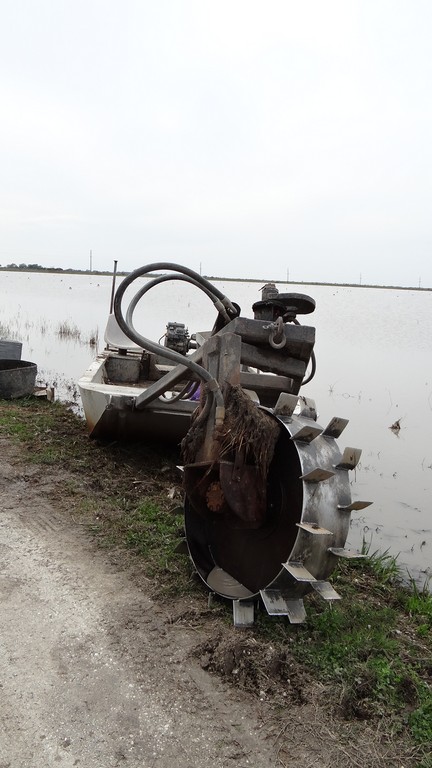
He showed us his other boat. It grinds a grove into the mud and pulls the boat along.
DSC03342 (Copy)

The advantage to this boat is that it can be operated by one man. The big wheel gets set in its groove and just moves along at the right pace while the driver pulls the traps, baits and sorts in the same way. The disadvantage is the damage to the pond has to be graded and repaired after using this method. Cody also mentioned that ducks ruin a crawfish pond. They kill the rice plants, decay removes oxygen the fish need,  their poop is acidic and harms the fish.  They have to fire guns to scare them away when they arrive by the thousands.
DSC03285 (Copy)

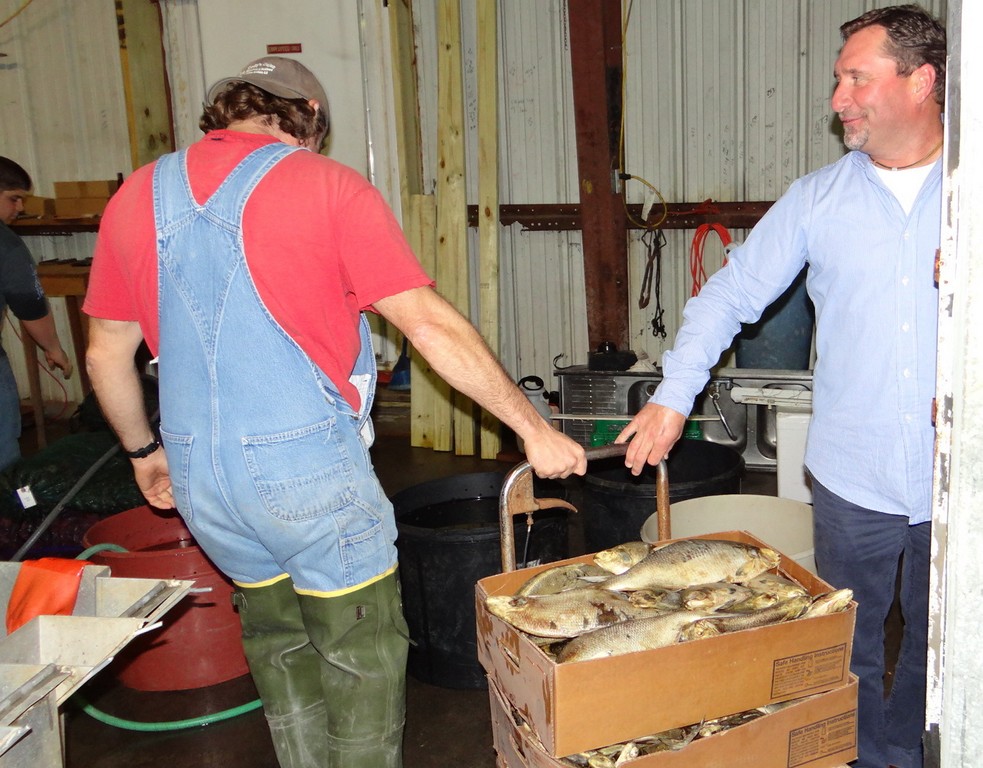
The previous day, when we walked into his shop, Cody was taking a delivery of shad, the bait fish.
DSC03266 (Copy)

And Cody’s mom had just delivered crawfish from her farm to the store. He buys from several other farms as well.
DSC03271 (Copy)

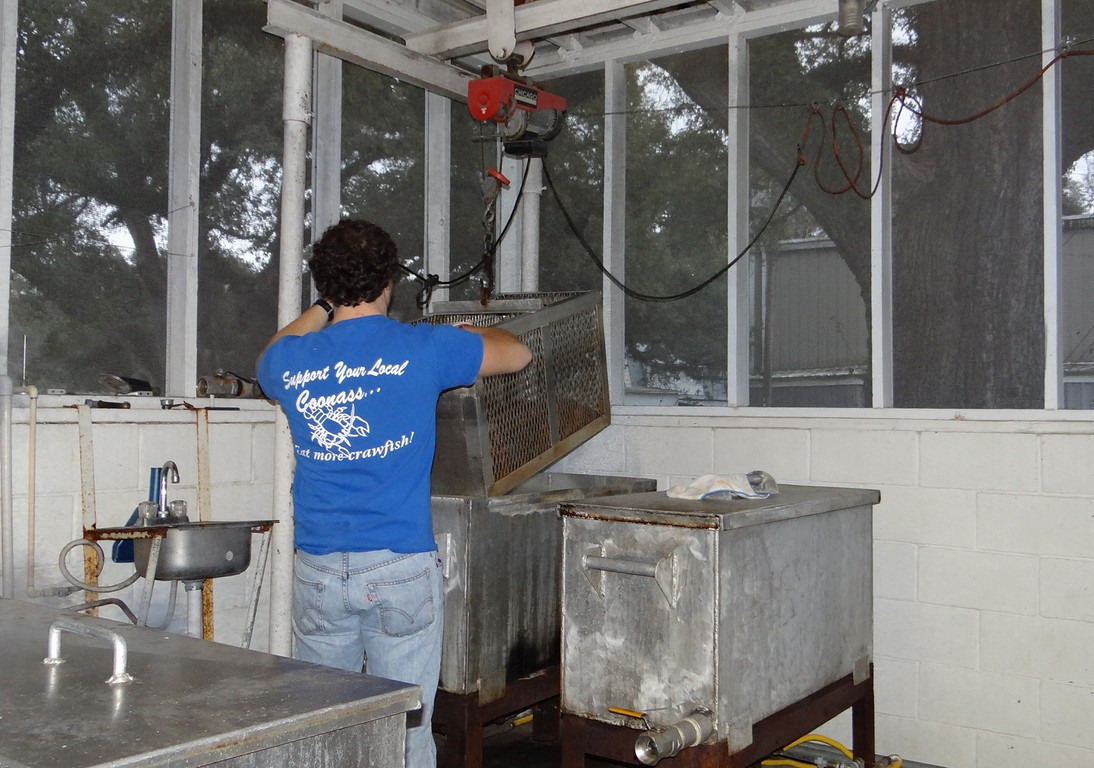
The crawfish are cooked in plain water for six minutes in these big boilers. Then they are placed in hot seasoned water for 12 minutes. Cody explains that he and others in the area are the only ones who boil that way. The 12 minutes gets the seasoning into the meat. Other places around the country add seasoning on the outside of the crawfish which gets on your fingers from the shell to flavor the meat as you eat. His crawfish is mildly seasoned. If you want it hotter, he will  put it on the outside.
DSC03273 (Copy)

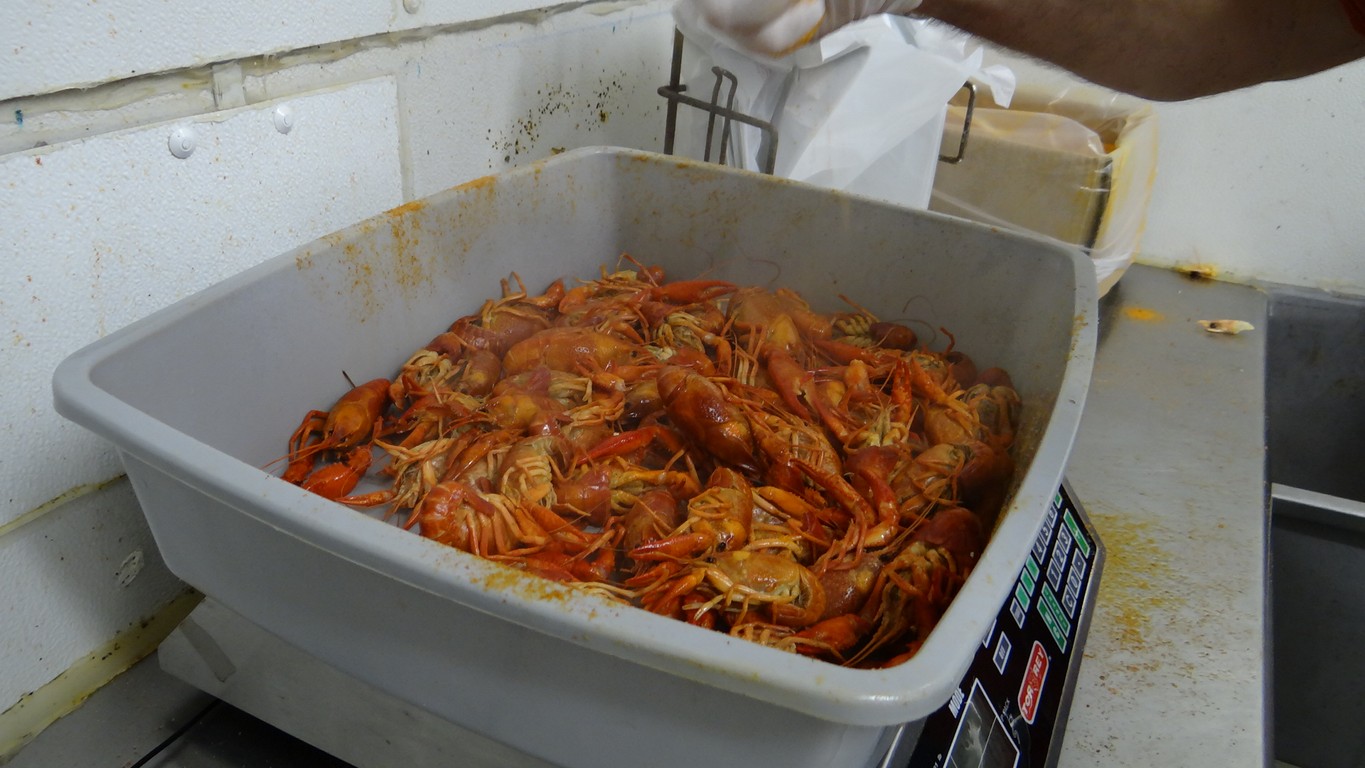
This is what they look like when they come out ready to serve. At this point he will add seasoning for a customer.
DSC03274 (Copy)

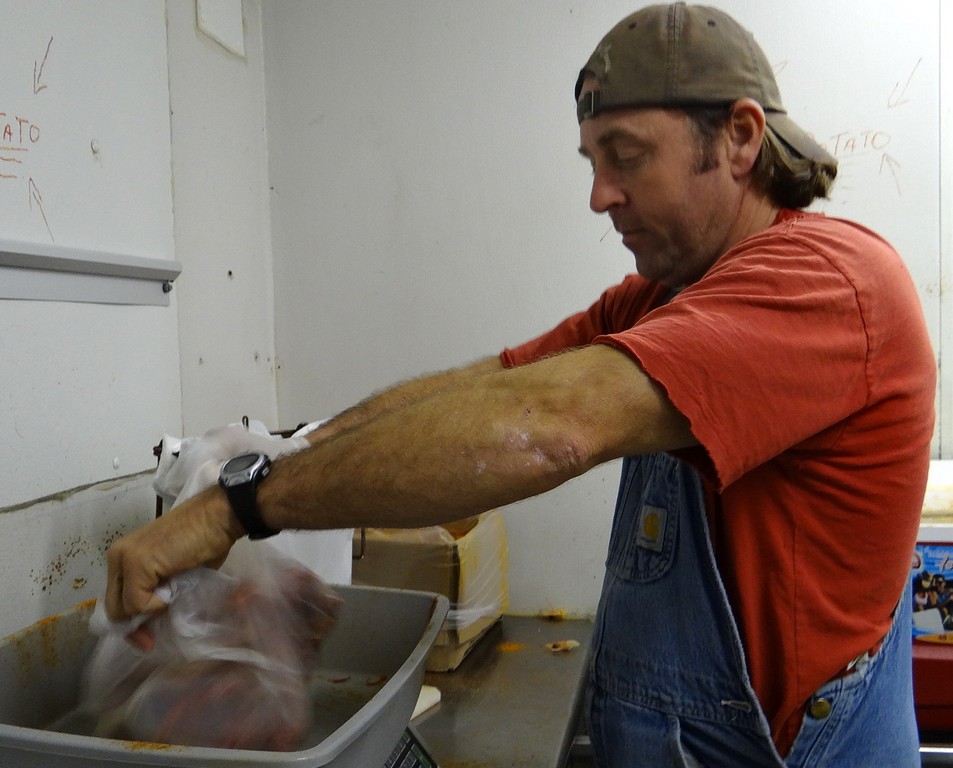
He bags and weighs the fish and put it on a platter for me.
DSC03279 (Copy)

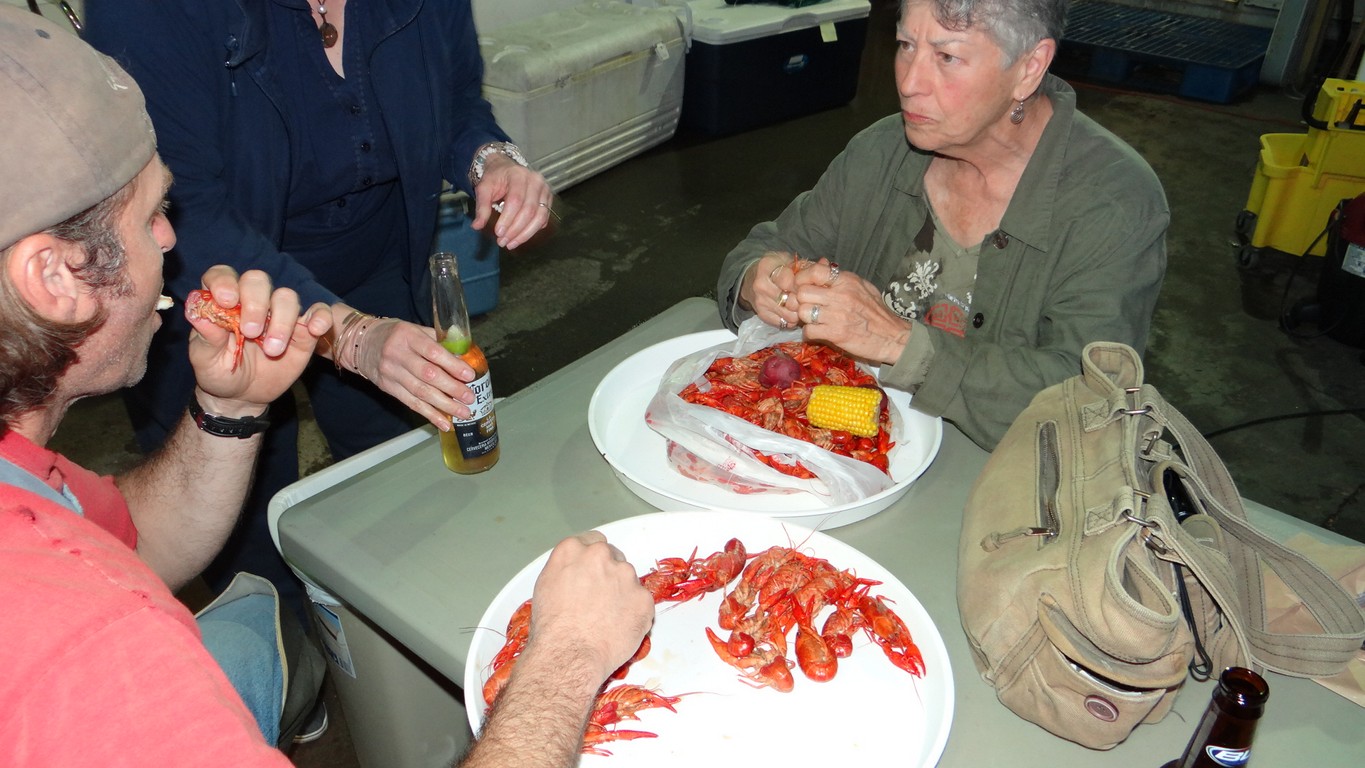
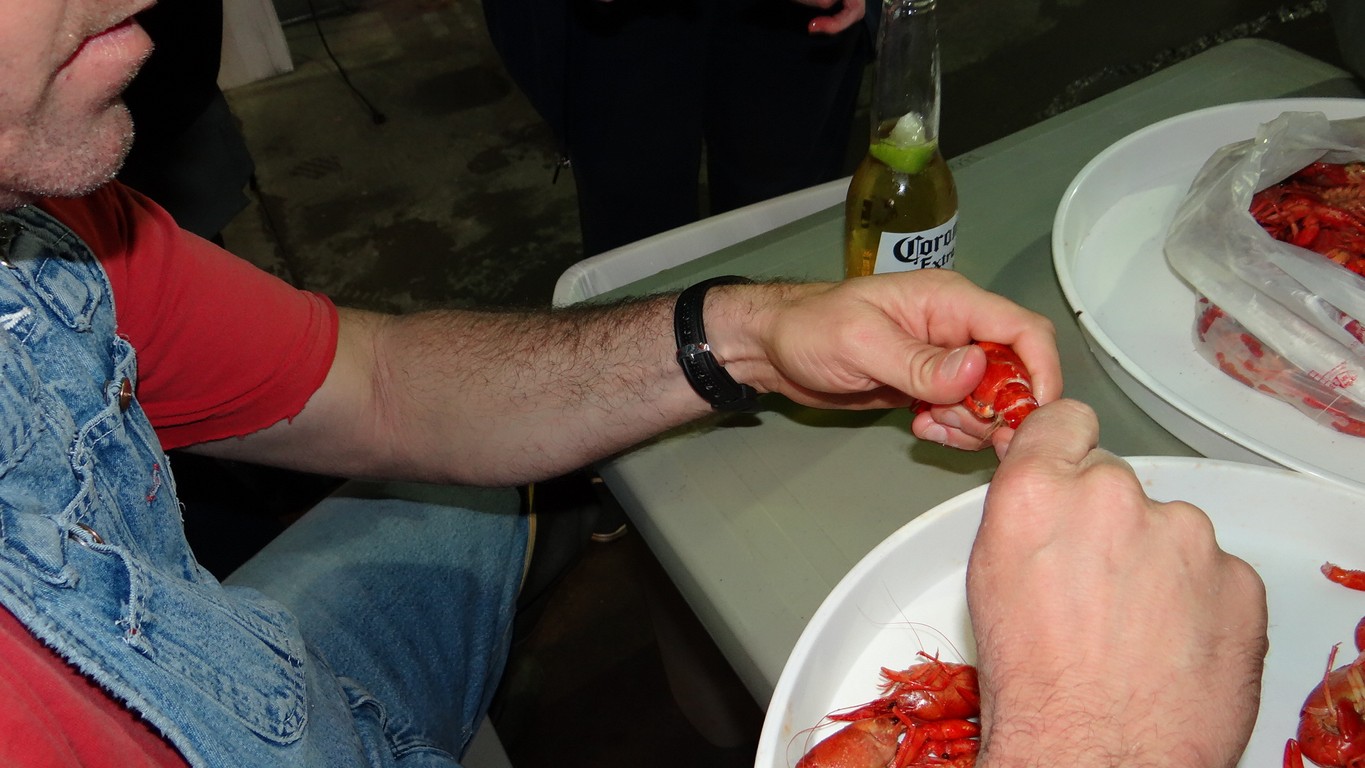
He taught me how to eat them. You push the tail in toward the body, and make a quarter turn.
DSC03278 (Copy)

Then you squeeze the tail and the meat pops up and you can bite it out in one piece easily. We’ve watched people in restaurants tediously peel away the shell from the tail. Cody showed us the proper way.  It works so well and I was so grateful to be able to eat those delicious little buggers so easily. Now, I know.
DSC03272 (Copy)

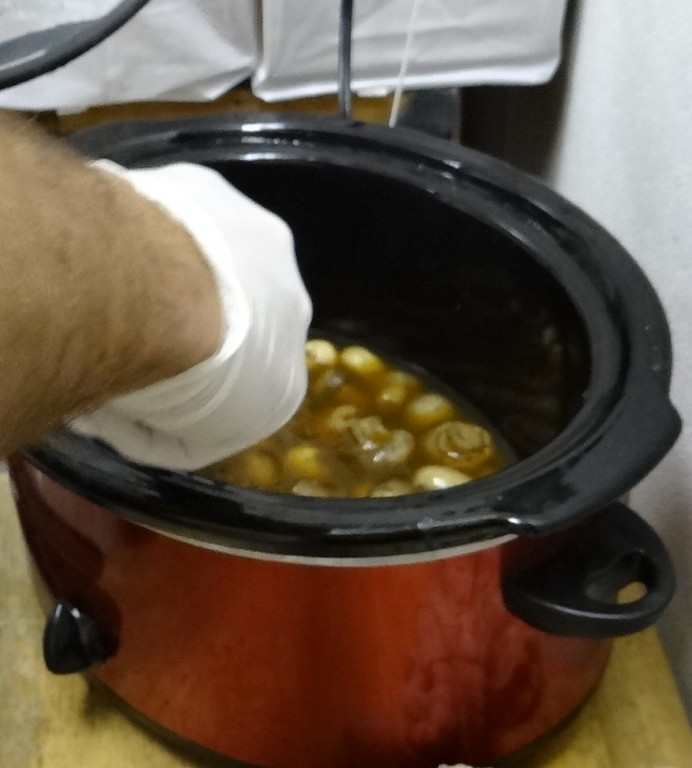
He also gave me a taste of his specialty Cajun marinated mushrooms which were delicious as well.
DSC03283 (Copy)

We were joined by another couple from Alaska and they told us about sucking heads, which Cody also referred to. You suck the head for the tasty juices that come out. And it is yummy. You can dig the meat out of the claws if it is a big crawfish. It took me no time to polish off three pounds of crawfish. I wish I’d bought about six pounds to go. But, it is best eaten the way it is served all over Louisiana. Freshly boiled. Thanks a million Cody!