Wednesday, August 6, 2014

BLAINE MARINE PARK, AND PEACE ARCH PARK.

DSC07713 (Copy)

Memory is not dependable. We knew we had visited this area in 2011. The problem was, we visited both parks in 2009, not 2011. I remembered so well the marvelous blackberries but forgot to bring a container.  Luckily I had a plastic bag in my purse. The Blaine Marine Park must have a mile of blackberries in several different stretches. But here we picked once before.DSC07714 (Copy)

The plants were bigger and meaner. Blackberries grow on new growth, so the old canes are big and sharp. We contemplated that the park must have to mow the whole works down at some point to keep them in such tight control.  I ate my fill and picked enough to take home. We had a big lunch earlier at Lizzies, all wonderful, homemade cooking. So we decided to stop at the store for ice cream before going home.
DSC07723 (Copy)

We walked the docks where all the fishing boats come in across from  Semiahmoo point. The breeze was heavenly and ruffled the feathers of the gulls. They are messy and bomb the wharf with clams to break them open, but we enjoyed watching them for about an hour.
DSC07735 (Copy)

They seem to know where to find the biggest clams.
DSC07725 (Copy)

When they fly around, we tend to think of them as white, but they really have a lot of variation in color.
DSC07728 (Copy)

Then I noticed this pigeon. I didn’t think pigeons hung around salt water. And look at those red feet.DSC07727 (Copy)

This must be mama, though she seemed to be chasing him. She is bigger and less colorful than the male.
DSC07716 (Copy)

We walked out through the commercial buildings on the dock. This truck belonged to a Crab Buyer but his logo is a lobster.
DSC07744 (Copy)

We were following the raucous sound of the birds. These cormorants were screaming and hollering to a similar colony across the water from them,  along with some gulls.
DSC07779 (Copy)

Then we drove over to Peace Arch Park.
DSC07781 (Copy)

We wandered through the gardens and then walked to the Canadian Side of the arch, first.
DSC07787 (Copy)

Then, the U.S. side.
DSC07783 (Copy)

On the inside of the arch is this commemoration from 1914. On the opposite side, the same gate with the statement, MAY THESE GATES NEVER BE CLOSED. It is refreshing to see this wide open border between our countries and sad to think of the horrible gates between the U.S. and Mexico.

DSC07802

The gardens and sculpture on display at the Peace Arch Parks, both Canadian and American are spectacular. I’ll post some pictures tomorrow.
At home,  we ate blackberries and ice cream in place of dinner. Jim and I both realized in the five years we’ve been together, we’ve never bought ice cream, other than a cone here and there along the way. Neither of us are big on ice cream. But, it was heavenly with berries.

Tuesday, August 5, 2014

SEMIAHMOO CANNERY MUSEUM.

DSC07652 (Copy)

About a mile from Semiahmoo Cannery is the Semiahmoo Cannery Museum. Easily identified by a totem sitting in front of twin buildings. The museum is run by volunteers and asks for donations. The second building most likely supports it by rents from weddings and other affairs.
DSC07648 (Copy)

The bride smiled sweetly when I took her picture. There was also a bride at the cannery, but I was unable to get her picture. Suffice it to say, both parking areas were very full and busy on Saturday. But, brides are always good luck. What a happy time for them.
DSC07700 (Copy)

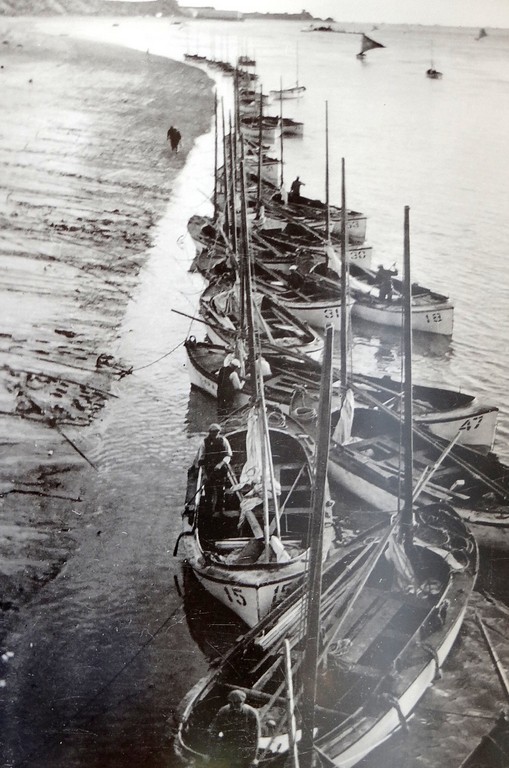
It started with fleets of small boats, netting salmon during the run and hauling their catch to the cannery.
DSC07662 (Copy)

Every day, these guys would go out and load their boats with fish maybe two or three times in one day. They’d bring in enough fish to feed an army.
DSC01221

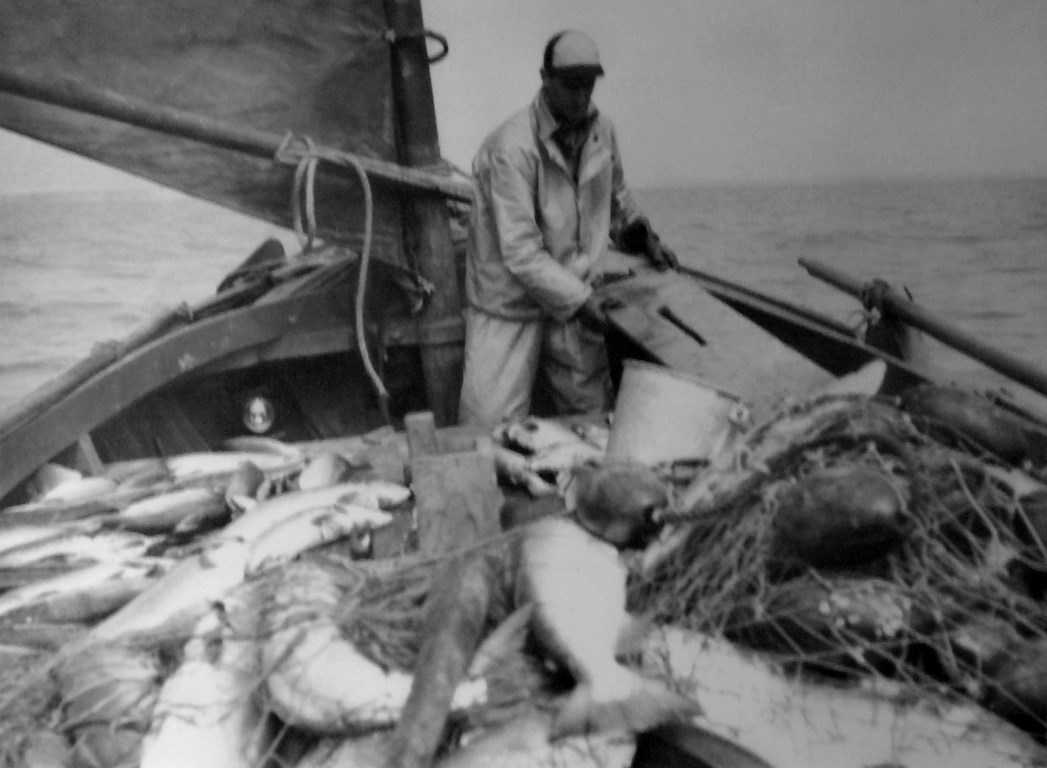
They would net enough fish to actually fill the boat, and look at the size of the salmon then. Not a small one in the net.
DSC07674 (Copy)

Salmon became the biggest West Coast Industry along with logging and big companies stepped in to reap the bounty. Fleets of company boats went out salmon fishing everyday instead of individually owned boats.
DSC07695 (Copy)

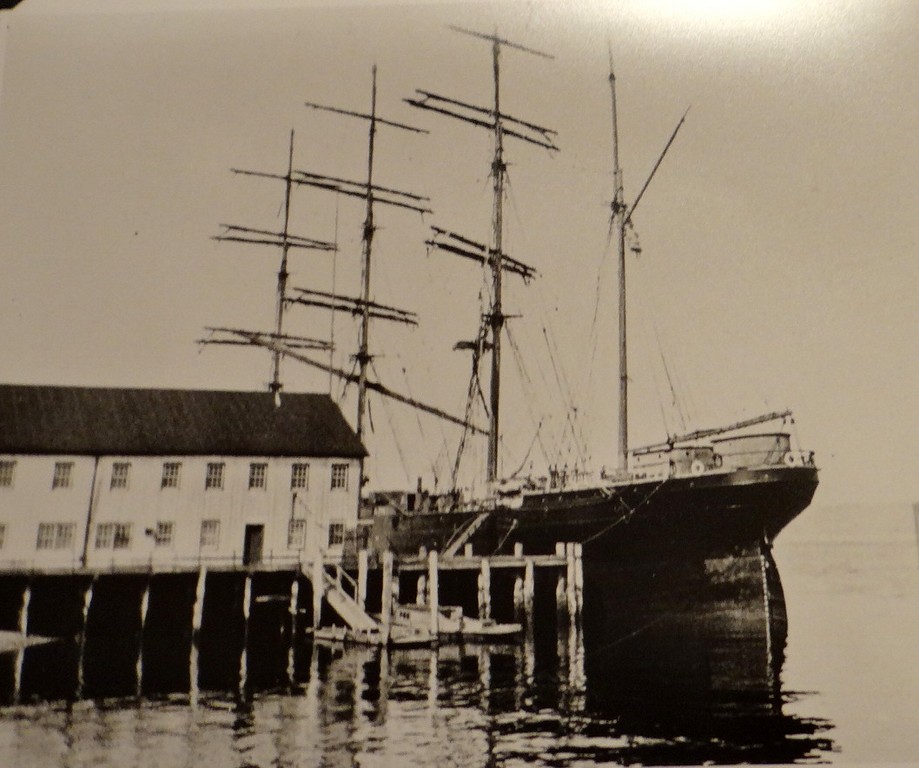
There was a cannery on every river from the Pacific Northwest to Alaska, 50 of them.  They all knew each other an competed. Only one, at Dillingham, Alaska is still in operation. There are new ones, but not the old canneries from the 1900’s. Most are gone. The boats, went to huge wooden sailing ships, like the one above, then steel sailing ships, to motorized ships. It became very big business indeed and is still a corporate operation today.
DSC07689 (Copy)

The real dirty work of cleaning fish by hand,  and loading cans and boxes of fish for market demand, was done mostly by about 30,000 Chinese workers imported to do a dirty and dangerous  job. Some had boats and fished for themselves but they were not welcome to compete on the water.  Always industrious, they still managed to send money to their families in China, considering it was a short, seasonal job.
DSC07653 (Copy)

All that changed with the invention of the Iron Chink, patented with that racially charged name by Edmond Smith of Seattle in 1905. It revolutionized the canning industry. Each of the nine Iron Chinks at Semiahmoo took the place of 15-20 laborers on the fish line. The machine could process more than 100 fish per minute. The industry grew exponentially.

DSC07682 (Copy)

The only reminder of the Chinese contribution to the industry in the museum, the Iron Chink and these two whiskey bottles.
DSC07698 (Copy)

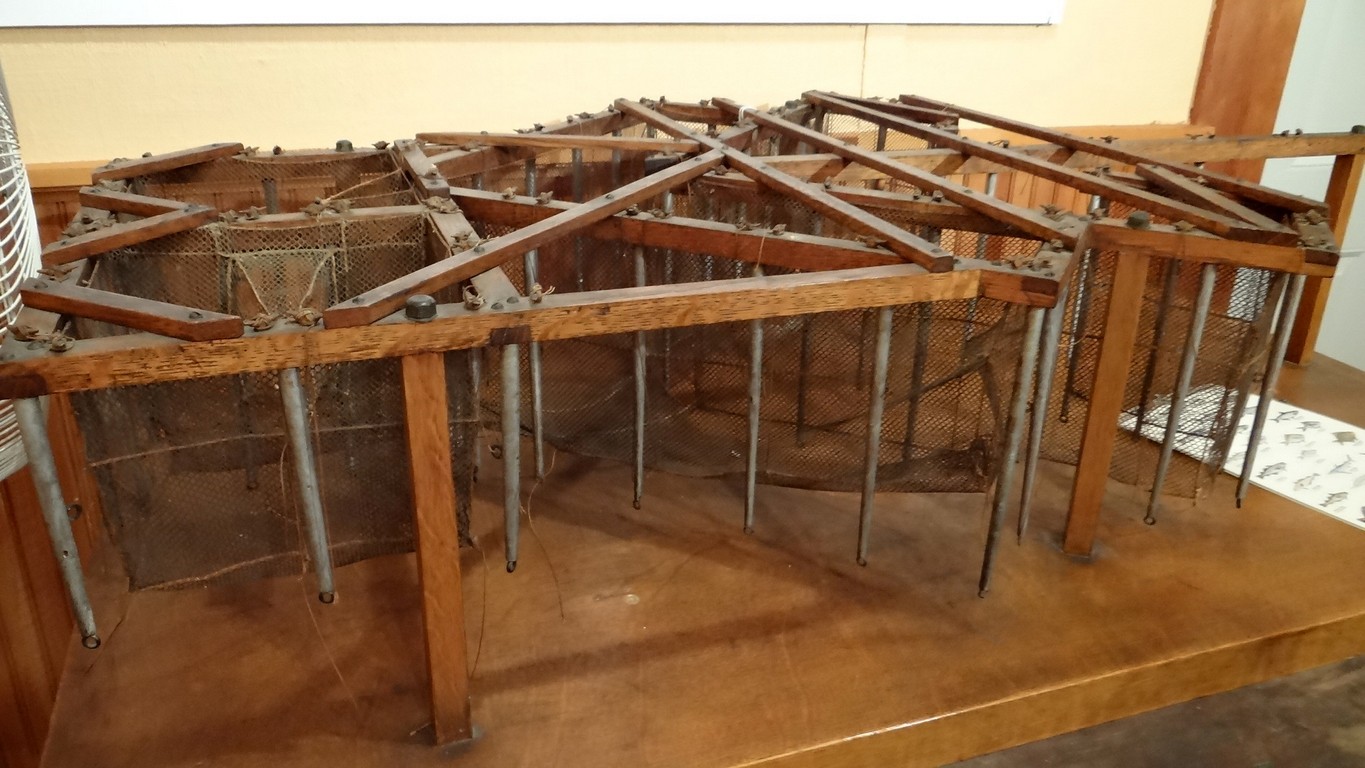
Before the big ships and the big corporations took over the industry, local fishermen decided to fish the way the Indians did, by building fish traps across narrows in the rivers. The take diminished so badly within a couple of years that the traps were outlawed. The Indians fed themselves, they didn’t fish commercially.
DSC07685 (Copy)

The cans were flat, then rounded and fitted with a bottom and rim before being filled with fish and sent through the cookers, and capped.
DSC07659 (Copy)

Then they were labeled, packed for shipping and found their way into our pantries.
DSC07687 (Copy)

Labeling and building boxes was a side industry of its own. This stencil machine was invented in 1911.
DSC07691 (Copy)

The stencils were metal and used over and over again.
DSC07692 (Copy)

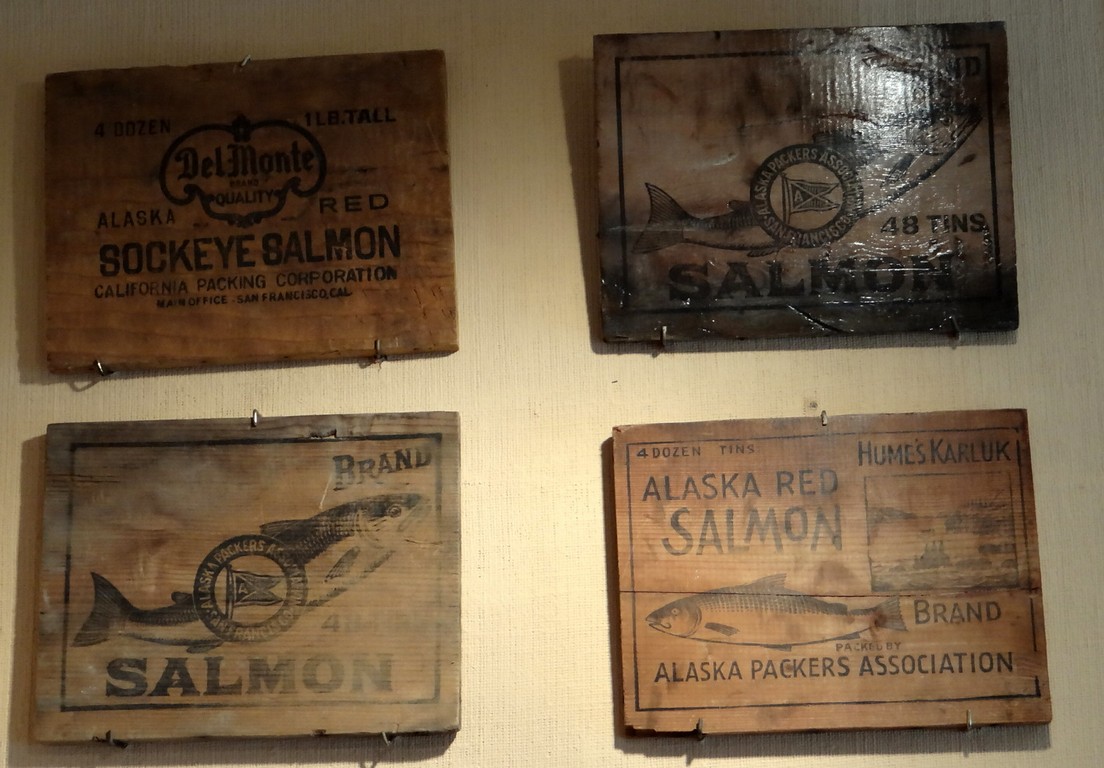
Applied to the ends of the boxes, that held four dozen small cans of salmon, less of the larger cans.
DSC07696 (Copy)

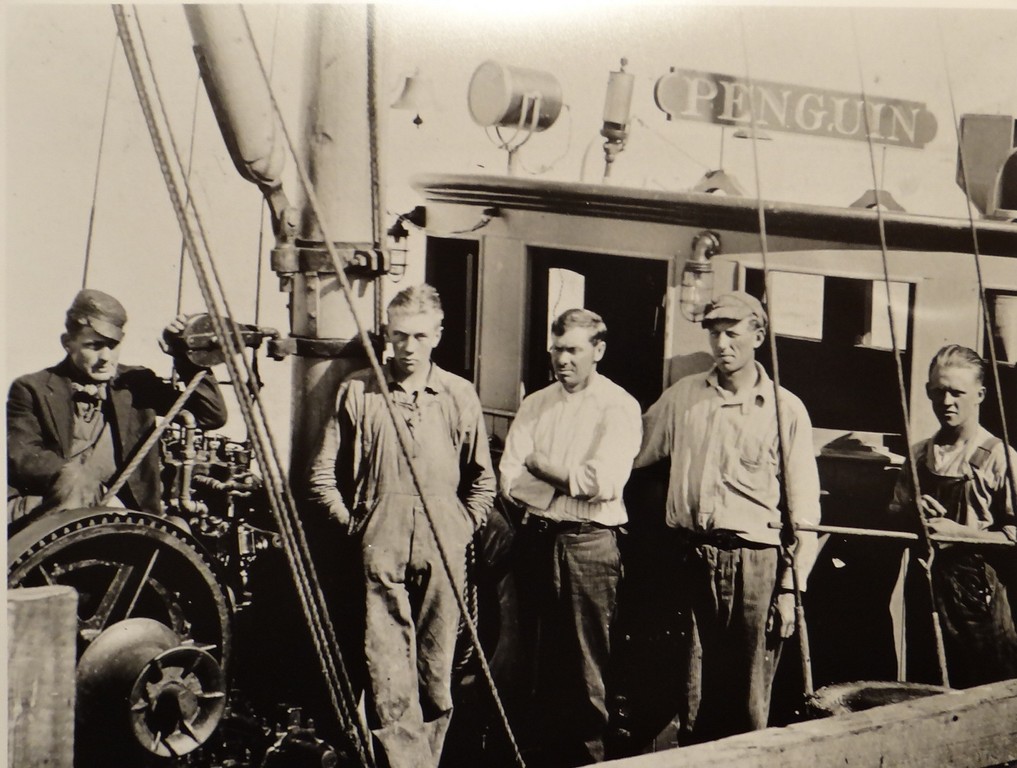
The Penguin was a popular local boat under Captain Thorstenson.
DSC07669 (Copy)

All of the pictures are copies from the museum, showing the industry as it went from one man operations like this one…DSC07673 (Copy)

To huge netting operations like this. The museum has a wonderful film that captures the story as it unfolded from the 1880’s to present day. In the film, a woman who worked the office of the cannery said, “If you ask around, even today, you can hardly find anyone who didn’t work the salmon, or had an uncle, father, or grandfather who worked the industry. And they loved it.” This museum is only open during the summer months and we missed it on my first visit here in 2009. It is well worth visiting.

Monday, August 4, 2014

SEMIAHMOO CANNERY ON TONGUE POINT.

DSC07612 (Copy)
On Saturday, we visited the Semiahmoo Cannery on Tongue Point. To do justice to this picture of the old building, click on it twice to enlarge it. It was once the largest salmon cannery in the world.
DSC07614 (Copy)
The old building has a lot of character.
DSC07610 (Copy)
Character that will be its demise someday, as it stands slowly rotting away. I expect the money to restore a building like this is scarce or non-existent.
DSC07616 (Copy)
In that cove a ferry dock takes people across the channel to White Rock British Columbia or to Blaine which is just around the point. I want to kayak while I’m here, but Jim isn’t interested. One rental outfit works off the point. I talked to a family that kayaked to a spot on the U.S. side where they were entranced by a colony of seals with new little pups.
DSC07609 (Copy)
Another tourist attraction on the point is the Plover Ferry.
DSC07636 (Copy)
The wide paved bike/pedestrian trail that leads to the point, we learn, is part of the historic Pacific Coast Millennium Trail. What an appealing area to visit.
DSC07625 (Copy)
Another tourist attraction is the old pirate ships. Two of them entertain by having a battle at sea. We didn’t ride it, but we heard the gunfire as the two ships engaged.
DSC07631 (Copy)
Plenty of other boat rides are available to anyone wanting a ride on the Salish Sea.
DSC07638 (Copy)
We drove to the modern Semiahmoo Marina, very pretty, with  restaurants and related businesses about.
DSC07647 (Copy)
I liked the name of this guy’s boat.
DSC07635 (Copy)
But, the barnacle clad, old rotting piers at the cannery were much more interesting.DSC07629 (Copy)
This mossy growth is everywhere on the old pilings. I swear, in the wake of even the smallest boats, the pier rocks back and forth as though they aren’t attached at the bottom. A bit disconcerting. But the gulls love it.

Sunday, August 3, 2014

I LIKE BEING BUSY.

DSC07599 (Copy)
Friday night, the park hosted T/3, a two person band from St. George’s Utah. They set up on the grass and played for everyone from 7:00 p.m. to 9:00 p.m.
DSC07598 (Copy)
With the special effects of electronics they can sound like just about any musical group you have heard before. With a wide repertoire, they had something for everyone, from Jimmy Buffet’s Margaritaville, some country, Nancy Sinatra’s, Boots, Franks, Something Stupid Like I love You, to some hard rock numbers, and fast dance numbers like Big Wheels Keep On Turning, Rollin’ On The River. I don’t have a good enough memory to cover it all, except to say, it was very enjoyable. Last year at Thousand Trails Palm Desert we heard one of the worst musical couples where most people walked out at the intermission. So, it was a happy comparison.
DSC07601 (Copy)
T/3 stands for Troy, Tyra and their little dog Tinkerbell. She has a great, strong voice that can growl through the rock numbers and caress the softer music while Troy is a whiz with the special effects. We didn’t get to meet Tinkerbell.
DSC07607 (Copy)
It was light out when they started playing, but by 9:00, the sun put on a beautiful display over the roof of the lodge.
Yesterday and Friday, I worked several hours on projects unfinished from home, but I like being busy even if the biggest appeal of the road is relaxation, carefree time away from daily cares and chores.
We got out late in the day and visited Tongue Point and the Semihamoo salmon cannery, and enjoyed a museum that was closed for the season on our last visit to Birch Bay. We returned by a circuitous route home, catching the scenery and I found a spot we hope to revisit for some pictures on another day.  We spotted a ranch that sells fresh green peas after we’d gone to our grocery for major shopping. The little beach store we stopped in on Friday had only bare necessities.  We were up late, woke late, a busy morning and I have Yoga, so, as my son Doug often says in his emails….yakatcha later.

Saturday, August 2, 2014

YESTERDAY IN THE PARK.

DSC07566 (Copy)
Jim went to town to get a new battery and an alternator for the Bronco, and I stayed behind.  Our neighbor has a permanent site here. They’ve had people of all ages coming and going and one guy offered to sell me these two motorcycles for $50 bucks each.
DSC07567 (Copy)
I found out later it was his friend, not his father who offered to sell me the bikes. He laughed when I told him. His bike is worth $70,000  He and his wife took off for a big bike rally a couple hundred miles away in Idaho. The son told me his dad had a house near Bellingham, a great big Victorian with lots of maintenance needed. He and his siblings got together and decided none of them wanted to maintain the place when dad died, so they convinced Dad to sell it, buy this permanent site and retire from housekeeping at 84. He loves it. And, he gets lots of company. Interesting idea.
DSC07565 (Copy)
We take a brisk 20 minute walk every morning and this cute little rig seemed so appealing. The owner has taken excellent care of it and told me it is 40 years old. Super. Last night she had a ring of chairs around a portable fire. With a small rig, you spend most of your time outside.
By the time Jim got home it was parking time. Rigs were pouring into the park. Huge rigs trying to avoid trees and other rigs attempting to wedge themselves into spots meant for much smaller motor homes and fifth wheels. Jim and a couple of neighbors were acting as parking attendants, guiding people into tight spots. The park is full to capacity, something we’ve never seen before.  Jim used to sell memberships in Thousand Trails. One selling point is how great they are for kids. You can turn them loose to have fun and not always have to have your parental radar on.  And it is so true. The kids just have an all out blast here. Riding bikes, swimming, flying kites, using playground equipment, and taking part in activities at the family lodge. Something for every age. The place was jumping.

Friday, August 1, 2014

ITS RED TIDE.

DSC07570 (Copy)
After having lunch at VIA, I wanted to get to the beach before the low tides cycle away and go clamming. Jim reminded me I must have a license to clam. So, I decided I'd  watch the clammers, bring a big spoon and see how it's done, take some pictures, find out where to get a license.
DSC07569 (Copy)
Of course, the kids are having fun. Not everyone is looking for clams.
DSC07575 (Copy)
I asked this budding scientist if he was finding any clams?  "Oh, no," he said. Its red tide. The shellfish are poisonous."  Then he proceeded to  explain that starfish wasting disease and die off was creating problems for clams, but then suddenly the clam population came back and the starfish are gone.
DSC07580 (Copy)
These grandparents bring their grandsons to the beach every summer. The boys wanted me to take a picture of the sand castle they are building. They wait for the tide to come in and make holes around it, wall it off with shell reinforcement to see how long they can fend off the tide before it takes it away.
DSC07572 (Copy)
So, what I thought was avid clammers turned out to be just everyone having fun at the beach. I think it confused me because the beach is gray, a mixture of sand and mud. It doesn't cling like sand and is quite stable to walk on. It looks less inviting than it is.
DSC07582 (Copy)
I saw kayakers from a distance but it was a long reach, I couldn't get to them before they beached and then began to drag their boats the long distance back to shore.
DSC07588 (Copy)
There was plenty of evidence of clams about.
DSC07593 (Copy)
This beautiful kelp floats in pools of seawater that pools in low spots. Not slimy, or sticky, walking through it was a pleasant experience.
DSC07584 (Copy)
I finally reached the water, where people were cavorting with their dogs or swimming.
DSC07594 (Copy)
On my return, I met "grandma". She went to get the boys boogie boards. They ride the tide all the way back to shore after their sand castle disappears.
DSC07596 (Copy)
Jim didn't want to get into what really appears to be sticky mud. It is a unique beach. We had a bit of grocery shopping to do. A clerk told me clamming season begins on August 15th, if  fish and game approves. We leave the 12th.  The store sells clamming licenses. Maybe some day, I'll get my chance to go clamming.