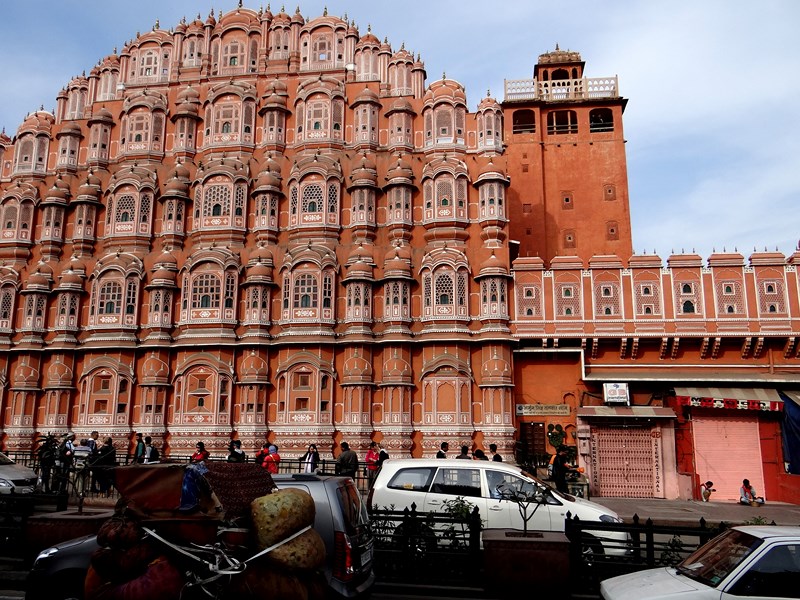
This building is Hawa Mahal, called The Palace of the Winds because the facade has 956 delicate, honeycombed sandstone windows used by the ladies of the palace to watch the outside world without being seen.
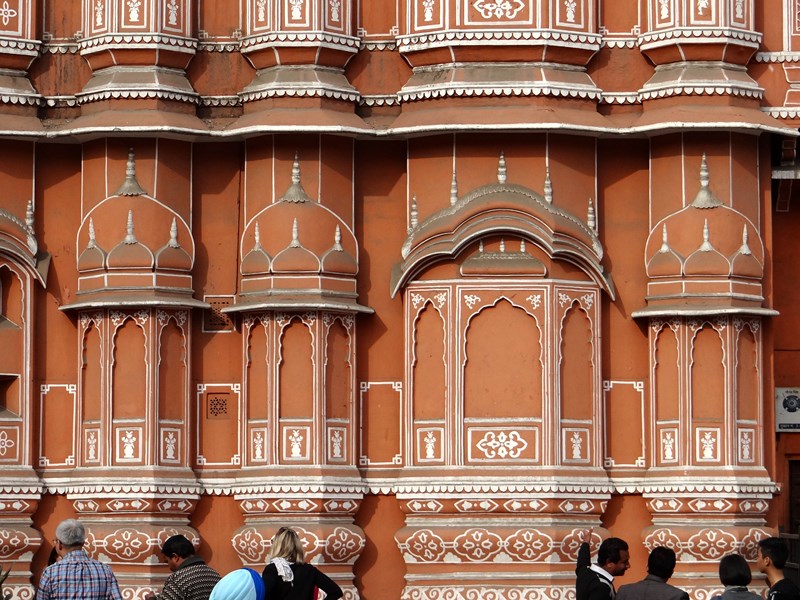
This is a close up but you cannot see the windows. It was built in 1799 by Maharaja Sawai Pratap Singh in the form of a crown of Krishna, the Hindu God.
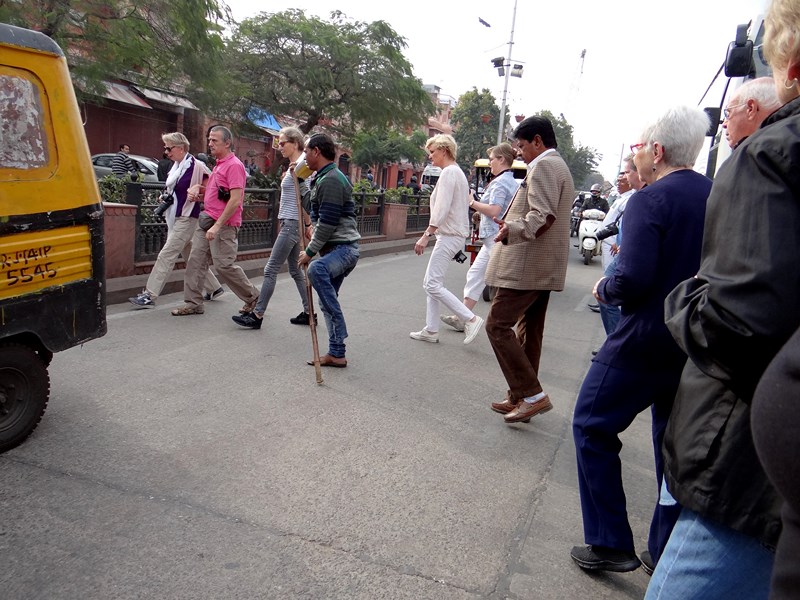
The reason we got such good pictures of the Hawa Mahal is because of this one-legged man with the cane in the middle of the street. He bravely walks into rather fast-moving traffic, they stop and let us cross over the boulevard divider so we could take our picture and then back to re-enter the bus. Ranvir pays him for this service. Methinks Ranvir has a soft heart for those in need. And, he keeps us safe.
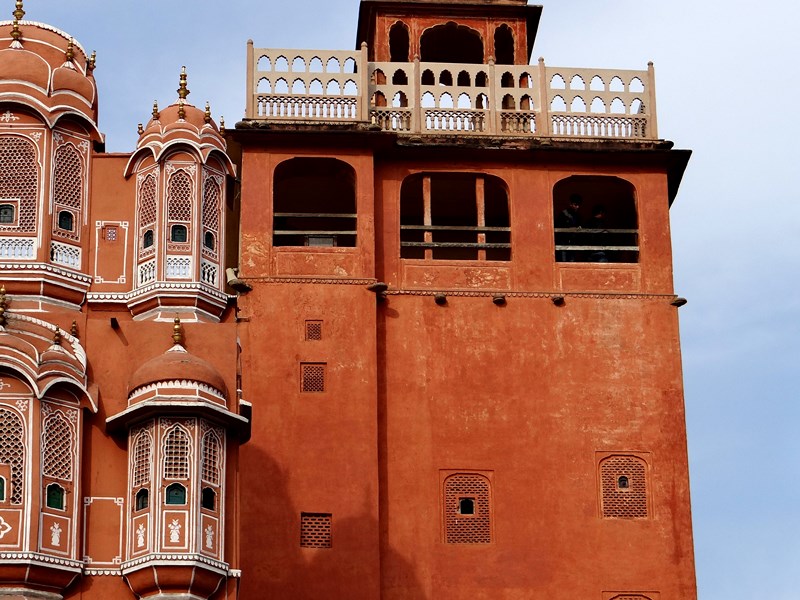
And, of course, no surprise that the building is pink. Now you can see the sandstone windows.
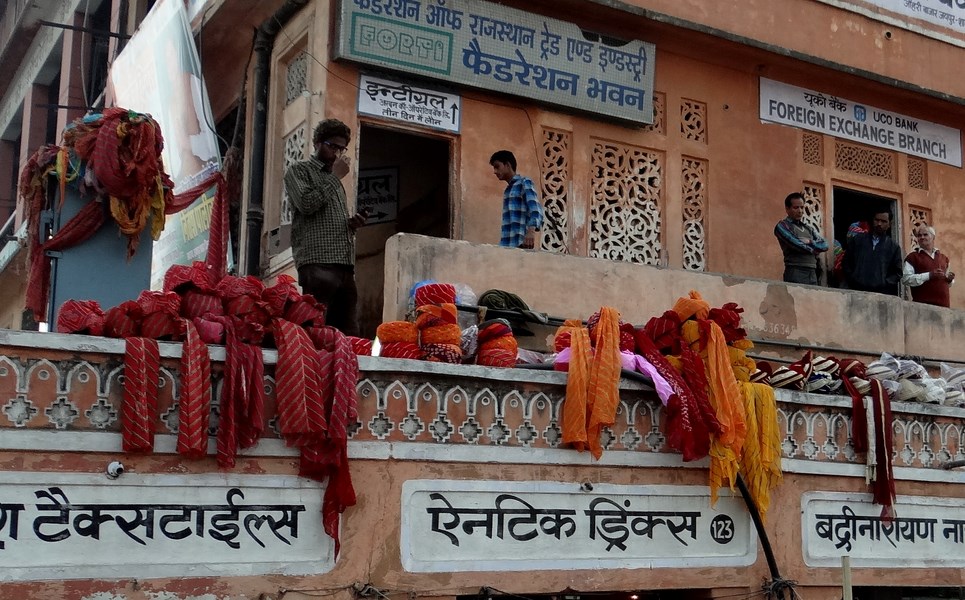
In this town we see ready wrapped turbans for sale. All you have to do is set it on your head instead of going through the long process of wrapping. Modernizing signs are everywhere in India. I love the colors.
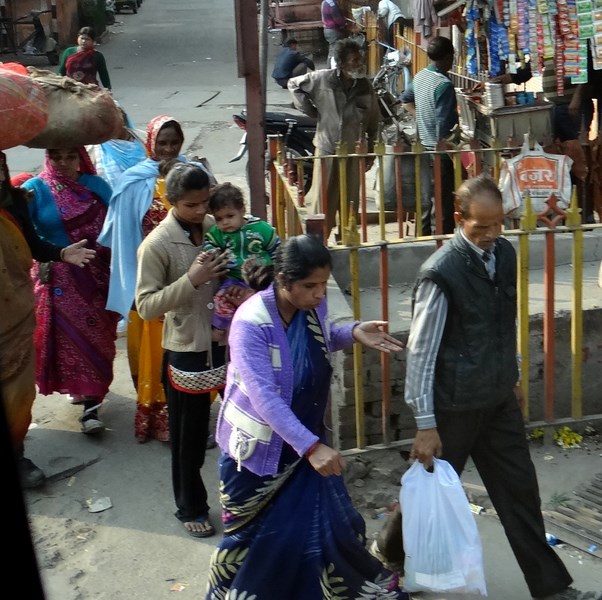
As I look out the window I see a little slice of life. The woman back left, lifting her garment and exposing pants underneath that she may wear out of sight. And we falsely think of India as such a macho society. The grandma stands behind the father carrying the baby. We see that often, men who are very involved with their children and babies. And the couple in front. He is carrying the package for her.
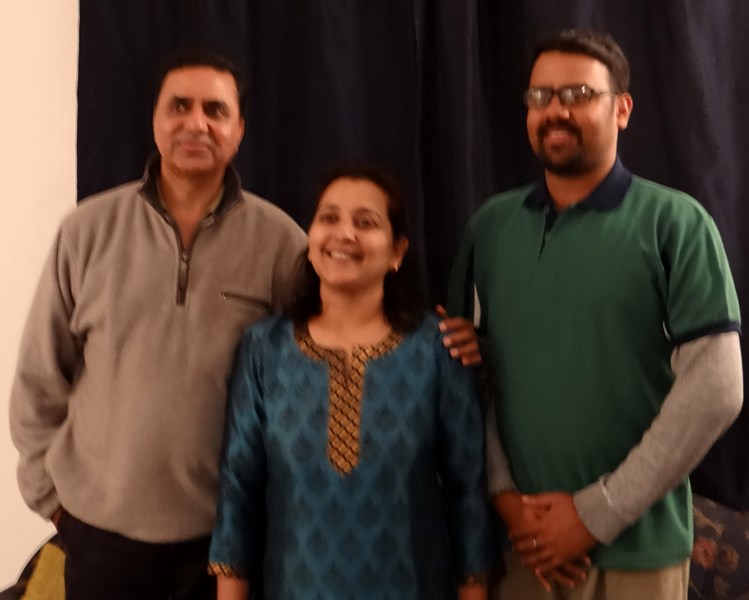
One thing I love about traveling with OAT is they always arrange for a home visit. This is Mr. Mathur, I've forgotten his first name. His wife, Ruchi and one of their two sons, right. (Apologies for not checking my camera focus, earlier.)
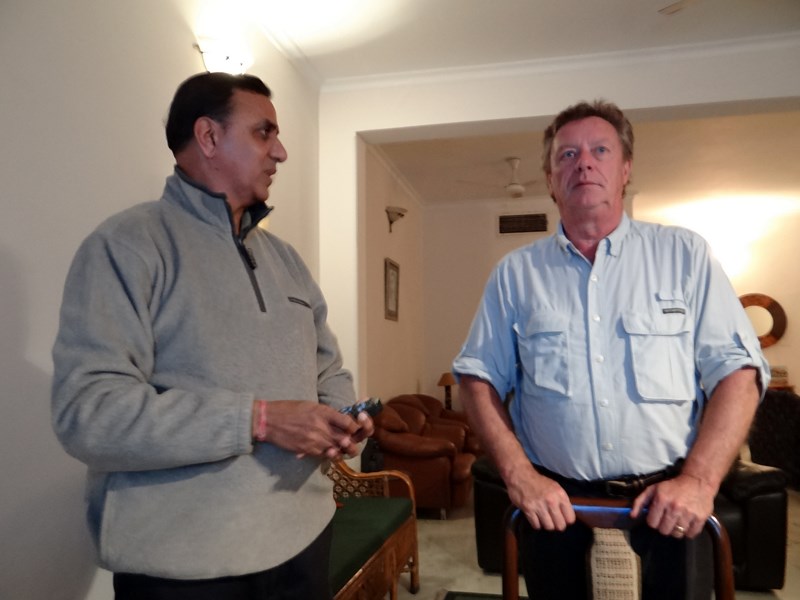
When we first arrived, Mr. Mathur wasn't home. The son was there and a visiting next door neighbor child. The son was busily fielding phone calls and filling in the gap for his father's absence, while we drank beer and wine. I was quite surprised to be offered an alcoholic drink.
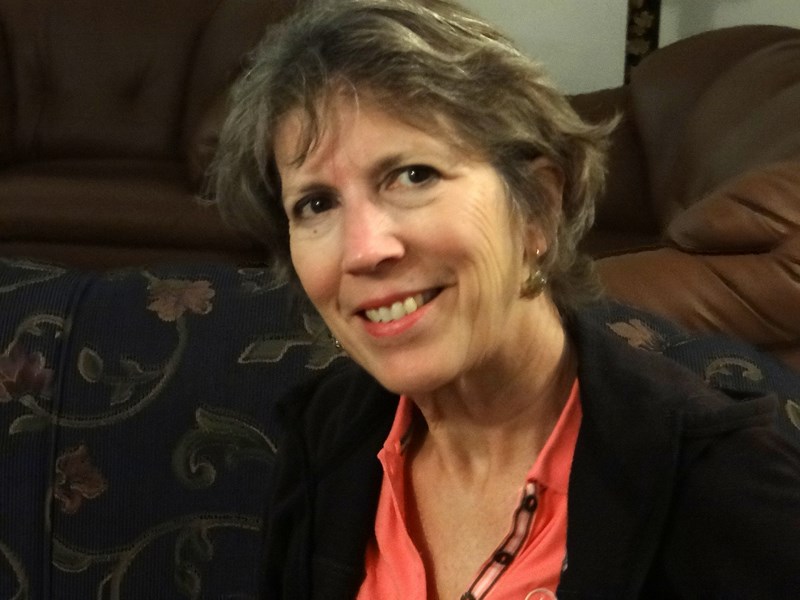
Ranvir tells us nothing about the family and Kris brought something for a young child. She entertained the neighbor child which turned out very serendipitous.
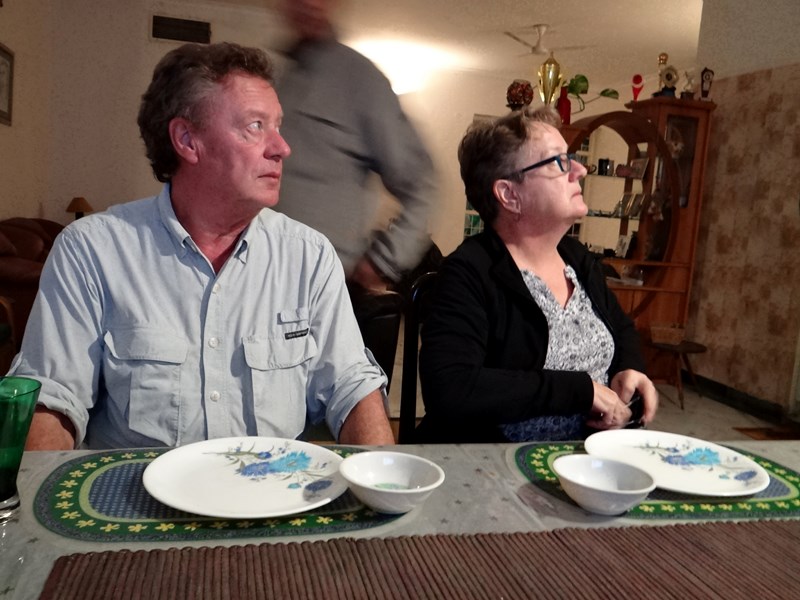
Dinner was very casual, everyone passed around the pots of great food. We felt just like family. The food, not over salted and absolutely delicious. Mr. Mathur was very friendly and informal. He is the youngest of 7 brothers who all live in the same complex. He wanted to be a businessman, but was nudged by his father to become a lawyer. He showed us his office, a bedroom converted. They live in the original house, downstairs with only two bedrooms. The rest of the family lives, up stairs or in other buildings on the property. Ruchi says when guests arrive they have nowhere to put them. So they will remodel. Just like talking to a neighbor.
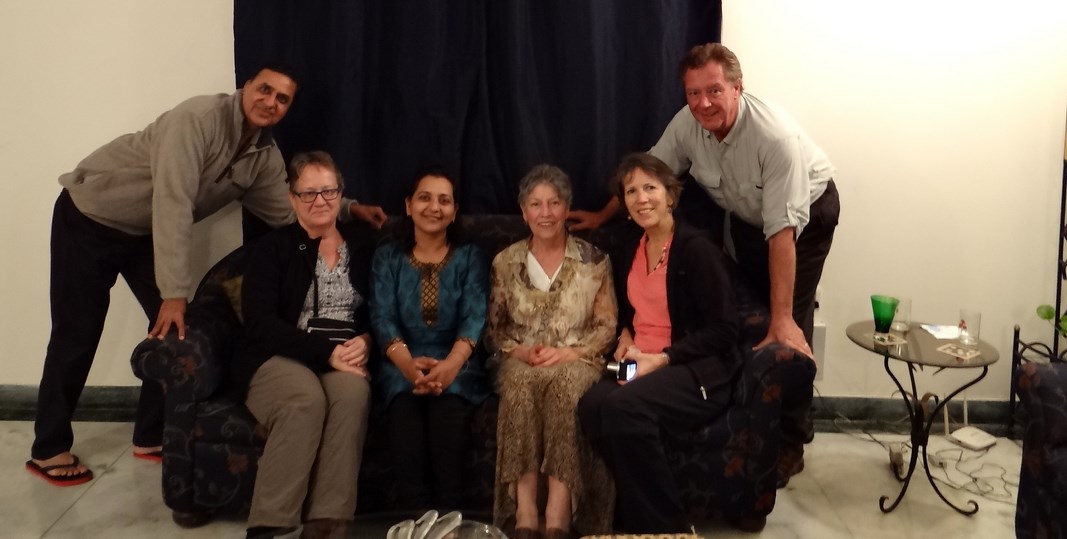
Hugo hit it off so well with Mathur they arranged a golf game on our return to Dehli before flying back to the U.S. (A game in which Ranvir joined and played golf for the first time.) Theo wasn't feeling well that night and stayed in the hotel.
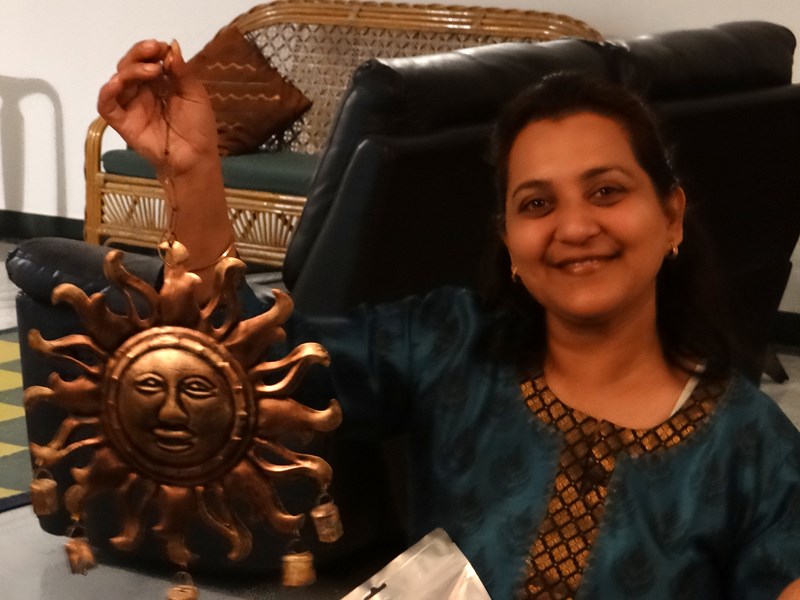
We always bring a hostess gift and no one ever really knows what to bring. Ruchi shared a lot of her personal life, too. Her mother died when she was very young and she was raised by her father. When she talks about her father or Dehli, her eyes just light up. After college she worked as a librarian and met her future husband. She said she had never cooked a meal in her life but, it is tradition, that the wife moves in with the husband's family. They did not use astrology to choose their wedding date. They both believe that is just superstition. She said her mother-in-law very patiently taught her to cook. And she enjoyed that very much. They travel all over Europe and the United States. Whenever they visit, they stay with family or friends. She sometimes wishes she could travel to a quiet place and meet people like us. I invited them to come stay and be my guest to visit Big Trees State Park as part of their next travels. I have her email and I hope they come.
I've had trouble with pictures because I tried to load them into separate folders and they ended up out of sequence. So, I may at times, blog out of sequence. And, I re-tore my rotator cuff before I went to India. I had an MRI before I left and it was confirmed on my return. I'm hoping to get the whole trip blogged before I'm unable to sit and type. Thanks, all, for your comments and for stopping by.


