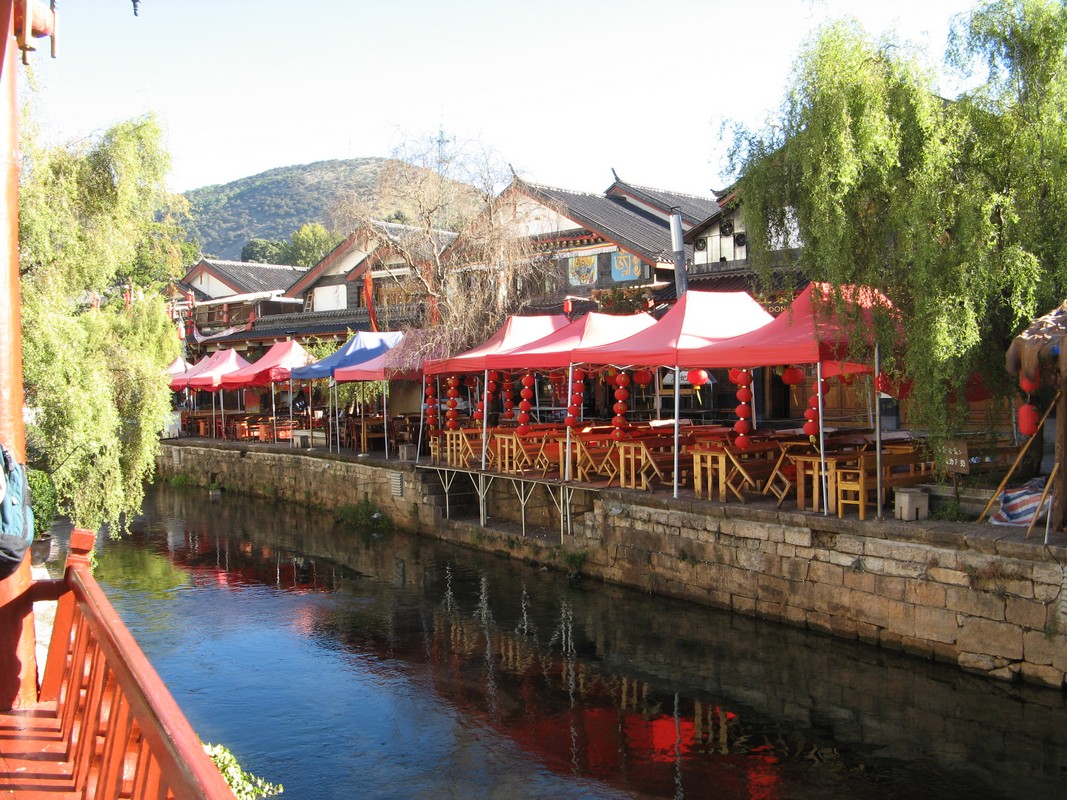
There is more to see in Wuhan City, but we leave late in the day for
the airport. Our luggage is already overweight. Vicki bribes the
officials but warns us that on one of the seven flights we take, she
will not be able to bribe the officials. It is only a short flight to
Jiliang, pronounced lee-John. My suit case arrived crushed. They didn't
want to fill out the papers for insurance because it was already packed
deep in the bus and they couldn't see it. She bullied them a bit. Then
they had no blank on their form for the color beige or plaid. It was
taking forever and the whole group was waiting. Finally, I told her it
was too much hassle, forget it. She told me the two clerks are afraid
they will lose their jobs if they make a mistake. Our plane was late and
Vicki called ahead to the hotel and asked that they hold the buffet
open so we could have dinner. At ten p.m. we are eating roast pork and
black sweet rice at the Grand Hotel.

It
was all so delicious but the hotel sits next to a moat, and from
across the moat come sounds of revelry, singing, talking and laughter.
Lights reflect in the water, from torches and candles on the tables.
People are having such a good time we want to be there. (The picture
above, across from our hotel, was taken in the morning when all the
revelers are gone.) The windows in our hotel have no glass in them. The
room walls are so thin you can hear people talking in a normal tone of
voice. The beds are thinly padded and quite hard with fluffy woolen
blankets. The stars are out, the fresh mountain air wafts through the
room and we quickly give over to sleep.

In
the morning, Michal and I (and everybody else on the tour) want to
explore this unique city, but we are hustled off to the Naxi (nah-shee)
Dongba Tribe Museum. Our expert in this area is Wu. He has funny
American expressions, like "shake the leg", "let's get rollin"). It
sounds so out of place and we laugh when he says stuff. Jiliang, we
learn is 250 miles from the Tibetan border, where we can see the
beautiful Eastern side of the Himalayan Mountains.

The
museum is particularly interesting because the Naxi people only had a
pictographic language. Their tribe in two areas only numbers about
60,000 people. As young people grew up and learned the official dialect,
their language was dying out.

The museum had much of their colorful textiles and calligraphy which they are noted for.

In the Museum store, this Naxi Calligrapher draws an expression for
Michal which she had framed and it now hangs on her wall. The Naxi
people are said to be able to place their hands into fire and boiling
oil without injury. We did not see a demonstration of this but expect it
is similar to the fire walkers we all know about. The Naxi raise goats
and llamas and their beautiful weavings are unique.

Wu
takes us to the Naxi village of Yunshangping, where the Himalayas hang over this magical
little town. People here cook on grills outside. We are here to see
the museum of a colorful anthropologist/botanist by the name of Joe
Rock, but, Wu says we will see it after we explore the town.

Just
about every woman wears the same blue garb, which is traditional to
their society. Vicki tells us they have become used to getting their
picture taken-for money. So we should attempt to take our pictures
indirectly.

A
fresh mountain stream flows through the town. The water in our hotel
was delicious and comes from the same stream. We were warned early in
the trip to never drink the water, always use bottled water. But, I
forgot the very first day in China and so I just continued to drink the
water and never had a problem. I also ate the lettuce and vegetables
they tell you to avoid that are rinsed in the water. If we didn't have
first class hotels, I might not have taken the chance.

Naxi villagers are great horsemen.

This gent is leading a bunch of tourists through town to head up the mountain for a trail ride.

Cute kids everywhere.

.

.

This older woman stuck her hand out for money when I took her picture, but I was quite a distance from her.

Then I caught her later in the day taking care of a group of kids, watching the horses go by.

For the most part, they seemed to ignore the invasion of tourists in their town.

Wu tells us the Naxi love their horses and pets.

They are very social with each other and do most of their chores
outside, like this woman washing her clothes. But, back to Joe Rock. Wu
first takes us to a house that is similar to Joe Rock’s house. It shows
the way those with means lived in the town.

The average house here is volcanic rock and wood.

A typical Naxi house looks like this. It has three buildings, a
living quarters, where people are standing, to the right, a storage
building in the center, where corn is hung to dry and food stuff is
prepared for keeping. Food for animals is also kept in the middle
building.

And the third building holds the livestock. Naxi people were not
friendly to outsiders before Joe Rock came. He spoke Chinese and gave
them medicine, and over time, gained their trust. He was very fat and
hired Chinese men to carry him on a special chair like some royal
Egyptian out of a Hollywood Movie. He had a battery operated Victrola so
he could listen to opera, and his own canvas bath tub. Rock came here
in the 1920′s and lived here until the Communists took over.

The Naxi have eagles and owls as their protective roof decorations.

We finally arrive at Joe Rock’s house where the living quarters holds
the museum, which contains some pictures of Rock’s work. Wu tells us,
the people here are the museum. Joe Rock’s 400 year old house is owned
by a dandy who is so obnoxious he doesn’t like to come. Just to look
into the court yard, we are required to take his picture and pay him
before entering this very small exhibit.

He is all dressed up in his leather shoes and white coat. The reason
to come at all is because Joe Rock was such an important figure. He
wrote several books about the Naxi while he photographed and studied
their pictographic language, translated it into a written language and
therefore preserved the culture of the old-timers before they died and
the language became lost. He photographed their rituals and studied
their culture extensively. Rock supposedly said, after the big
depression, “Depressions are for industrialized nations, we don’t have
depressions, here.”
http://factsanddetails.com/china.php?itemid=172&catud=5&subcatid-87#11
There are some interesting stories about Rock at the above website and many facts in the wikipedia link about him.

We said goodbye to this lovely village, me wishing I could have taken a horse back rid into the mountains.


 .
. .
. .
.

 .
. .
.

 .
. .
.