Showing posts with label dragons. Show all posts

Wednesday, August 15, 2012

PEACE, CULTURE AND HIP HOP.


It is our last morning in China. We are up early. Business people all over town line up in their suits and ties at street steamers to buy buns and dumplings for breakfast.  (Picture by Nicolas Delerue) China is vast but it’s cities are huge and crowded. The Chinese seek peace in their gardens.

In the center of this snarling city is the UR Garden. The designers took great pains and cost to turn this former government employees home into a centerpiece of Chinese garden architecture. A walled garden shuts out the troubles of life and brings peace and quiet to the soul. It allows you to contemplate a higher plane and renew the spirit.

The Chinese people strive for perfection in everything they do. A perfect garden must have a hill, water, rock, plants, bamboo, a building and trees. The plants placement and position in the garden, and shapes of everything  have special meanings. A rock must not overshadow water. All gates, walkways, windows and doors must suggest nurture, peace and serenity to soothe the soul. A tea house provides refreshment and joy.

A cut out in the wall has pleasing lines and picturesquely  frames and enhances a particular view of the garden.
A beautifully designed window does the same.

Each rock, each plant is chosen for its sense of balance and rest. Lotus for purity. Bamboo for strength and resilience.  Flowering plum represents rebirth. If you plant a pine tree, you must have both a male and female tree. If one dies, the partner tree is removed.

Proper dragons guard the roof and walls.

The roof is enhanced with bamboo at the top to make music as the wind passes over the hollow tubes.  The poetic aspects of a garden are taken very seriously.

When a contingent of Chinese Garden Architects from Vancouver came to see the garden, they politely said it was beautiful. Not perfect?  They judged it imperfect because modern condominium visible in a little corner of the garden.  Tsk, tsk!
We leave the garden to visit Shanghai Cultural Museum.  On the freeway we see a huge cement column  about 12 feet in diameter  supporting an over crossing. It was beautifully decorated with writhing dragons. I asked why the need for such a heavy support column? Our city guide explained that it allows the dragons to get out. When they were building, the workmen had trouble in that spot. They insisted there was a dragon there and it would be bad luck to cover it up. The government architects came up with a solution. It is partially hollow and has an exit window.  Now knowing what we do of Chinese culture and centuries of superstition embedded in their character, we understand.
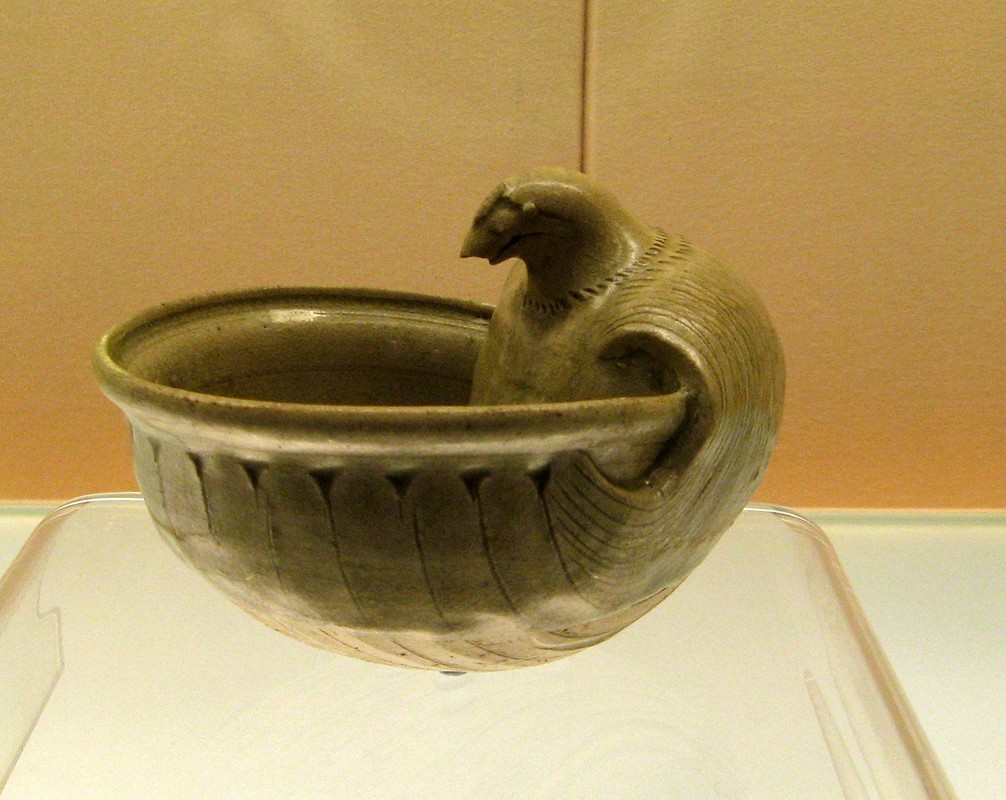
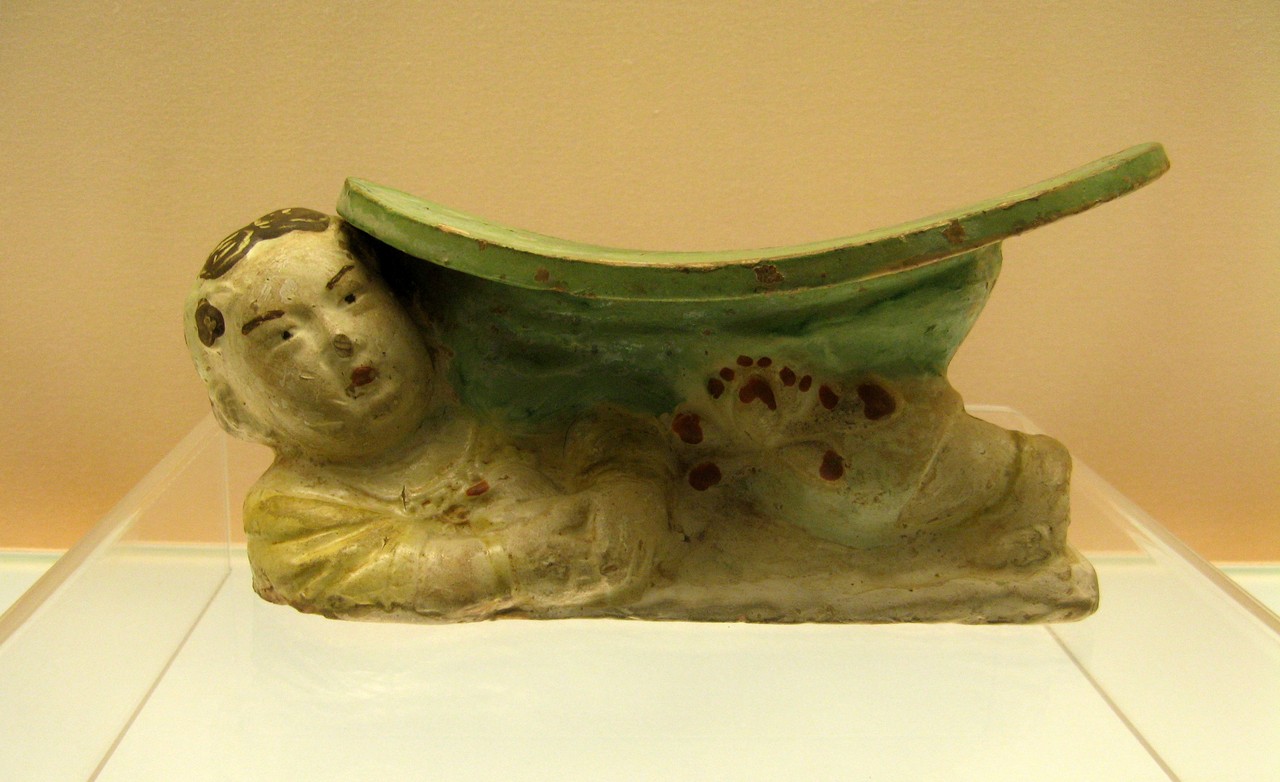
The museum too, is a quiet place that gives a sense of peace…


and beauty.
Late in the afternoon we have free time and several of us take tea at a lovely tea house and then off to the Hip Hop Market to pick up any last minute souvenirs. This is not a souvenir market.  We gawk at ultra modern merchandise. Shoes like I’ve never seen in my life with price tags to match.  Baby items and clothing  for the children or grandchildren of the very wealthy. Teens swarm the place with their phones and wrist band radios. They buy see-through blouses, painted skirts and bathing suits that would fit in a cigarette box. We are running from store to store like unruly kids were we see every kind of goods,  rich leathers, golden threaded bags and scarves; canes, sunglasses, jewelry to dazzle an empress, plastic neon bracelets, fancy suits and ballgowns, jeans and top branded merchandise from all over the world.  A city of such contrasts is Shanghai.
We enjoy a fabulous farewell dinner with a flaming dish of some sort. We  fondly embrace our new friends and  trade addresses and know we’ll probably never see them again. Unforgettable China.

Monday, June 25, 2012

MODERN CHINA-2006

With my first digital camera, I visited China in 2006 , when China was in the middle of changing from a Socialist/market economy to a capitalistic economy. As a child, I watched a neighbor dig a deep hole in his lawn. Every few minutes, he’d say, “Look at this?  He’d hand me a penny he’d supposedly found, and tell me “We must be getting close to China.”  He regaled me with fantastic stories about dragons and castles and magic, all happening on the other side of the earth.  Simple things that fostered a dream.

We whizzed through Beijing with 300,000 vehicles in a city of 13 million people. Fifteen percent of families now own cars that intersperse with weird motor driven carts piled high with goods,  and 8 million bikes, motor cycles carrying whole families  and buses and pedestrians all mingling  in a way that you are sure someone is going to get killed at any minute.  I saw a man carrying a baby high above his head as he squeezed between two moving buses. You just have to turn your head away. We stop at Tiananman Square, so huge it defies the camera’s ability to capture it. A flag pole so tall the flag can be seen all over the city.

Just like us, Chinese tourists, something new for China, have their picture taken at their seat of government,  much like us having our picture taken outside of the White House. Sixty per cent of the citizens of Beijing work for the government just like the greatest percent of people in D.C. are under some kind of government employ.

The grounds around the building are beautiful where once there was a forbidding wall around the buildings and the whole city. Chairman Mau tore down the old city walls and built what they call ring roads to replace the  feudal walls of China’s  cities.

This is “modern” China. We were very quickly dispelled of the notion that we would see Chinese men and women in black sack pants and shirts wearing straw hats. This is the infamous square that led to student deaths in 1989, forever giving China a black eye over their aggressive policies. We are mobbed by vendors selling post cards. Capitalism is grasped very quickly.

We move on to the Forbidden City which was built, or finished anyway, in 1420. Eleven Emperors  have lived  in this multiple complex of buildings between 1419 to 1911. It has 9,999 half rooms in the palace. Nine is the supreme number. Nine gates, each gate measures nine x nine. Our guide tells us that the Last Emperor,  the movie, is very accurate about what happened to their last Emperor.

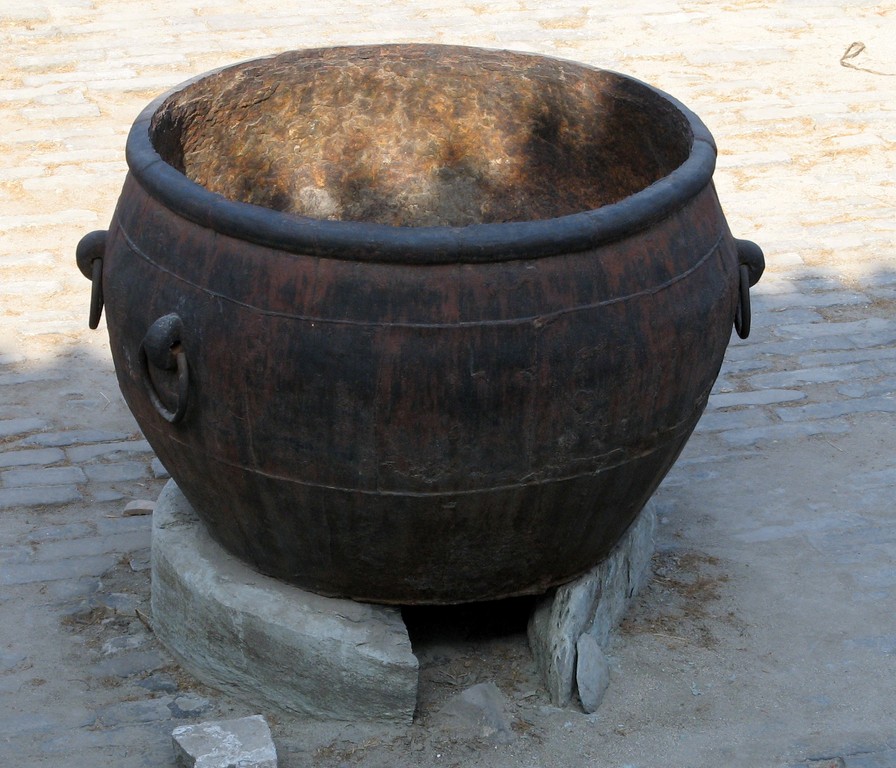
This is one of 18 water pots around the square, (a multiple of nine). They represent the 18 provinces. All must be in harmony.

Soldiers still guard the palace and live here. Notice their boots and shoes  lined up next to their “barracks”. The living quarters of the Emperor  is approached by a series of stairs and nine gates to pass through.  Each gate is a building with marvelous gold, jade carvings, incredibly fancy decoration as part of the building, with real gold leaf.   The rooms that store antiquities are  not lighted, tall columnar rooms, no windows. Pictures don’t reflect  the glorious treasures inside.

It seems as though every inch of the building is exquisitely decorated like this mantel above a doorway.

My traveling companion, Michal Houston and I posed before this Chinese guard lion. His left foot is crushing some small creature, I think.

His right foot is balanced on this ball. I’ve forgotten the significance of this stance, and its meaning, but it is the same wherever these lions are seen. And, the dog-like face of Chinese lions was rendered by artists who had never seen a lion. They only had a description of lions from explorers/travelers  who passed through China.  I always wondered about that. Now I know and so do you.

The roof of the palaces are  protected, as you can see. It seems a bit strange to us that the superstitions of old are still, if not believed, at least respected and revered. Visiting China  helps to understand many mysteries about the Chinese people’s beliefs that hang on.

This little boy knows nothing of the Ming Dynasty, 1420 to 1644 or the Ching Dynasty, 1644 to 1911, or the turbulent  history of  the gate he is crawling through. Notice you step over the deep thresh hold as you move from one gate, which brings you to another palace, and on to the next.

And I got to see many dragons. This gives you an idea of the size and scope of these carved wall panels.
Aren’t they gorgeous?  There are nine of them at the Palace of Tranquil Longevity.

We see so much, it is difficult to take it all in and remember it all.

More tomorrow.