We leave Jiliang on the bus. Scenic villages, cows, horses, yaks and donkeys over-laden, hauling goods on the road. Many children hanging drying baskets of corn or grain outside. Terraced gardens and fields follow the river. We look back at the snow capped Himalayan peak marveling at its beauty and that we were there.

We stop at Stone Drum Town, a Naxi village for lunch at the Stone Drum restaurant. In the courtyard are many tables filled with Naxi people.

Except, none of them are eating lunch. They are playing majong, dice, dominoes, or cards as though it is a holiday.

The faces are animated and noticeably, none are young. Vicki claims this is very unusual and asks around. She learns that a government official is due in the village and will speak to the elders today. They are waiting for him while we lunch.

The eating area was separated from the courtyard by a curtain of chili peppers.

I managed to get two pictures of the open-air restaurant kitchen, the cooking area…

And the pantry. I didn’t see a refrigerator, but they must have one. This is an inland village and the only place we ate that didn’t have fish on the menu. Service here is more casual than city restaurants and the foods simpler but still delicious.

It was a photo bonanza for us, the magnificent faces, the interplay at the tables, the rapt concentration on their games.

I saw two men smoking an opium pipe.

They were very attentive when their speaker arrived. What is he saying, I asked Vicki. “Oh, just lot of government propaganda. We all laughed. Same as home!

We had fifteen minutes to walk around and stretch our legs before getting back on the bus. Wanning tried to talk with this bent over little man. She speaks Chinese but couldn’t understand the language even with the help of another Chinese fellow.

Again, the Naxi were not the least bit shy about having their pictures taken and indicated to me they wanted to see the results; obviously familiar with digital cameras.

This fellow wanted to sell me a stool he had made. I could only take a picture.

After we loaded into the bus, this woman was seeking to sell trinkets through the windows. Vicki called her a beggar and told us it is very unusual to find a beggar in a remote village like this one. Vicki didn’t want us to buy from her and the bus drove off before any transactions could be made. We are headed for the airport to take us to Kunming. More tomorrow.

We stop at Stone Drum Town, a Naxi village for lunch at the Stone Drum restaurant. In the courtyard are many tables filled with Naxi people.

Except, none of them are eating lunch. They are playing majong, dice, dominoes, or cards as though it is a holiday.

The faces are animated and noticeably, none are young. Vicki claims this is very unusual and asks around. She learns that a government official is due in the village and will speak to the elders today. They are waiting for him while we lunch.

The eating area was separated from the courtyard by a curtain of chili peppers.

I managed to get two pictures of the open-air restaurant kitchen, the cooking area…

And the pantry. I didn’t see a refrigerator, but they must have one. This is an inland village and the only place we ate that didn’t have fish on the menu. Service here is more casual than city restaurants and the foods simpler but still delicious.

It was a photo bonanza for us, the magnificent faces, the interplay at the tables, the rapt concentration on their games.

I saw two men smoking an opium pipe.
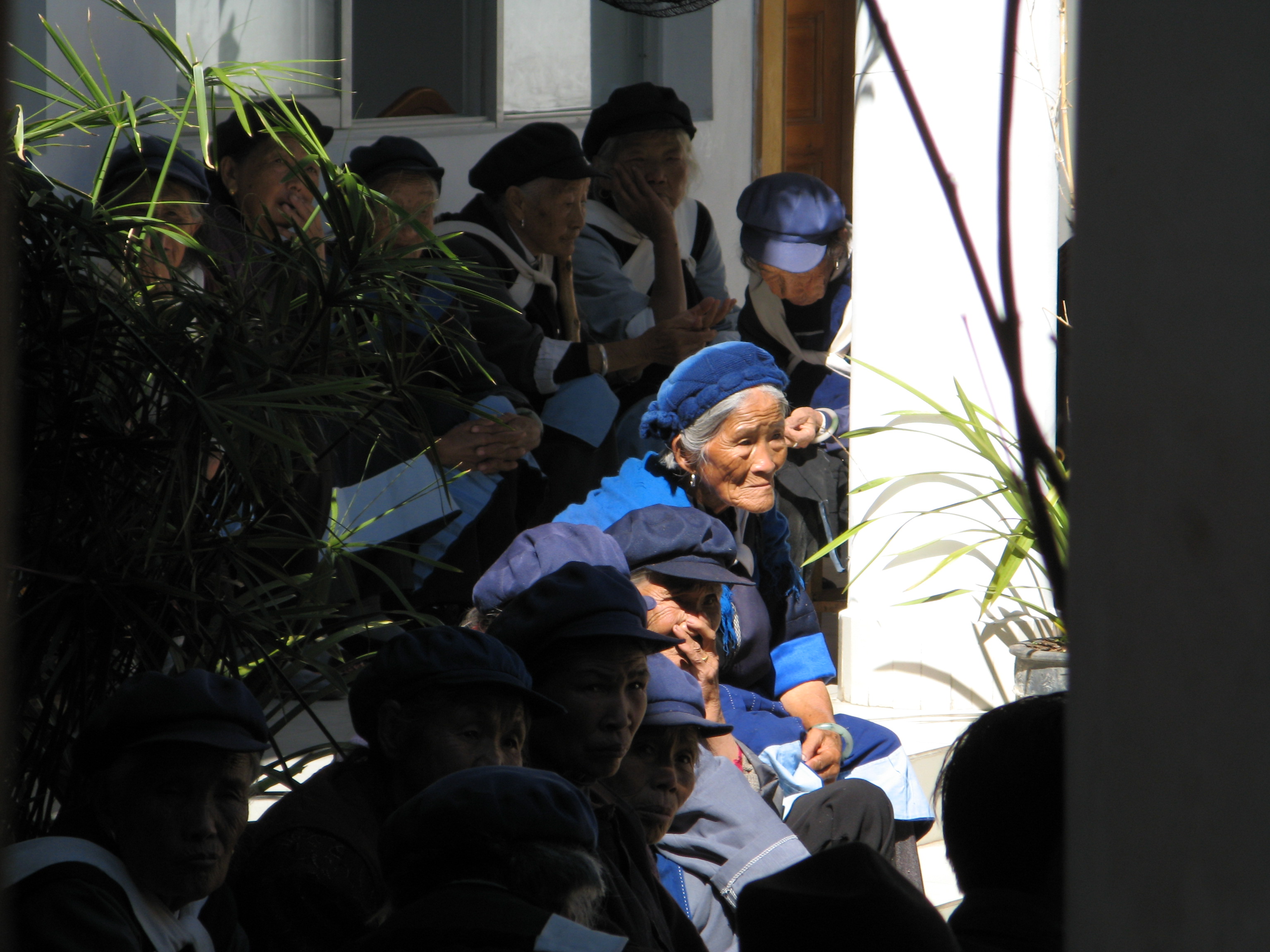
They were very attentive when their speaker arrived. What is he saying, I asked Vicki. “Oh, just lot of government propaganda. We all laughed. Same as home!

We had fifteen minutes to walk around and stretch our legs before getting back on the bus. Wanning tried to talk with this bent over little man. She speaks Chinese but couldn’t understand the language even with the help of another Chinese fellow.

Again, the Naxi were not the least bit shy about having their pictures taken and indicated to me they wanted to see the results; obviously familiar with digital cameras.

This fellow wanted to sell me a stool he had made. I could only take a picture.

After we loaded into the bus, this woman was seeking to sell trinkets through the windows. Vicki called her a beggar and told us it is very unusual to find a beggar in a remote village like this one. Vicki didn’t want us to buy from her and the bus drove off before any transactions could be made. We are headed for the airport to take us to Kunming. More tomorrow.


