Showing posts with label Martin Luther King Jr.. Show all posts

Monday, January 25, 2016

MEET AGITATOR JIM HIGHTOWER.

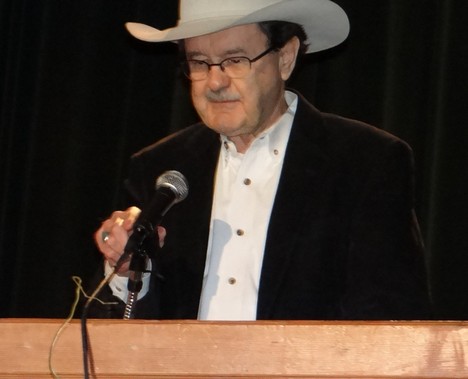
DSC07631 (Copy) 

Jim Hightower writes the Hightower Lowdown, a national newsletter that exposes injustice in America, only he calls it exposing bushwackers, bullshitters, gooberheads, plasticized morons, moon howling...well, the adjectives, some invented by him, are numerous and humorous. He says he is an agitator..."the center post of the washing machine that gets out all the dirt." And, right now, he doesn't like the hucksters running a Democracy where 4 people, all of them hedge fund managers, each earned 10 Billion dollars last year, where 108 Kindergarten teachers split 1 million. The hedge fund managers pay taxes at a rate of 15% and the teachers pay at a rate of 35%. Democracy works best from the bottom up and includes everybody. That's you and me folks. Its revolution time for people tired of being the fire hydrants for all of those top dogs. And, the chorus sang, Hallelujah.
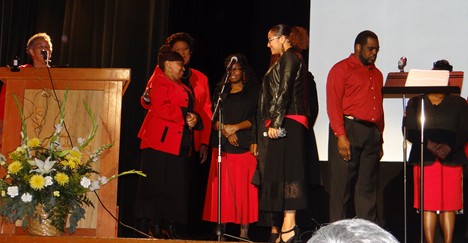
DSC07636 (Copy)

They did, but it wasn't quite in that order. First, the Mother Lode Martin Luther King Jr. Chapter, active in our area for 23 years, drew over 500 people to hear Hightower speak. Amazing because this is a very white, rural community.

The program began with Martin Luther King Jr.'s last speech on a movie screen. I had forgotten what a powerful and passionate speaker he was. It was an emotional moment to turn back the pages of time and remember, the women who died in a baptist church, Rosa Parks refusing to move to the back of the bus, little girls being escorted to all white schools by the National Guard in the fight for equal rights for black Americans;  a fight that is on going to this day, 48 years after his death.  Hightower reminded us that Katie Stanton, and the jailed and punished suffragettes didn't get the right to vote that they fought for either, but WE got it because of them.

And, that my friends is his point. Money now flows upward and the rich have so much money they can air condition hell while the poor and middle class struggles to make ends meet.

"We don't want charity, we want economic justice. And Congress, the House and the President is stealing from us with a fountain pen." He pointed to the current NAFTA agreement where 500 corporations and that included the Koch Brothers, met in secret, and hammered out an agreement and stuffed it down our throats without one member of a Union or anyone from the middle class and small business sitting at the table.

Hightower believes that people like Elizabeth Warren and Bernie Sanders, who don't accept money from the big super pacs can overcome the moneyed elites who have corrupted our politics and rigged our economy to squeeze the life out of the middle class.

Bernie's average donation is $23. Hightower says, you can't buy a presidency with $23. His campaign is about We The People. Hightower convinced me that, with Bernie, its time to rock the boat.

No one addresses him as Senator Sanders, he is just Bernie, and one of the poorest Senators in the pack. He hasn't parlayed his position to great wealth like most national office holders have.
He came from a low-income working class family in Brooklyn. He first worked as a carpenter, then film maker, writer and agitator. An agitator in college during the 60's, he moved to Vermont and began exposing Burlington money boys who ran the town for their own fun and profit. Then he stunned everyone by winning an election for Mayor in Burlington. Bernie has never abandoned his working class roots. I've changed my position to clearly stand with the candidate who says: "I can't do this, but WE can."
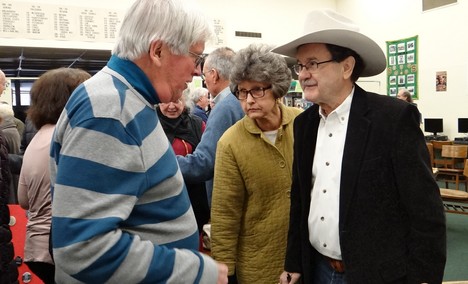
DSC07642 (Copy)

The program ended with everyone singing the song:  We Shall Overcome. Hightower was available to talk to people at a reception after the program.
wecanpetition.moveon.org.

Sunday, April 21, 2013

CIVIL RIGHTS MUSEUM AND FREEDOM'S SISTERS.

DSC04624 (Copy)

Martin Luther King Jr. and his cortege stayed at the Loraine Hotel in Memphis  numerous times. They always used the same rooms, #306 and #308.
DSC04640 (Copy)

Looking up at the balcony where he was shot, the preserved wreath still hangs there. Cars or replicas of those used by King and his group are still parked in the lot beneath them.
DSC04630 (Copy)

From the balcony, you can peek into the rooms the group used. Not fancy digs. Just typical hotel rooms of the times.
DSC04632 (Copy)

Also from the balcony, you can see the boarding house from which James Earl Raye shot him. It now houses the major exhibits of the National Civil Rights Museum.
DSC04650 (Copy)

During the investigation, it was determined that Raye had to have stood in the bathtub to shoot King. The room is glass encased, the window left open partway as Raye left it.
DSC04642 (Copy)

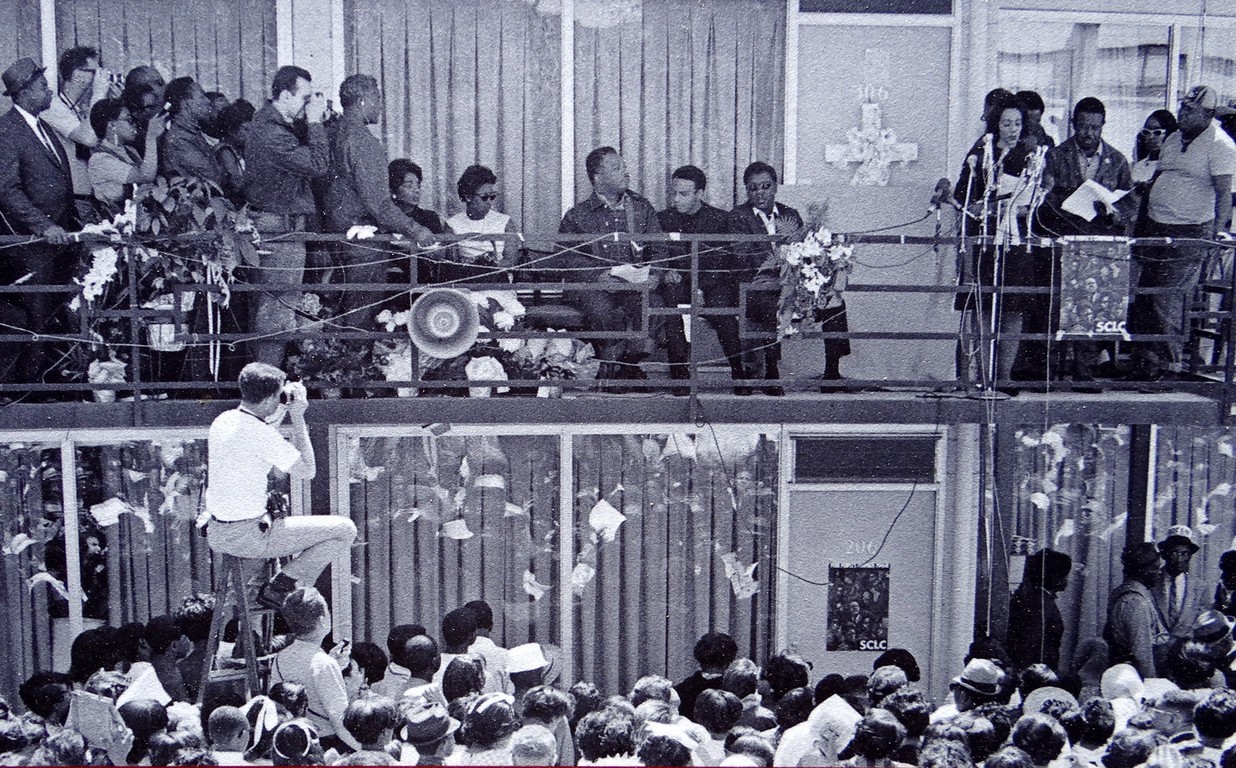
After the shooting, King lies dying on the balcony, others point to where the shot came from. One of the members of the coalition removed a pack of cigarettes from King’s pocket so his wife and kids would not know he had taken up smoking again because of the stress. I was shocked to be reminded he died at the tender age of 39 years old. He repeatedly told his friends that he would not live through this struggle.
DSC04643 (Copy)

Martin Luther King Jr. was only 27 years old when he decided to preach and impeach the injustices suffered by black Americans. He didn’t know Rosa Parks, but her famous refusal to get off the bus drew King to Memphis and thus began an unstoppable movement to right the wrongs done to American Blacks. (Unfortunately, the struggle for equality is not over.)
DSC04641 (Copy)

The Press recognized King as a special person. Not only charismatic, but a soon-to be icon from whom  black Americans would take strength and carry on the fight, and they did.
DSC04625 (Copy)

The Museum has many pictures and a time line of the horrific struggle of enslaved peoples. We sometimes need reminders of the shameful part of our history, that it not to be swept under the rug as they tried to do in Germany with the Holocaust. I was amazed how much I didn’t know, or didn’t remember.
DSC04655 (Copy)

I was also positively impressed by the thoroughness of the investigation and the evidence used to convict James Earl Raye. Black Americans know that the FBI did it right and they got the man who shot King.
DSC04658 (Copy)

I was stunned to learn that they almost missed getting him. This little gun was found on him at a London Airport and because of it, he didn’t get to disappear somewhere and never be found. I also learned that others were  involved in King’s death. Raye escaped from prison with help; he suddenly had a bank account of $100,000; he seamlessly got professional identities and methods of subterfuge and a car without holding a job after his escape.  The conspirators have never been found or identified after years and years of trying,  and Raye didn’t tell.
DSC04645 (Copy)

Rosa Parks was a quiet, dignified woman who worked long hours and rode the public bus system to work and back. She had had an encounter with a bus driver the first time she resisted giving up her seat. The driver pulled and shoved her and threatened to strike her before making her leave the bus. I had NO IDEA that was how things were done. I always thought blacks had to move to the colored section at the back of the bus and give up their seats to whites if they needed them. The second encounter, she was sitting in the colored section and a white  man was standing. Four black people were ordered off the bus so one white man could sit down. Rosa refused politely to move. The driver called the police and they told her she could be arrested. She calmly said, “You may do so.”

King asked the black community of Birmingham, Alabama to boycott riding the buses, which they did for 381 days. Civil Rights attorneys were knocking on Rosa Park’s door. They had a solid case against the system and ran with it and won.
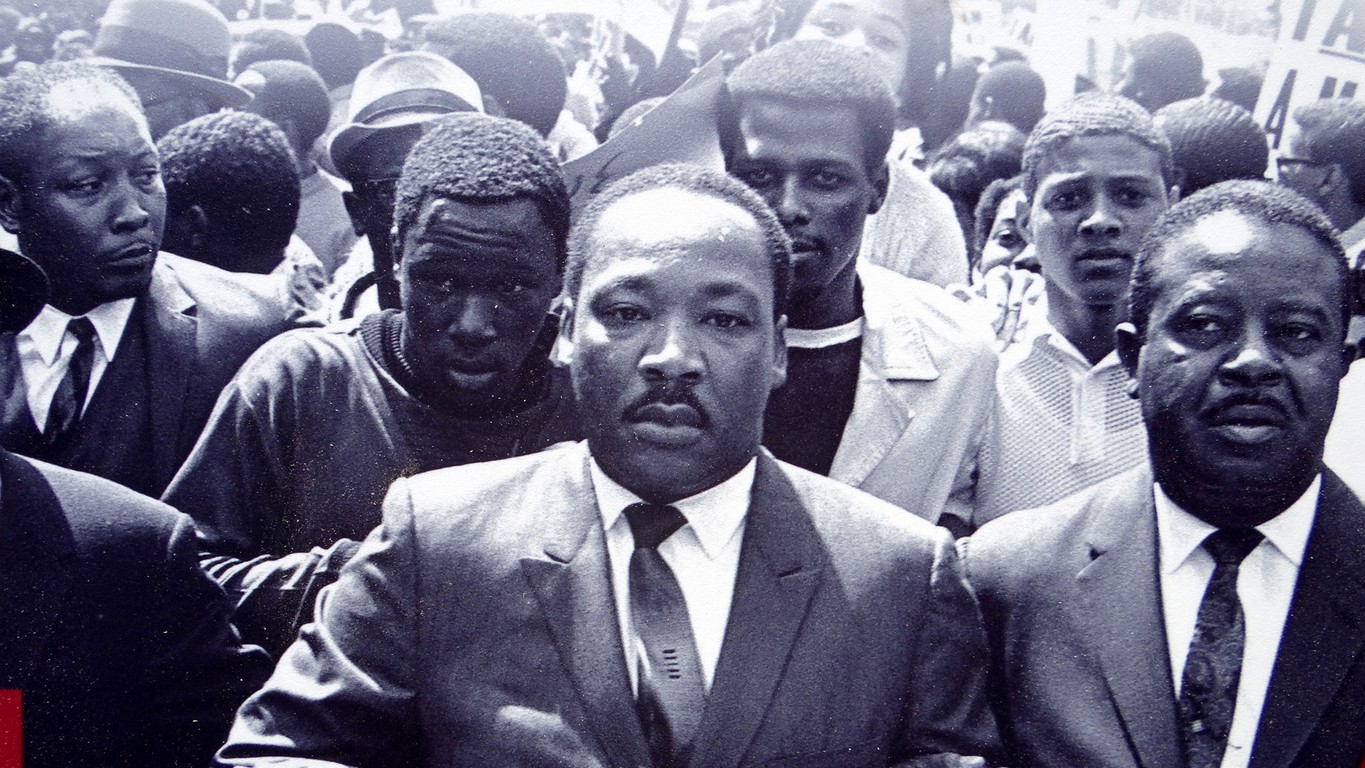
King repeatedly returned to Memphis working for fair wages for sanitation workers; segregated restaurants, back door entrances for black workers. He led freedom marches.  And, the rest is history, as they say.
DSC04663 (Copy)

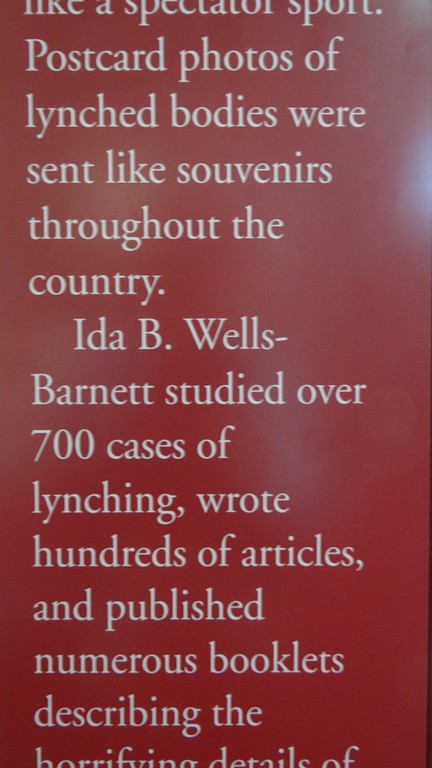
Did I know there were black men lynched and kept in a state of fear?  Yes. Did I know there were over 700 cases documented?  I was horrified even now to learn that. A special exhibit from the Smithsonian was in the building, entitled Freedom’s Sisters. It is about the many courageous black women who contributed greatly to the emancipation of blacks in our country.
DSC04673 (Copy)

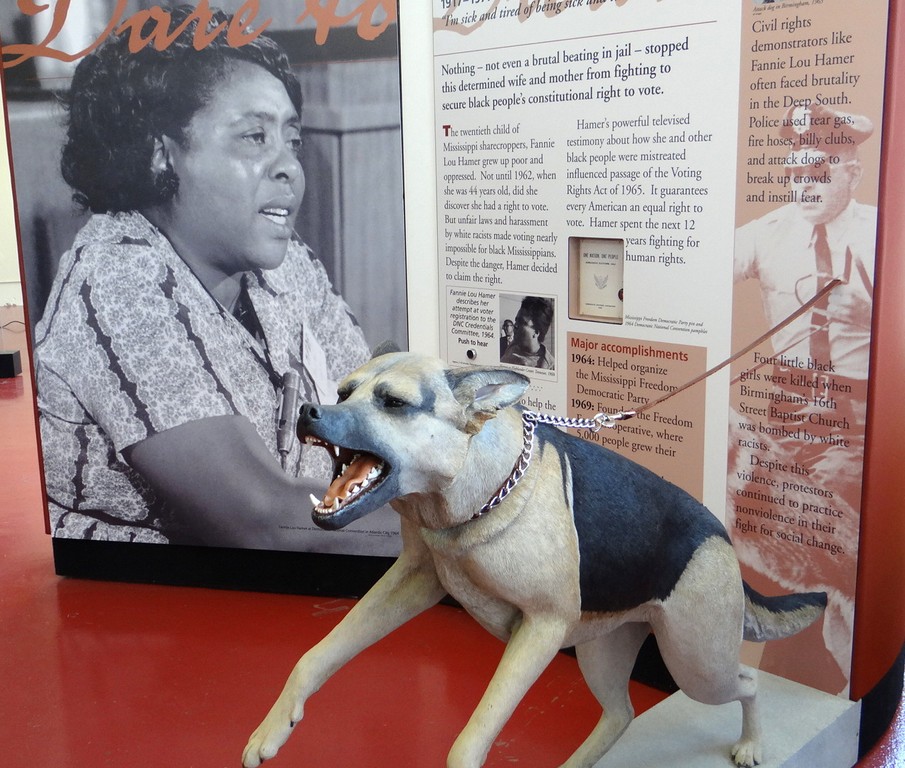
Not many women of any color would have the courage of Fannie Lou Hamer, who was  brutally beaten by police,  arrested, attacked by dogs. But she kept on fighting for the right to vote.
DSC04672 (Copy)

This was one of the demeaning tests used for blacks who attempted to go to the polls.
DSC04662 (Copy)

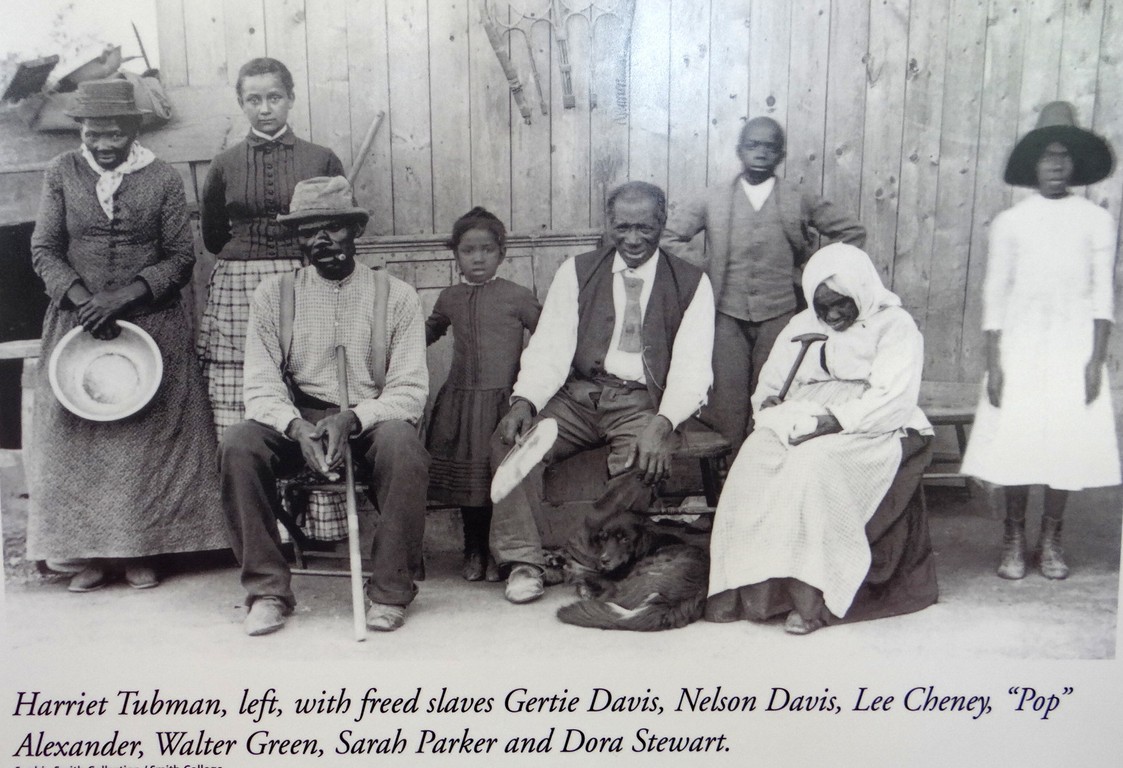
I never learned about Harriet Tubman until my grandson studied her in grammar school. She assisted in freeing over 800 slaves at risk of her life.
DSC04665 (Copy)

There are her modern counterparts, Shirley Chisholm, Barbara Jordan, Constance Baker and 20 others enshrined here. Don’t miss it if you get to Memphis.
DSC04679 (Copy)

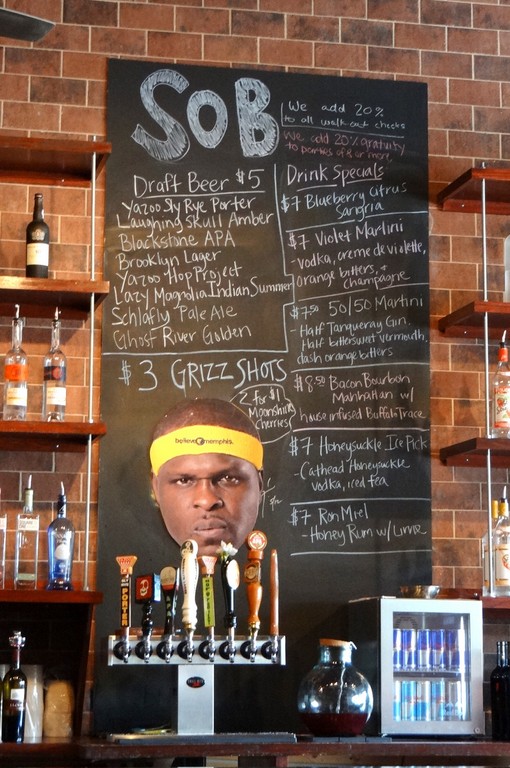
We left the museum and took lunch at South Of Beale, a restaurant that uses as much organic and local source food as possible. I’d never seen a receipt where they ask you if you wish to donate a dollar to the farmers cooperative who provide their food. I canceled my appointment with the acupuncturist since I felt better in the morning. We decided to walk around the historic arts district, a short walk of about five or six blocks.
DSC04706 (Copy)
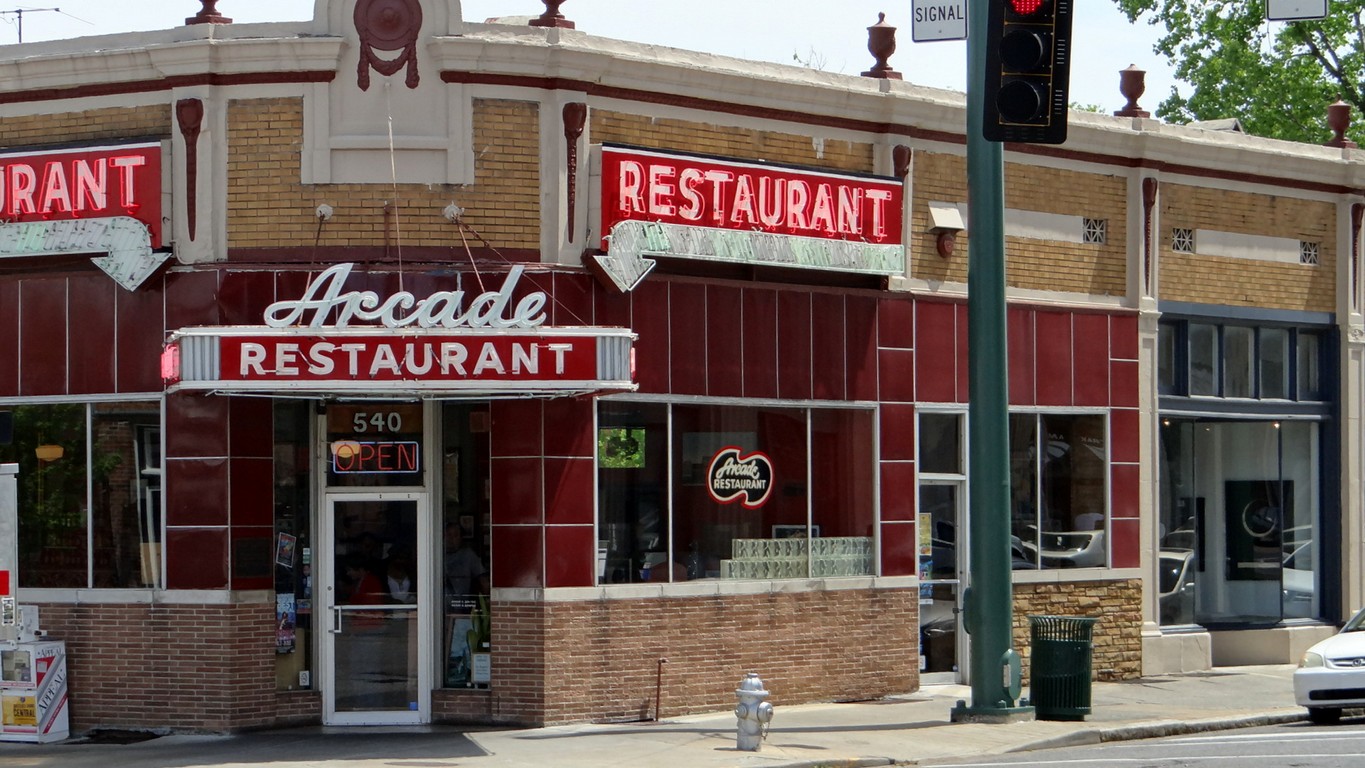
Jim had read about the Arcade Restaurant on the National Historic Register. It opened in 1919 and has been the site of many movies. We peeked in.
DSC04739 (Copy)
It resembles the 1950′s style.
DSC04717 (Copy)
Kitty corner across from it is another 100-year-old building, Earnestine & Hazel’s Sundry Store which also had a bar, a counter and a gambling den and bordello upstairs. It too has been used in a slew of movies.

DSC04710 (Copy)
DSC04722 (Copy)

The red lights are still hanging from the ceiling and in one lamp we saw.
DSC04718 (Copy)

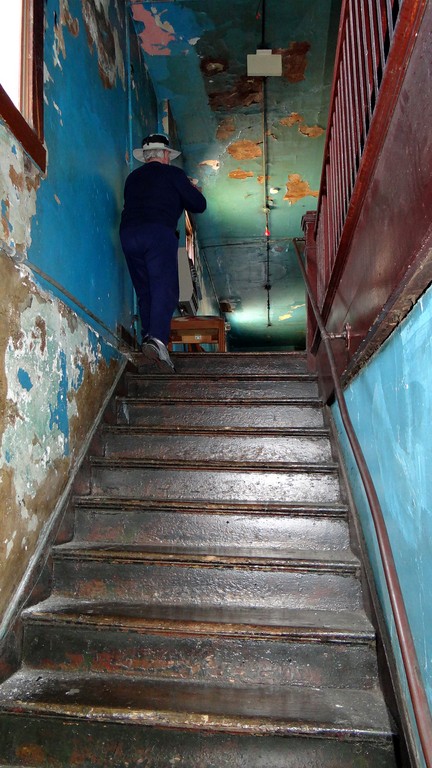
The rooms are very scruffy and everything smells of antiseptic.
DSC04723 (Copy)

The paint, where there is paint, looks like it has been applied with a broom.
DSC04709 (Copy)

The upstairs is still used. One locked door claimed it is the office. A room with  piano and bar and many card playing rooms of definite character. The band that played here is Twelve Mellow Fellows.
DSC04729 (Copy)

In the restaurant part, the bartender pointed out some famous blues players but they are all strangers to me.DSC04730 (Copy)

This is Howlin’ Wolf.. There were plenty of pictures of famous people who’ve been here. Quite a place!
DSC04703 (Copy)

This is the arts district and we expect to return.
DSC04686 (Copy)

Here the meters, garbage cans, fences and old walls are painted to beautify the area. Kind of fun.
DSC04733 (Copy)
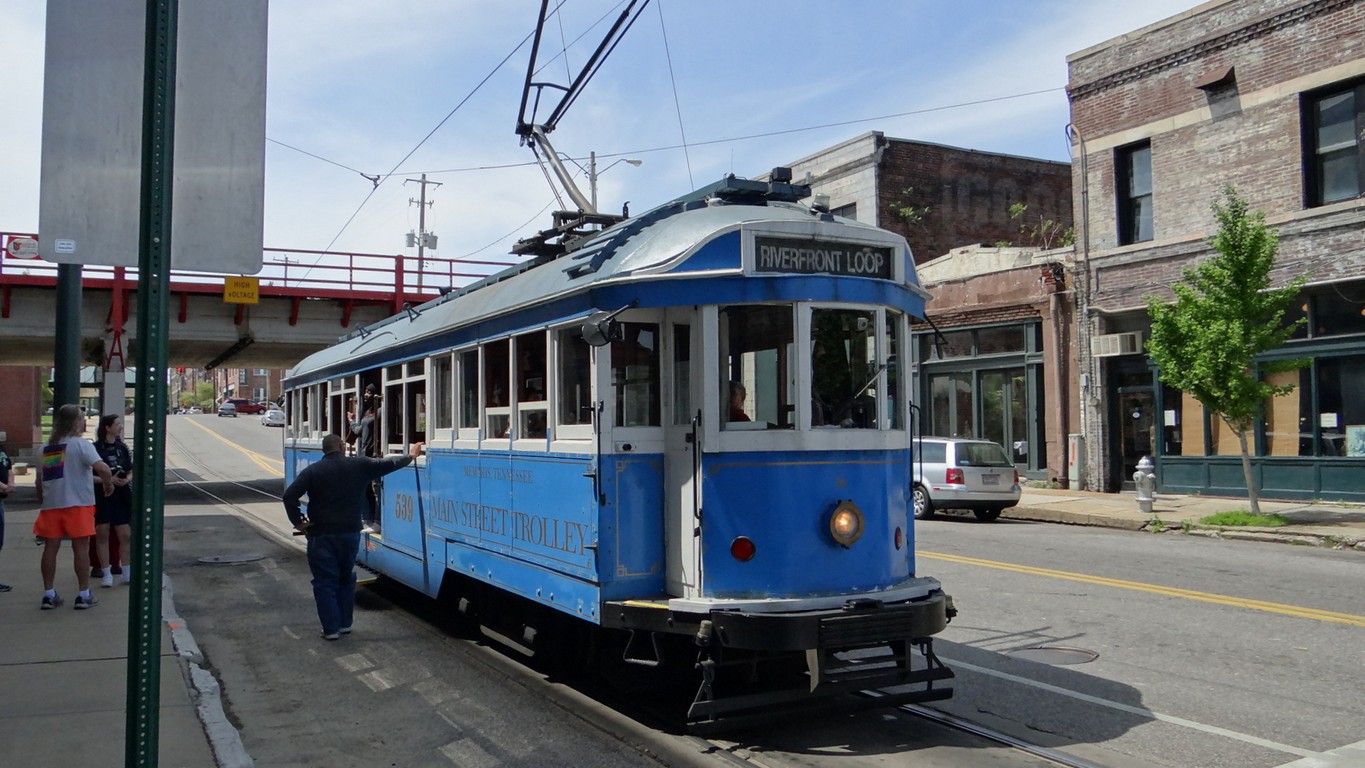
The area runs a number of modern and kind of antiquee trolleys. Some guy makes a living giving people rides in a Cinderella Pumpkin. We took it easy and it was a fun day and relatively pain-free.

For a look into my album for the day, click on the link below:
https://picasaweb.google.com/106530979158681190260/2013420CivilRightsMuseum

Sunday, August 22, 2010

MOTOWN MUSEUM WITH SUE AND ART

The house above, on Detroit's West Grand Blvd., was purchased by Berry Gordy Jr. on a family loan of $800. He had sold his first song, Lonely Teardrops, and his pay was $3.75. His parents both owned businesses and he realized immediately that the middlemen were collecting the money on his work. He wanted control of his own work and talent. He decided to get a loan, (from his family) buy a house,  and open up a recording studio. It was a risk, but he was able to get it off the ground almost immediately since the black community was full of talent with little outlet for that talent in the general population. Most radio stations wouldn't play black music on white stations. One short range black station was all they had.
 Motown Record Company changed that in a big, big way. Over the years, came Marvin Gaye, Stevie Wonder, Diana Ross and The Supremes, Elaine Brown, The Jackson Five, The Platters, Billy Ekstein, Smokey Robinson, The Temptations...the list goes on and on. What a walk down memory lane is this fun, fun museum, even though no picture taking is allowed. In fact, Motown recorded Martin Luther King's I Have A Dream Speech. It was first given in Detroit and went over so well he used it several times, in Washington DC, in Montgomery, Alabama and elsewhere.
As business grew, Berry Gordon bought the house next door, and the one next to that, and another and another until he had eight buildings around the area that tested, recorded, trained, dressed and made history with new young musicians.
Starting out, Berry recorded in his garage and lived in a modest apartment upstairs. Part of the famous "Motown Sound" came from a hole in the ceiling that gave an echo to the singers that other studios tried to duplicate with equipment. It was just a hole in the ceiling. Sometimes, an artist was chosen by the following test. Berry would gather the employees in the studio and play a piece and ask, "If it was your last dollar and you were hungry, would you buy this record or would you buy the sandwich?"  He would ask them all and if one said, how hungry? or What kind of sandwich. He still considered that a vote for the artist because they hesitated.
 Motown got the first black act on Ed Sullivan's show. Motown got the first black act in a white night club. Berry knew that radio stations could only play from one label three times in a day. So he did the math and developed many labels. He actually recorded everything but classical music in his studio.
Motown records got to white stations by sending a record with a blurb with no picture of the artist. Kids liked the music, the beat, they could really dance to this stuff. When they finally saw the artist, and found out he or she was black, it was fine with them. In fact, the whole black musical community stuck together because of their training at Motown. Motown set the professional tone for black musicians and they succeeded.
Berry also recognized that black musicians had jobs, often shift work, just as he did on the assembly line at Ford at one time.  They couldn't come in and record from 8am to 5 pm. He kept the place open for 24 hours a day so musicians always had access to the studio. (Two hours of that time was used for cleaning.)
A singing or playing talent, didn't always know how to act on a big stage, in front of an audience. He hired a woman to teach them manners, to dress professionally, to always be on time, to practice good grooming, to choreograph their act and so on. It was an amazing transformation of talent to spectacular success.
After our visit, in which all of us sang and danced, (sort of), Jim's longtime friends,  Art and Sue Lambart led us to a Mexican Restaurant near where Art taught English as a second language at one time. He learned Spanish when he was building a Nuclear Power Plant in Mexico and has managed to retain his Spanish and likes to practice using it.